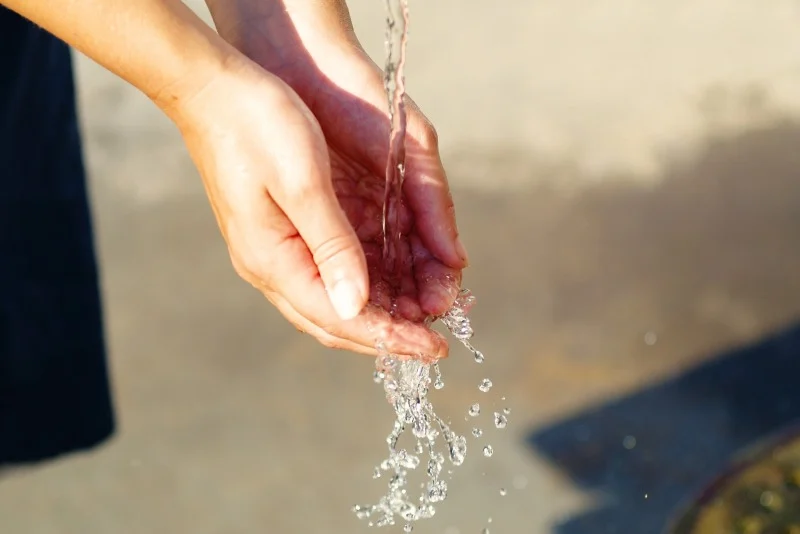
Social media has been abuzz recently with videos documenting the process of water prospecting and well digging in various Moroccan regions using traditional methods.
The most common of these is the “stick” method, which involves a dowser holding a Y-shaped branch, horizontally before it starts to tremble when it reaches a spot where water is said to be present underground.
Traditionally, Moroccans have sought the services of water diviners to locate underground water sources, a crucial factor in determining the settlement of human communities throughout history.
Many attest to the effectiveness and accuracy of these classical methods in detecting hidden water reserves.
However, the ability of some diviners to predict the depth and quantity of water has led others to question their validity, dismissing it as “lies and deceit” in light of scientific and technological advancements that have produced more precise and reliable techniques.
“The method I employ for water prospecting and well detection involves using copper rods or pomegranate tree branches to locate water sources,” said Hafid Boukhlouf, a 48-year-old traditional water diviner from Guercif.
In a statement to Hespress AR, Boukhlouf emphasized that “this method is 100% guaranteed and does not involve any deception or fraud towards clients who themselves attest to its effectiveness.”
He continued, “the price of the service we provide is subject to negotiation with the client, and we supervise the drilling work until water is extracted,” while emphasizing that “this traditional method is often faster and more effective than the modern methods used by engineers.”
“There is a range of traditional water prospecting techniques that rely on the principle of gravity, such as using two copper rods held by the prospector in their hands,” explained Riad Ouhtita, agricultural expert, in a statement to Hespress Ar.
He elaborated further, “the prospectors begin scanning the area to be examined, and the rods tilt downward and start rotating in the holder’s hands when they reach water sources.
The expert affirmed that “the determining factor in the effectiveness of these techniques is the force of gravity, and therefore they are partly based on scientific principles.
However, the prospector’s ability to accurately determine the depth and quantity of water, Ouhtita explained, remains a matter of relative estimation and is often not precise.
He noted that “the most effective methods for detecting wells and underground water are modern, precise scientific methods.”
The agricultural expert further explained that “our ancestors used traditional methods for water prospecting, and these methods have indeed proven effective on many occasions.”
However, he said that in the current context of drought, reduced rainfall, and declining groundwater reserves, “the effectiveness of these classical techniques has diminished, and their success rate in detecting underground water has become very low.”






add your comment
Terms of publication : Not to offend the writer, people, sacred things, or attack religions or the divine self, and refrain from racist incitement and insults.