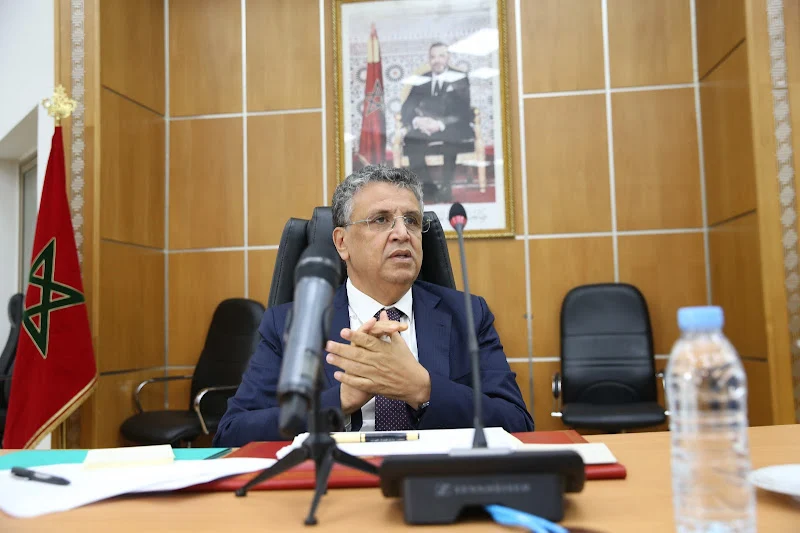
Justice Minister Abdelatif Ouahbi expressed concerns at a symposium on Artificial Intelligence (AI) and Human Rights, where he argued that AI’s rapid development poses major problems for rights and freedoms, particularly when considering the anonymity social media grants to those who spread misinformation and violate privacy.
“I hate these things, but you have no solution but to deal with them in the future, and you will live with them and must coexist with them. We hope that you will live like a human being and die with us and be buried in the grave,” he told students at Ibn Tofail University in Kenitra at a symposium on “Artificial Intelligence and Human Rights: Opportunities and Challenges.”
Jokingly, Ouhabi addressed the government reshuffle that has been very popular in the media for weeks, saying sarcastically: “At one stage, I told the Head of government that when you want to make a government reshuffle, use artificial intelligence and these modern means,” and added: “It may cancel (repeal/change) all the ministers.”
Ouahbi said complex legal issues surround AI’s decision-making and criminal justice role. Unclear lines of responsibility emerge when AI is used for war crimes or identity theft, raising the question of who is truly accountable: the programmer, the purchaser, the one who issues the command, or even the individual who could have intervened but didn’t?
The new criminal law attempts to address some aspects of this by criminalizing filming private property without permission, a seemingly simple offense with potentially far-reaching implications. But Ouahbi expressed deep anxieties about the future, fearing AI could ultimately erode privacy and personal security for coming generations.
Despite his anxieties, Ouahbi underscored the importance of human values and responsibility in navigating AI’s challenges. He argued that judges, with their capacity to understand human emotions and circumstances, are irreplaceable in the pursuit of justice.
He said algorithms lack such emotional intelligence and cannot deliver true justice, even if their rulings adhere to legal technicalities.







add your comment
Terms of publication : Not to offend the writer, people, sacred things, or attack religions or the divine self, and refrain from racist incitement and insults.