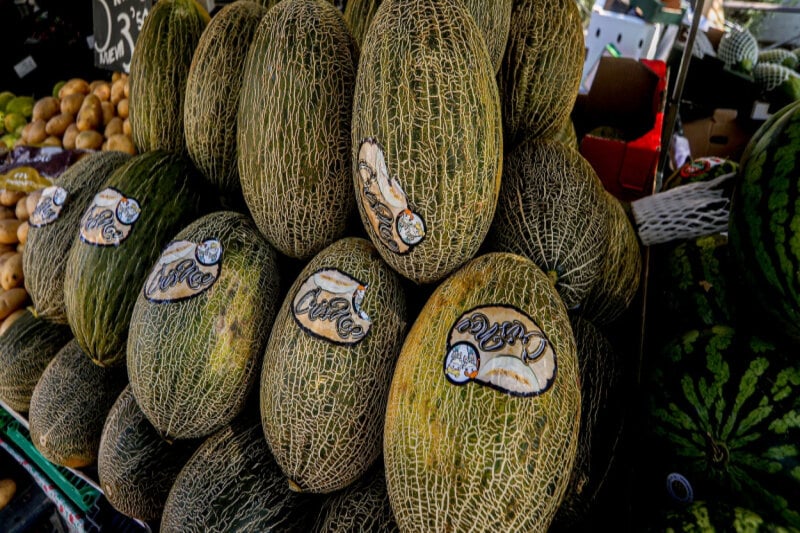
Spanish authorities issued a health alert on Friday, April 5, through the European Union’s Rapid Alert System for Food and Feed (RASFF) on melons imported from Morocco that contain “dangerous” levels of a pesticide.
Analysis conducted at a border control point revealed residues of the pesticide chlorpyrifos exceeding permissible levels in the watermelons. This incident follows a similar alert just one month prior, where strawberries from Morocco were found to contain hepatitis A and deemed a “serious risk” to consumers.
The RASFF system confirmed the Moroccan watermelons as “potentially dangerous” due to exceeding the maximum permissible limit of 0.01 mg/kg for chlorpyrifos. Notably, chlorpyrifos is an organophosphate insecticide commonly used in agriculture to control pests on crops and ticks on livestock.
While the RASFF alert halted the distribution of these melons in Spain, it lacked crucial details. The notification did not specify the affected region in Morocco, the brand under which the melons were marketed, or the farm of origin.
This lack of transparency, criticized by consumer protection organization FACUA, creates unnecessary suspicion towards all Moroccan melons.
FACUA argues that consumers have no way to identify and avoid potentially contaminated products. They have called for the RASFF system to provide more detailed information in future alerts.








add your comment
Terms of publication : Not to offend the writer, people, sacred things, or attack religions or the divine self, and refrain from racist incitement and insults.