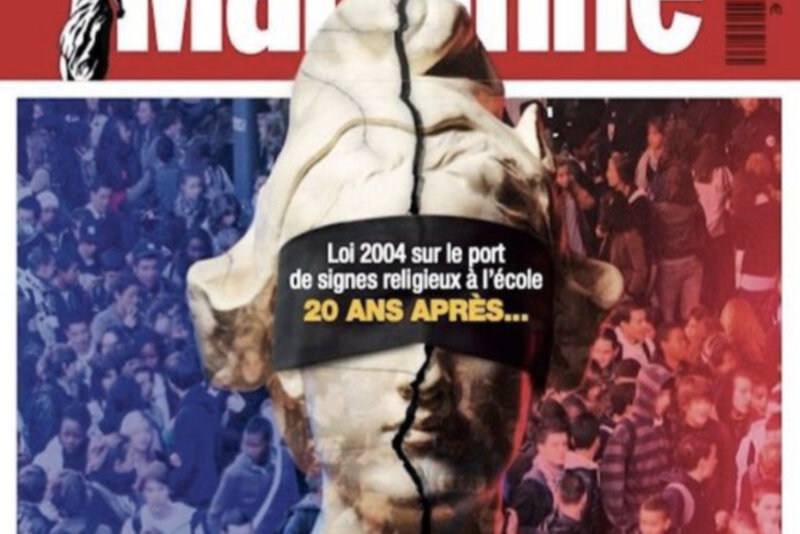
The Moroccan authorities have banned the latest issue of the French magazine Marianne, after it published a cartoon of the Prophet Mohammed.
The Moroccan government said it banned the magazine in order to “preserve public order and protect religious feelings.”
The cartoon, which originally appeared in Charlie Hebdo in 2006, shows the Prophet with the caption “Mahomet overwhelmed by extremists” and the quote “It’s hard to be loved by jerks.”
The publication of the cartoon sparked outrage among Muslims, and in 2015, Charlie Hebdo was attacked by gunmen, killing 12 people.
Marianne is known for its provocative editorial stance, and has been accused of Islamophobia in the past.
Morocco has a history of taking action against publications featuring caricatures of the Prophet Mohamed. This isn’t the first time the country has implemented such a ban.
In 2020, Moroccan authorities prohibited the distribution of French newspapers republishing Charlie Hebdo’s caricatures of the Prophet.
This move was justified by citing Article 31 of the country’s press code, which allows authorities to ban publications deemed disrespectful towards Islam.
Article 31 permits the refusal of a license for the distribution, sale, or display of foreign publications and periodicals if they contain insults towards Islam, the monarchy, incitements agaisnt the country’s territorial integrity, slander, insults, or infringements against the King, Prince, royal family members.
The Moroccan government emphasized that such actions fall within their right to regulate publications entering their territory. They stated that this doesn’t violate international freedom of expression standards, as the ban only targets specific content deemed offensive.
The publication of cartoons of the Prophet Mohammed has a long and controversial history.
In 2005, a Danish newspaper published a series of cartoons of the Prophet, which sparked protests and violence in Muslim countries.
In 2011, Charlie Hebdo published a series of cartoons of the Prophet, which led to the magazine being firebombed, while in 2015, it was attacked by gunmen, killing 12 people.
The attacks on Charlie Hebdo have led to a debate about the limits of freedom of expression and the right to offend.
The ban of Marianne in Morocco isn’t the first time tensions have flared between the country and the magazine.
In September 2023, following the Al Haouz quake, Moroccan authorities reportedly expelled two Marianne journalists who were working on a piece without proper authorization.
This action came amidst frustration with French media coverage of the quake, particularly from outlets like Charlie Hebdo and Libération.
The Moroccan government defended the expulsions, stating the journalists lacked the necessary permits to cover the event and had entered the country for tourism purposes.




add your comment
Terms of publication : Not to offend the writer, people, sacred things, or attack religions or the divine self, and refrain from racist incitement and insults.