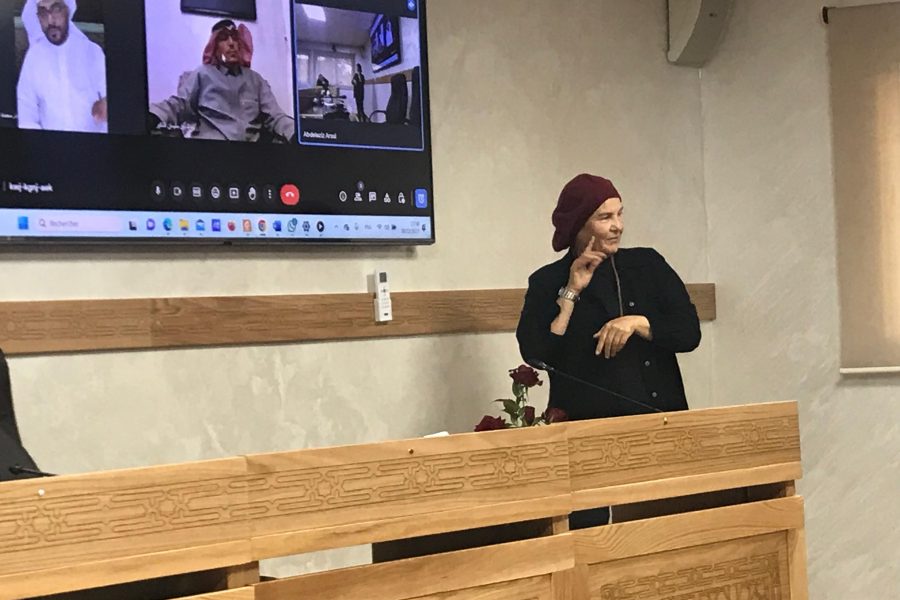
The situation of deaf and hard-of-hearing women in Morocco remains gut-wrenching, given the plethora of barriers they say impede their access to various social services, and prevent them from benefiting from a full sense of citizenship in the country.
Considering the communication barriers, especially since sign language in Morocco is not yet solidified and standardized, deaf women usually feel marginalized, and their abilities are eventually dimmed.
With the help of Mohamed Chakri, a sign language interpreter, Nadia Lazraq, the president of the National Federation for Deaf in Morocco, recounted the struggle and discrimination of deaf women in Morocco.
“Deaf women face a double marginalization for being both women and members of the deaf community,” highlighted Lazraq in a statement to Hespress EN.
She stressed that the situation of deaf women is often difficult, given the multiple barriers they usually face, including limited access to education.
Because of their deafness and gender, they often find themselves confined to domestic chores and secluded within their homes, said the president of the National Federation for Deaf in Morocco.
“Deaf people in Morocco encounter various obstacles and experience a sense of incomplete citizenship,” she stressed.
Lazraq also highlighted that the illiteracy rate is very high among deaf women and their educational level is usually limited in terms of reading and writing. Yet, similar to hearing-able women, they possess skills and creativity.
“Many initiatives, talents, and untapped potential that one can find among deaf women. However, they usually remain overlooked,” said the president of the National Federation for Deaf in Morocco.
While precise figures for illiteracy among deaf women in Morocco are unavailable, Lazraq stressed that the rate of school enrollment in Rabat is comparatively higher than in other cities.
Asking about the role of the Federation that she presides, Lazraq mentioned that their main objective is to shed light on the creative abilities of deaf women, just like their hearing-able counterparts.
She underscored the importance of recognizing sign language as a real language, equal to other languages like Arabic and most importantly Amazigh.
“Sign language, like the Amazigh language, should be officially recognized, as it enables communication and ensures equal citizenship for the deaf community,” stressed the president of the National Federation for Deaf in Morocco.
She also highlighted the crucial need to create equal opportunities for employment for deaf individuals, as they are frequently marginalized and excluded in areas such as healthcare, court, and administrative services.
The National Federation for the Deaf in Morocco includes around 24 associations from different cities in Morocco, as well as 14 sports clubs for the deaf. Their goal is to advocate for the rights of deaf individuals and prepare sign language interpreters.




add your comment
Terms of publication : Not to offend the writer, people, sacred things, or attack religions or the divine self, and refrain from racist incitement and insults.