
On Wednesday, residents of Oued Zem in the Khouribga region were gripped by panic after a quake measuring 3 on the Richter scale was detected.
The epicenter was identified near the municipality of Ait Ammar in the Khouribga region, as registered by Google’s earthquake monitoring service
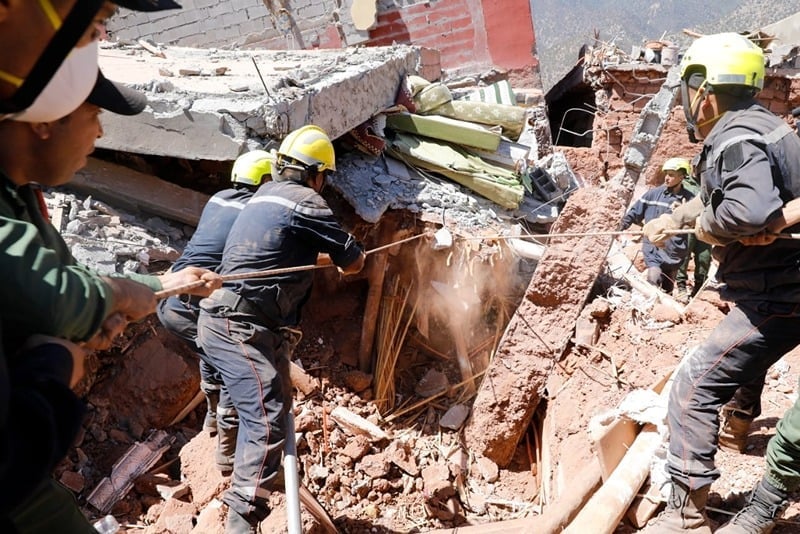
Concerns surfaced on social media, connecting the event to ongoing aftershocks from the Al Haouz quake.
Despite the significant distance from the region to the epicenter of that seismic activity, and no reported damage, these worries persisted.
Many Moroccans have been raising concerns over natural phenomena experienced after the Al Haouz quake due to its significant impact on both material and mental aspects.
In 2019, the Khouribga region experienced an earthquake of similar magnitude (3,4), according to the Spanish Geographical Institute for Seismology, with no reported human or material losses.
Providing an explanation for the recent earthquake, Nasser Jebbour, the director of the National Institute of Geophysics, told Hespress Ar that the effects of the Al Haouz quake have influenced a wide geographical area in Morocco.
This suggests an expected increase in seismic activity in the country by approximately 10%, occurring in locations far from the epicenter.
Jabour added that the aftershocks of the Al Haouz quake will remain confined to its region, meaning that what happened in Oued Zem is not a result of continued aftershocks.
The same source explained that the earthquake in Oued Zem was a small one, measuring 3.3 on the Richter scale which is typically not felt by citizens.
The occurrence of this earthquake during the night made some people aware of it. At present, there are several unnoticed small earthquakes happening in Morocco.
The Oued Zem quake occurred internally, not at the tectonic plate edge. It happened in the western massif of Morocco, known for its inactivity. This region is located at the beginning of the Mediterranean Atlas, where the first faults are situated.
Jebbour explained that the institute continues to monitor current earthquakes to understand them and study the fault systems that release Earth’s stress.
The expert said that there is a significant decrease in seismic activity in Morocco, indicating a noticeable reduction in seismicity three months after the Al Haouz quake.
This suggests that the quake in Oued Zem occurred internally.
Regarding the predictions made by the National Institute of Geophysics, Jebbour revealed that the wide-reaching effects of the Al Haouz quake could potentially lead to other quakes, but as of now, they have not manifested.







add your comment
Terms of publication : Not to offend the writer, people, sacred things, or attack religions or the divine self, and refrain from racist incitement and insults.