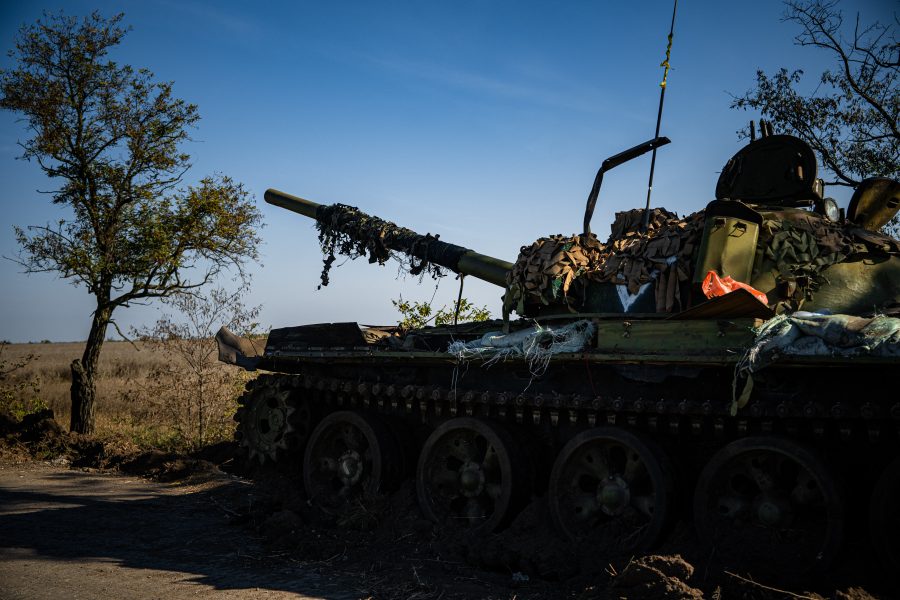
In 2023, the world witnessed an unsettling time characterized by several geopolitical tensions, military coups, and a slew of conflicts reverberating across nations.
· Palestine persistent resistance:
On October 7th, the Palestinian group Hamas launched a surprise attack and fired a huge barrage of rockets into southern Israel and captured dozens of Israelis.
In response, the Israeli Security Council declared a state of war and has been launching raids on the densely populated sector, which has been besieged for years.
The operation was carried out on a scale not seen in decades in the conflict between Palestinians and Israelis.
Since October 7th, the world has been watching heart-wrenching scenes depicting Israeli atrocities and the carpet bombardment of Gaza. Only in two months, approximately 18,000 Palestinians were killed and 49,500 injured.
The rising death toll among Palestinian civilians, the majority of whom were women and children, fueled international accusations that Israel was committing war crimes.
· Azerbaijanian-Armenian war:
Three years after their most recent war over Nagorno-Karabakh, Armenia, and Azerbaijan seem to be on the verge of another confrontation.
After the collapse of the Soviet Union in 1991, Nagorno-Karabakh declared independence from Azerbaijan, triggering a war between Armenia and Azerbaijan.
The region fell under the control of ethnic Armenian forces backed by Armenia, displacing approximately 1 million Azerbaijani residents.
In 2020, Azerbaijan launched a military operation, breaking Armenian defenses, reported Reuters, and taking back parts of the region in the South Caucasus Mountains, in addition to surrounding territory seized by Armenian forces earlier.
In September 2023, Azerbaijan launched an attack, capturing the remaining territory it did not already control.
This offensive resulted in the displacement of a large number of Armenians, with over 100,000 people fleeing to Armenia, accounting for approximately 85% of Nagorno-Karabakh’s population, according to AP.
· Sudan civil war:
In April, intense fighting erupted in Khartoum and across most of Sudan between the Sudan Armed Forces (SAF), led by Abdel Fattah al-Burhan, and the paramilitary Rapid Support Forces (RSF), led by Mohamed Hamdan Dagalo, over the planned integration of RSF into the regular army.
The RSF claimed control of the presidential palace and Khartoum International Airport, among other key locations on April 15.
The Sudanese army reported regaining control of the presidential place on April 16 and continued fighting for control over Khartoum International Airport.
Over 5 million people fled the raging conflict, seeking refuge in neighboring countries, as many of them faced food and water shortages, according to UNCHR.
The healthcare system collapsed and people had difficulties accessing medical care, as many hospitals faced shortages in supplies and staff, according to MSF.
At that time, the UN World Food Programme warned that the unrest could lead to millions more people going hungry in a country where 15 million people already needed assistance to avoid famine.
· Niger’s military coup:
On July 26, 2023, members of Niger’s presidential guard overthrow President Mohamed Bazoum, who was elected in 2021. Soon after confirming the coup’s success, Abdourahamane Tiani declared himself the leader of a new military junta.
The military junta highlighted that the continually deteriorating security situation as a primary reason for the coup.
· Gabon’s military coup:
In August, a military group headed by Brice Oligui Nguema deposed former President Ali Bongo, whose family held power for nearly 56 years. The coup came just an hour after Bongo was declared the winner of the presidential elections.
Later on, Nguema, a former associate of Bongo, was named head of the newly formed Committee for Transition and Institutional Restoration.
· Iraq:
Kirkuk, a multi-ethnic and oil-rich province in northern Iraq, was a point of contention between the Iraqi federal government and the Kurdistan Regional Government (KRG).
Tensions rose when the Arab and Turkmen communities in Kirkuk protested the transfer of their headquarters to the Kurdistan Democratic Party (KDP), which the Iraqi army has used as a base since 2017, according to The New Arab.
The protest resulted in a blockade of the Kirkuk-Erbil highway, causing traffic congestion and business disruptions for Kurds.
The situation deteriorated into violence, resulting in the deaths of four Kurds, including civilians and a PUK peshmerga, allegedly as a result of gunfire from Iraq’s security forces, according to the same source.
· Venezuela vs Guyana:
The long-running territorial dispute over the Essequibo, an oil-rich region, erupted into a crisis in 2023.
In September 2023, Guyana provided drilling licenses in the disputed waters. However, Venezuela, refused the oil tender, claiming that the offshore blocks awarded are in disputed areas, hence, the companies do not have the right to explore them, according to Reuters.
Venezuelan President Nicolás Maduro instructed the state oil company to issue extraction permits and proposed legislation to incorporate the area into Venezuela, according to the BBC.
As a response, Guyana’s defense forces were placed on high alert. Tensions rose further after Venezuelan voters approved a referendum asserting Venezuelan sovereignty over Essequibo.
Brazil, a country that supports Guyana’s position, sent troops and armored vehicles to its border with the region and the US conducted military exercises with Guyana, reported the same source.
· Libya:
Gun battles between two leading armed groups, namely the Special Deterrence Force (RADA) and the 444th Combat Brigade, in the Libyan capital Tripoli.
At least 55 people were reported killed and it was considered the deadliest clash there in a year, reported the NYT.



add your comment
Terms of publication : Not to offend the writer, people, sacred things, or attack religions or the divine self, and refrain from racist incitement and insults.