
3.2 million people have transitioned into poverty (1.15 million) or vulnerable conditions (2.05 million) in 2022, nearing levels recorded in 2014, according to a recent report by The Economic, Social and Environmental Council.
Socially, more than two years after the onset of the health crisis caused by the COVID-19 pandemic, Moroccan families continue to grapple with its repercussions.
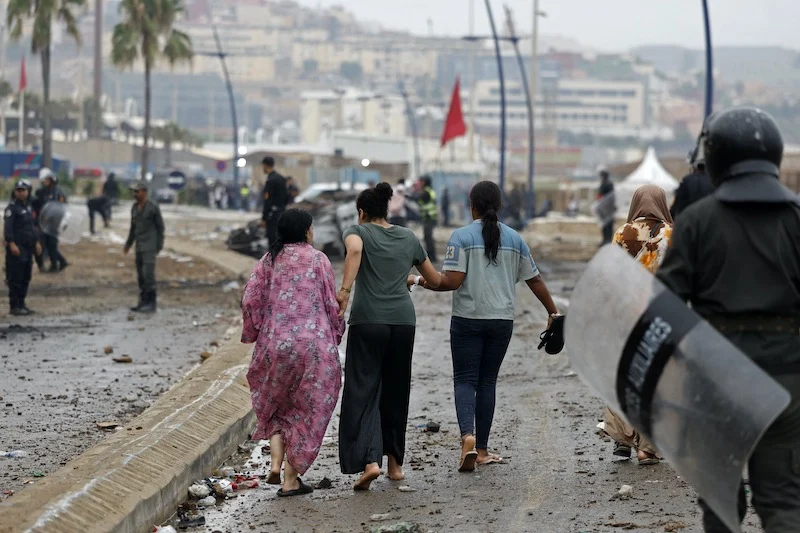
The situation has worsened due to inflation and the subsequent decline in the purchasing power of citizens, exacerbating their living standards.
Inflation has also contributed to widening social inequalities. According to the Gini Coefficient, social inequalities increased from 38.5 % in 2019 to 40.5 % in 2022.
Absolute poverty rate rose from 1.7 % in 2019 to 3 % in 2021 and further to 4.9 % in 2022 on a national level.
In 2022, Moroccans experienced an unprecedented decline in satisfaction with their living standards, marking the lowest confidence level since the beginning of research on household conditions in 2008 conducted by the High Commission for Planning.
About 83.1 % of households reported a deterioration in their living standards over the previous 12 months. Looking ahead, 52.4 % of households anticipate a further decline in their living standards in the coming 12 months.
More than half of the households (52 %) stated that their incomes cover their expenses, while 45 % had to dip into their savings or resort to borrowing to make ends meet.
Only 3 % of households managed to save a portion of their income, highlighting the financial challenges faced by a significant portion of the population.
In terms of the social status of women, no significant changes were observed in 2022, especially regarding women’s economic participation. This keeps Morocco ranked low in the global gender gap index.
Discrimination against women persists in the job market, highlighting the need for a review of the family code to address various forms of discrimination.
Economically, the national economy experienced a slowdown, with growth decreasing from 8% in 2021 to 1.3 % in 2022.
This downturn is attributed to the cumulative impacts of several shocks, including international and domestic fluctuations, Such fluctuations include ongoing droughts, the lingering effects of the COVID-19 crisis, and its impact on resilience and domestic demand.
Trade deficit worsened, and inflation rose (from 1.4 % to 6.6 %), primarily driven by the general increase in food prices, affecting the purchasing power of households.
Unemployment, though slightly decreasing from 12.3 % in 2021 to 11.8 % in 2022, still resulted in a net loss of 24,000 jobs.
The report also noted that there is a concerning trend of young people who are neither employed nor receiving education or training, commonly referred to as NEET (Not in Employment, Education or Training).
More than one in four individuals aged between 15 and 24 (25.2 %, or 1.5 million people) fall into this category, with women constituting 72.8 % of this group.
The persistent nature of this phenomenon is depriving Morocco of optimizing the demographic advantage the country is currently experiencing.
Climate change manifested in extreme weather phenomena in 2022, including heatwaves, frequent droughts, and floods, causing significant human and economic losses and impacting food security, health, and infrastructure.
Despite unfavorable conditions, Morocco achieved a global rank of seventh in the Climate Performance Index for 2022.
In the energy transition, Morocco secured the top position globally among countries most attractive to renewable energy, reflecting a monumental achievement in the renewable energy sector.



add your comment
Terms of publication : Not to offend the writer, people, sacred things, or attack religions or the divine self, and refrain from racist incitement and insults.