
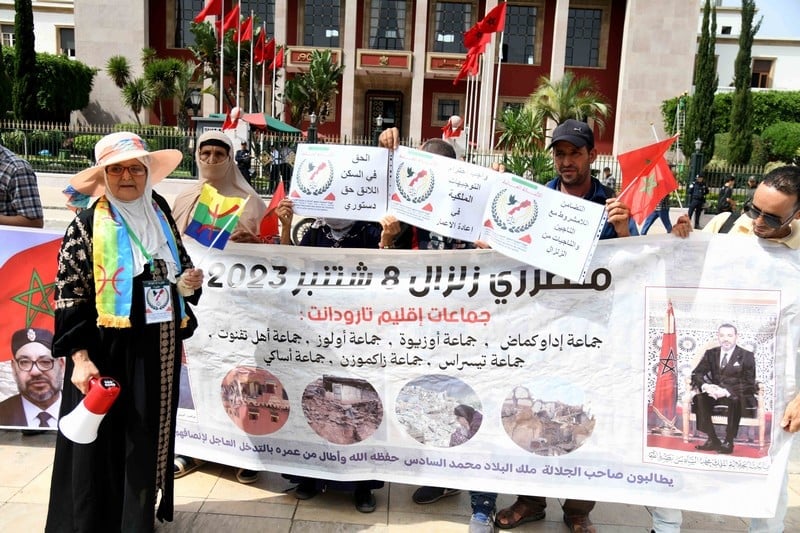
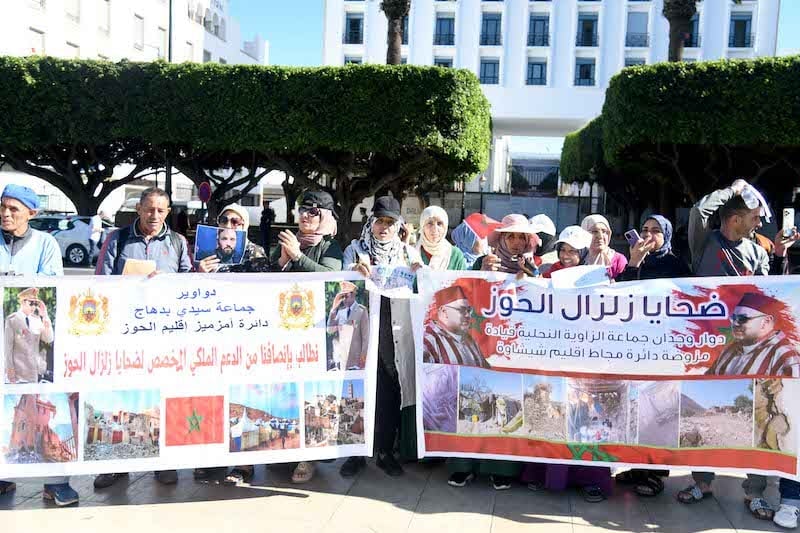
The government decided to allocate MAD 810 million to address the effects of the Al Haouz quake and repair road damage, according to the seventh meeting of the inter-ministerial committee chaired by head of government Aziz Akhannouch on Tuesday.
The allocated funds aim to implement an emergency program, which includes the rehabilitation of two sections of National Road No. 7, connecting Ouirane and Thalat N’yaakoub in the Haouz region over a length of 34 km, and Tizi Ntast and Tafenkoult in the region of Taroudant over a length of 30 km.
The total estimated cost for this first phase is around MAD 340 million .
During the meeting, the committee assessed the progress of road opening and debris removal from public buildings and houses damaged by the earthquake. It reported that approximately 624 km of rural roads and paths that are not classified have been reached in 300 circles and 4 regions.
The committee also discussed ongoing studies related to the second section of National Road No. 7 and the road connecting Ouirgane and Thlath N’yaakoub in the Haouz region.
Regarding the removal of debris, the committee highlighted that 2,687 villages, including public buildings and houses destroyed by the earthquake, will be covered at an estimated cost of MAD 300 million.
The project to build the Tassa Ouikan dam was discussed during the meeting, with a storage capacity of 3 million cubic meters and an estimated cost of MAD 449.6 million. This initiative, set to begin in January 2024, aims at achieving local development, valorizing local products, and promoting eco-friendly tourism.
The committee noted progress in distributing barley to farmers in affected areas, amounting to about 500,000 quintals. 126 kilometers of irrigation canals were rehabilitated, and efforts began to restore hydro-agricultural equipment in small and medium-sized water circles.
An agreement with the National Association of Sheep and Goat Breeders was signed, facilitating the distribution of 70,000 heads of livestock. The ongoing work of repairing and building rural paths and roads, covering 54 km in affected regions, was also discussed.
In the education sector, the committee highlighted efforts resulting in the resumption of lessons for approximately 8,000 students in the affected areas. Support includes 300 educational staff providing laptops and other study materials, along with the setup of 830 tents as classrooms and 375 mobile units.
Regarding the health sector, the committee emphasized the rehabilitation of 42 prioritized health centers, with construction set to begin in the first week of December 2023. These centers are expected to be ready to receive citizens in June 2024.
Prime Minister Akhannouch said that the government will swiftly and effectively implement the program, addressing social deficiencies and ensuring the success of the reconstruction process.






add your comment
Terms of publication : Not to offend the writer, people, sacred things, or attack religions or the divine self, and refrain from racist incitement and insults.