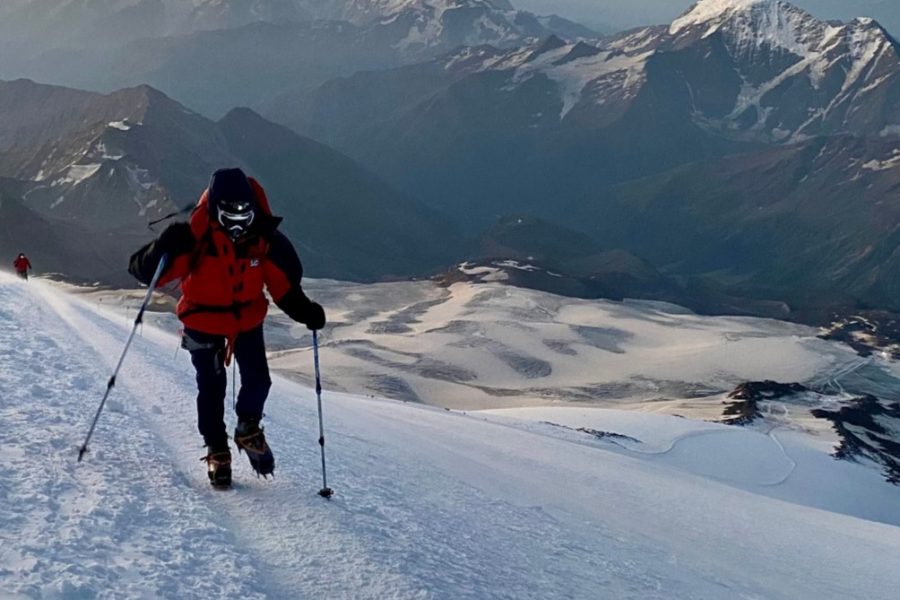
Achieving her lifetime goal of hanging the Moroccan flag high, climber Nawal Sfendla became the first Moroccan to ascend Manaslu, which stands towering in Nepal’s Himalayas at 8,163 meters.
“A dream come true Al Hamdouliah I worked hard for it, A lot of sacrifices have been made which I absolutely don’t regret,” said the climber on Instagram, sharing her feelings with her almost 100K followers.
She credited her team for helping her realize this dream, reaching her first 8,000-meter summit and making her nation proud as the first Moroccan to summit the true peak of Manaslu, especially considering the challenges posed by the earthquake during her climb.
Sfendla went up Manaslu to train to conquer Mount Everts, but after the devastating earthquake news, she climbed Mansalu “filled with rage, tears of sadness and a heavy heart” for her country.
In a video documenting reaching the top, Nawal Sfendla dedicated her success to all the Al Haouz quake victims, “you have all been my force, may the death rest in peace and may the sick get better.”
She was seen reciting Surat Al Fatiha, deeply immersed in the emotional highs of her successful climb.
Sfendla climbed the eighth-highest peak in the world, Manaslu, located at an altitude of 8,163 meters (26,781 feet).
It is situated in Nepal’s west central region, in the Mansiri Himal, a section of the Nepalese Himalayas. The Sanskrit term Manasa, which means “intellect” or “soul,” is where the name Manaslu, which means “mountain of the spirit,” originates.
At the highest point in North Africa, Toubkal, she discovered her love of mountain climbing and began pushing herself to the maximum.
Her accomplishments, such as the ascents of Kilimanjaro, Aconcagua, Elbrus, and Denali, show her extraordinary fortitude and unwavering bravery in the face of challenging circumstances and high altitudes.
The climber has a Facebook page called “The 7 Summits Challenge By Nawal Sfendla” in which she shares her climbing journey updates and her great achievements.




add your comment
Terms of publication : Not to offend the writer, people, sacred things, or attack religions or the divine self, and refrain from racist incitement and insults.