Rumors of a potential tsunami striking Morocco recently sent shockwaves through social media platforms, instilling fear and anxiety among the public, and directing criticism against an unlikely figure has emerged as a harbinger of seismic dread.
The source of these rumors is none other than the self-taught and self-proclaimed Dutch “seismologist” Frank Hoogerbeets who had hit the jackpot when he tweeted about a potential earthquake in Turkey on February 3, 2023.
Since then, Hoogerbeets’ predictions have gained in popularity and become a source of quake news and seismic activity through his research institute SSGEOS, Solar System Geometry Survey.
Hoogerbeets’ quake forecasts have time and again spawned fear and panic among the public due to their severity and magnitude. These forecasts were brought under fire for their lack of credibility since Hoogerbeets is not a seismologist and his method of prediction is far from scientific.
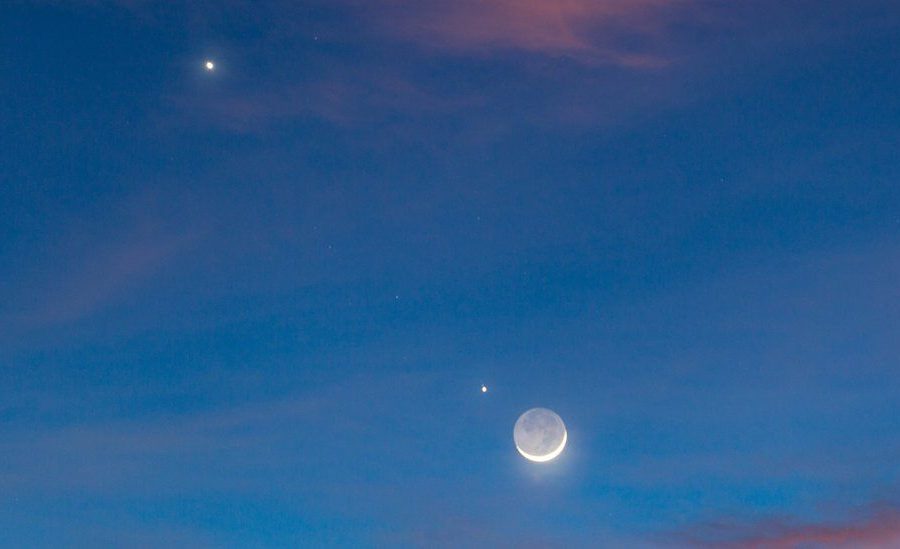
Hoogerbeets’ earthquake prediction method relies on the positions of celestial bodies in the sky. He reportedly predicted Morocco’s quake on his X account through this method.
In one of his planetary and seismic update videos on Youtube, Hoogerbeets says “we have a high lunar peak and a planetary peak converging on the 19th. I think that that will be more critical. That will be two planetary conjunctions converging Sun-Mercury-Uranus in the morning of the 19thth, shortly after followed by Sun-Earth-Neptune. That may become critical. In a worst-case scenario we could see a borderline 7 magnitude earthquake, an obvious seismic increase, which depends on the stress levels in Earth’s crust. There could be a larger seismic event around the 20th, give or take one day.”
Sherif al-Hadi, the head of the Seismology Department at NRIAG refuted Hoogerbeets claims as “unscientific, inaccurate, and irresponsible,” adding that such predictions don’t represent earthquake forecasting.
“Today, two planetary conjunctions are occurring between Mercury and Venus, accompanied by the moons of Jupiter and Uranus. On September 6, another conjunction took place between Mercury and Venus. A significant earthquake is anticipated between September 5 and 7,” Hoogerbeets said.
These repeated warnings by the Dutch scientist have caused global concern, particularly because his previous predictions have proven accurate.
Hoogerbeets later backtracked, denying making a specific prediction about the earthquake, clarifying his stance saying “ Some media seem to claim that I “predicted” another big quake in Morocco. This claim is false. I answered questions here about the current threat. Usually, after an earthquake like on 8 September, smaller aftershocks (M 4-5) occur. Another large one is less likely.”
Ironically, Hoogerbeets himself admits that the timing and place of quakes cannot be predicted. As he points out on his website “It is important to note that earthquake prediction is still a developing field and the ability to accurately predict earthquakes is still limited. Currently most earthquakes occur without any warning and while there are some methods for identifying areas with increased risk. There is no reliable method for predicting the exact timing and location of earthquakes.”
Based on his outrageous unscientific method, Hoogerbeets has been called a hobbyist earthquake “enthusiast” and “quake mystic”.
The U.S. Geological Survey has already said that there has never been a scientist who successfully predicted a major earthquake.
Susan Hough, a seismologist from the Earthquake Hazards Program at USG, said that the recent attention-grabbing statements and predictions are a recurring trend, even when they may appear to be accurate.
Hoogerbeets alleged predictions don’t provide the three necessary elements – date and time, the location and the magnitude.
Yet, in a blatant contradiction to his previous statement about the impossibility of making an accurate prediction, Hoogerbeeets says on his Institute’s website “It is often stated that in order for an earthquake forecast to be valid it must define 3 elements: 1) the date and time, 2) the location, and 3) the magnitude. We believe that this requirement is unrealistic for the same reason that a weather forecast is allowed to say that even on the most shiny days there is a 0-10% or 30-40% precipitation PROBABILITY, without specifying the precise location. This has been valid scientific practice for decades.”



add your comment
Terms of publication : Not to offend the writer, people, sacred things, or attack religions or the divine self, and refrain from racist incitement and insults.