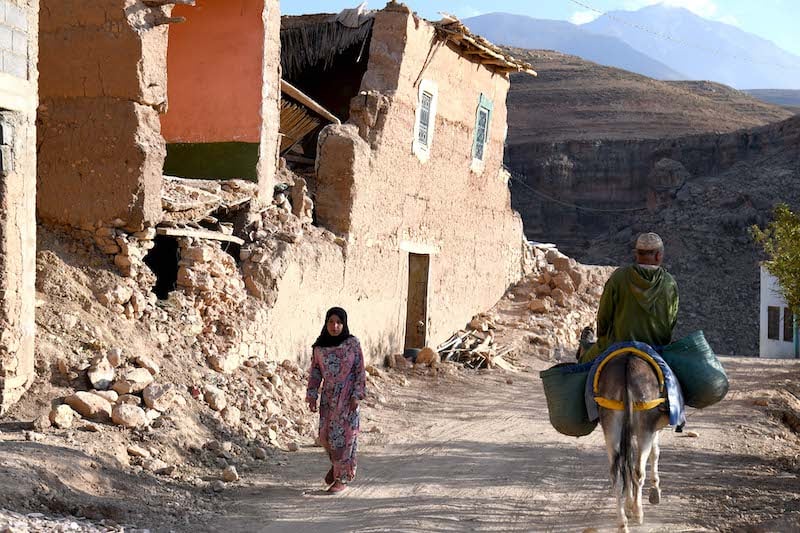
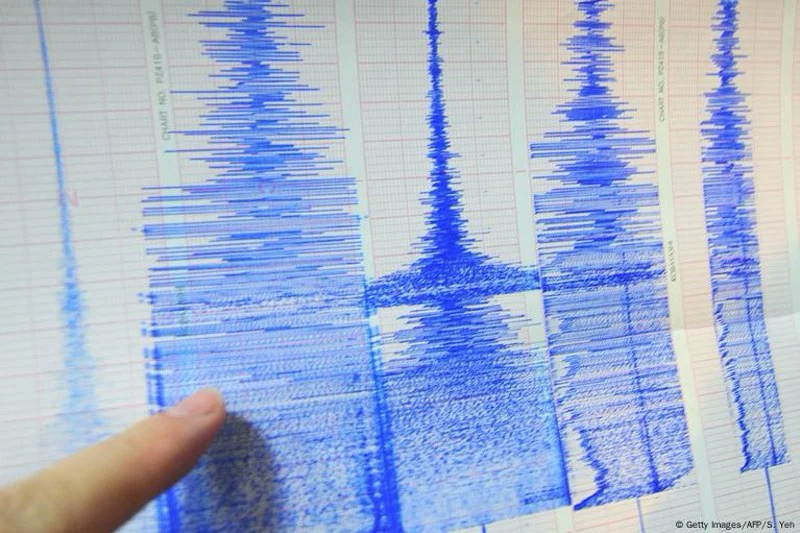
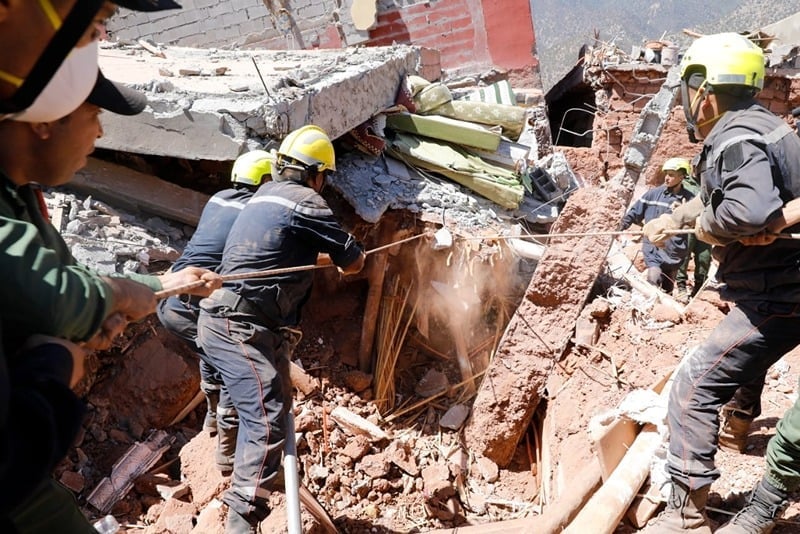
One week has passed since the tragedy that shook Morocco, as the 6.8 magnitude earthquake devastated Al Haouz, Chichaoua, and Taroudant, leaving a trail of rubble and trauma in the region.
Even now, the people of these damaged regions remain trapped in a never-ending battle, caught between the haunting echoes of calamity and the tedious road to recovery.
The collapsed buildings still bear witness to a great tragedy that swept the place, but the residents are trying hard to leave the sorrows behind them and start a new life.
Tents replaced houses, solar panels helped illuminate the place, and shared toilets were installed as the residents are trying to cope with their new life after losing their close ones.
Painful memories:
The residents of Imin Tala began preparing for a new life near the scenes of total destruction that stuck in their homes. Among the tents, faces appear steadfast, while their hearts recall the painful memories.
The residents are no longer as enthusiastic and active as they once were, and the many apple fields near the valley no longer tempt them. The concern of finding water for irrigation has turned into the concern of life inside the tents, while the joy of family gathering around food has faded.
The survivors continue to live with haunting memories that deprive them of sleep. One of the residents, Hassan, lost his mother, his wife, and many of his relatives. Speaking to Hespress AR, he told his story.
“I cannot sleep, my mother’s voice is still in my mind. As for my late wife, her image completely exhausts me. I have lost my whole life, and what I am experiencing now is just a very stressful daily reality,” said Hassan.
He continued. “Every morning I go to our completely destroyed house, and through it, I recall our memories, and how my mother used to sit to prepare tea as soon as I returned from the field, and how my wife used to support me in difficult times, and after that, I completely collapse and wonder: Is my survival despite losing them fair?”
Despite the depressing atmosphere, Hassan is keen to console his son, as he has suffered “despite my strong knowledge that I will not succeed in the matter, but I am trying.”
PTSD:
Although undiagnosed, the victims of the quake seem to be dealing with post-traumatic stress disorder (PTSD).
“The rocks that collapse every time terrify me, and increase my possibilities of thinking, which have increased in the millions since that black night. My head injury also puts me in a great worry that I have never experienced before,” said Ibrahim.
Solidarity’s role in helping the victims process the tragedy:
Life has gradually begun to return to the Adassil community, and residents are adapting to the new situation after death and fear that swarmed the area.
The residents of this area confirmed, during a visit by Hespress AR a week after the tragedy, that they had begun to forget the incident because of the large amount of solidarity they were witnessing.
According to one of the quake victims, the Moroccans’ great sympathy helped them overcome the ordeal and forget what happened that night, the details they no longer wanted to remember.
A woman who lost her husband, thanked God for what happened, adding in her Amazigh language mixed with a few words in Arabic that they are now trying to adapt to the new situation while awaiting what the case will turn out to be.
On the other hand, although the authorities in Chichawa prefecture have provided significant numbers of tents, some residents are still waiting for other tents to be provided to them so that each family can use them.
Government intervention:
Fatima Zahra El Mansouri, Minister of Housing and City Policy, visited those affected, stressing that the government is working in accordance with royal instructions to provide for the needs of the population and to accelerate the activation of the emergency program to re-house those affected and take care of the groups most affected by the earthquake.
El Mansouri arrived in the region, accompanied by Samir Koudar, head of the Marrakesh-Safi region and governor of the Chichaoua region, along with a number of central officials from the Ministry of Housing.
Many residents of the area hold on to the hope that they will rebuild their Douars, refusing to abandon their great grandparents’ land despite all that happened.





add your comment
Terms of publication : Not to offend the writer, people, sacred things, or attack religions or the divine self, and refrain from racist incitement and insults.