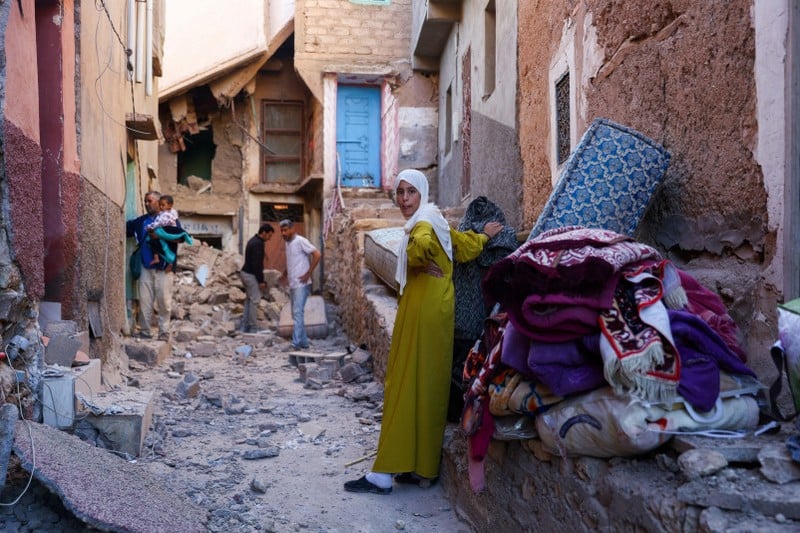
As Morocco struggles to recover from the devastating repercussions of the Al Haouz earthquake, a new concern has surfaced among concerned citizens: human trafficking, in particular, child and young girl trafficking.
Several social media posts went viral, in which Moroccan men suggest that others join them in marrying young victims of the earthquake, to “save them from their tragedies.”
In addition, a number of people are requesting to be put in touch with local authorities, to adopt children seen on social media, presumed to be orphaned by the tragedy.
The United Nations Children’s Fund (UNICEF) stated that around 100,000 children have been affected by the powerful earthquake, according to initial reports.
“UNICEF does not yet know the exact number of children killed, injured and orphaned, but the latest estimates from 2022 indicate that children represent nearly one-third of the population in Morocco,” the agency said, recalling the latest assessment by authorities and stressing that this figure “is likely to increase.”
Child Trafficking
Many volunteers who are currently in the affected areas, shared pictures and videos posing very closely next to girls, with what many deem repulsive captions such as: “She doesn’t want to come with me to Casa but she whispered that when she grows up we will get married. I love you x.”
The largest community supporting this form of human trafficking is on Facebook, in which groups encourage taking advantage of women’s and girls’ vulnerabilities, considering this an ideal opportunity to marry what they describe as “impressionable, pious and modest rural girls.”
Famous Facebook pages consider marrying earthquake victims as “a good deed,” taking a religious approach to justify the predatory behavior.
In a long text, the page bashed “city girls” saying “Why would you marry someone spoiled who still wants to dress in exposed and tight clothes, spend a lot of money, improperly raise your kids,” instead of “marrying girls who wouldn’t ask for anything.”
People started calling out the page, whose admin shared another text, calling everyone who didn’t agree with him “mentally ill”, explaining that he only spoke out of good intentions.
Moroccans all over social media are now wondering how to protect orphans from such vicious possibilities, knowing that most of the young girls pictured are underage.
Several influencers have been spotted all over social media posing with quake child victims, constantly forcing cameras in their faces and treating them like props in a play instead of actual humans with decency.
CNDH efforts:
After contacting the National Council for Human Rights (CNDH), a representative informed Hespress EN that despite many calls received on the matter, the council has yet to lodge actual complaints with proper information regarding the people involved.
CNDH confirmed it is keeping a close eye on the subject, as they await formal complaints.
“Matkishch Waldi”, long-lasting efforts to fight for the cause:
Hespress EN reached out to respected child protection association, “Matkisch Waldi” (Don’t Touch My Child).
The founder, Najat Anwar told Hespress EN that since the tragedy occurred, the organization has been closely monitoring the situation of children in the affected areas.
“Based on feedback from our field coordinators, we have issued warnings about the exploitation of vulnerable children, and the chaos resulting from the tragedy, especially when orphaned children are left alone. We have even documented cases of orphaned children being exposed to illegal adoption attempts through social media,” she explained.
Tweets of people trying to adopt child earthquake victims received serious backlash.
It appears that these people offering to adopt these kids are very selective, as they start sharing specific pictures that went viral of very young girls, demanding that people help them find them.
However, many called out these individuals, asking them to take the legal adoption routes instead of resorting to social media, reporting them to authorities.
Najat Anwar emphasized that Matkisch Waldi “is taking action in this regard, and we had hoped that the Social Unit in Taroudant would remain active due to the positive outcomes it had achieved. We call for its reactivation to coordinate with authorities to address the situation of orphaned children, and potential cases of sexual harassment and abuse.”
Hind Benameur, an expert in educational science, family coaching, and neuroscience, called for maintaining the great mobilization of Moroccans for the benefit of earthquake victims.
However, she warned against the dangers of digital exposure of young victims, whose faces have now been all over the world, exploited to serve as cover story material.
According to Benameur, who is very vocal about the tragedy on her Instagram, the exposure of child victims of the earthquake includes numerous dangers that can be summarized in three major points.
“In today’s ultra-digitalized world, an image posted on the Internet will remain there for eternity. These children exposed to the view of the entire Earth will be made for them to see indefinitely, which in itself constitutes a trauma, the images making them relive endlessly the profound wound of the earthquake itself.”
“The exhibition of these images also exposes them to the dangers that the digitalization of the world entails, namely, exposure to predators, organ traffickers, charlatans of occult sciences, who pursue the children of the Al Haouz region known as Zouhris.”
“Under common law, it is illegal to take and distribute images of people or children without their consent or that of their legal guardian. This right was originally put in place for protection purposes, particularly children’s rights.”
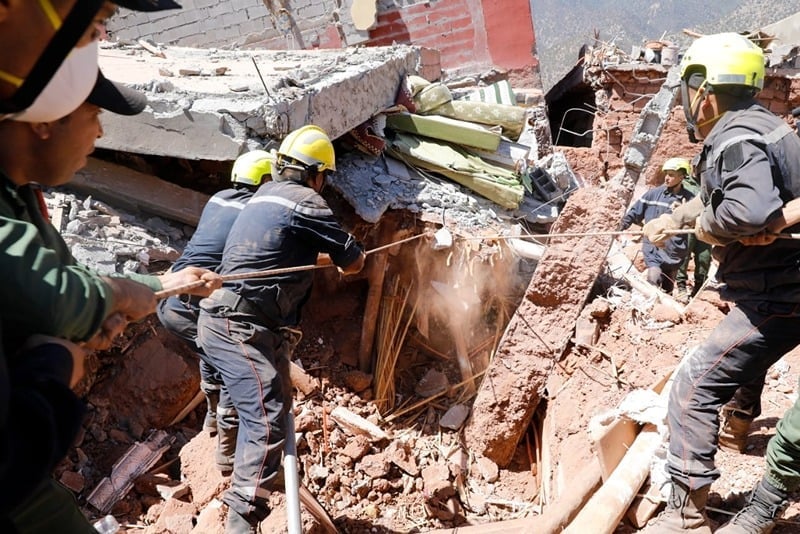
Thousands of homes were destroyed, displacing families and exposing them to all sorts of danger.
People are now calling on authorities, urging that they take action regarding what’s happening, as it puts children’s futures and lives at risk.






add your comment
Terms of publication : Not to offend the writer, people, sacred things, or attack religions or the divine self, and refrain from racist incitement and insults.