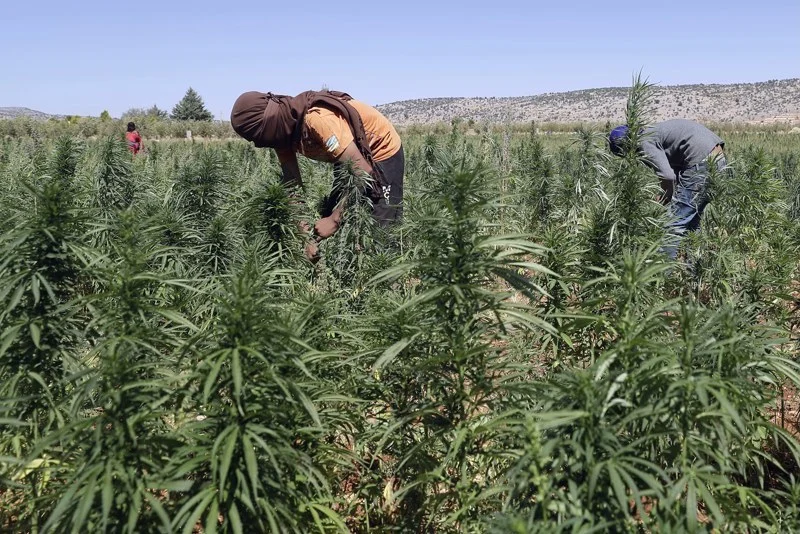
Morocco boasts a rich and extensive legacy of cultivating a diverse array of cannabis strains that are rooted in its historical agricultural practices, a competitive feature that’ll play in favor of the country’s export prospects.
Highlighting the country’s favorable climatic conditions for cannabis cultivation, researcher Ibrahim El Hatimi, whose work has centered on the cultivation of cannabis in Morocco and its consequential social and economic implications for small-scale producers, underscores the unique characteristics and specific chemical compositions exhibited by these strains.
“These strains may display distinctive traits and a particular chemical composition,” said researcher Ibrahim El Hatimi, who worked on cannabis in Morocco and its social and economic impacts on small producers. “
The first seeds for Morocco’s legal cannabis crop were distributed to farmers this year. The strains come from various nations, including Switzerland and Uruguay.
Cannabis expert Khalid Mouna said that “Morocco’s long history as the world’s largest exporter of hashish, which is mostly consumed recreationally, contributes to the distinctiveness of Moroccan cannabis.”
“Morocco has a special culture centered on cannabis and its derivatives. This might result in the creation of innovative products like hemp oil and other goods.”
Morocco ought to work hard to raise the caliber of its research and product quality, according to El Hatimi, the Moroccan product may become competitive on a worldwide scale if it is of high quality.
Sustainability is another element that would help to improve the Moroccan cannabis sector and enable it to compete and export internationally.
“Agricultural practices that are environmentally and sustainably friendly can help draw in customers who are concerned about sustainability.”
Logistical challenges
Strict administrative and logistical control, however, steadily shrink the supply chains that small farmers regularly access through illegal sales. Strict supervision decreases the sector’s economic added value as well as the product’s economic market, suggested Le Monde.
Additionally, the considerable legal and logistical complexity of these prohibitions and strict monitoring impede international trade.
Morocco has adopted a legislation strategy that maintains control over the commercial chain, from the cultivation of the plant to the finished product.
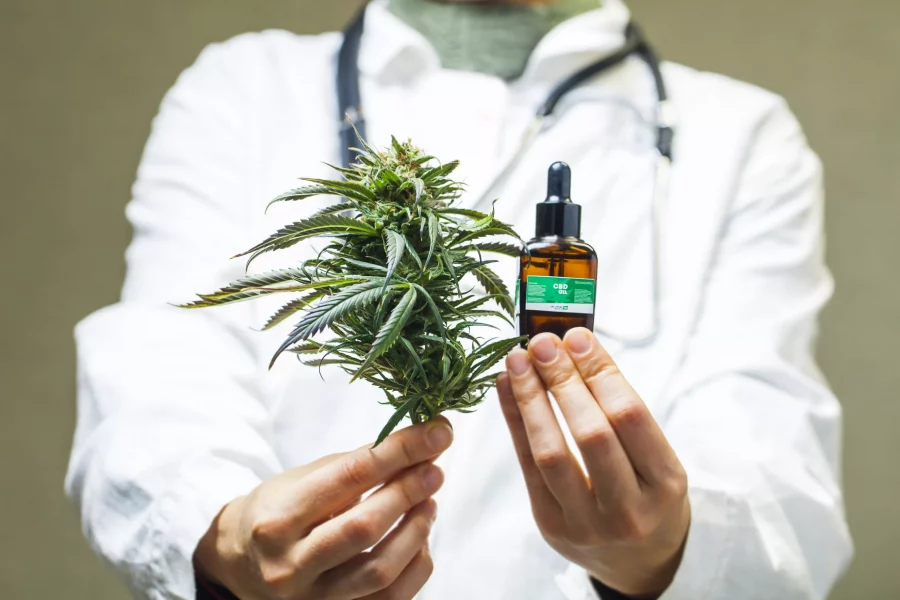
The medical, pharmaceutical and industrial sectors are the only authorized industries to cultivate and produce cannabis, according to Article 6 of the cannabis legislation law.
The National Agency for the Legalization of Cannabis-Related Activities delivered permits for the industrial and medical production of cannabis in collaboration with the Ministry of Health and Social Protection to farmers, businesses, and cooperatives earlier this year.
The current strategy employed by Morocco maintains a balance between various viewpoints on the subject, by legalizing certain uses while keeping others under strict control.
“Morocco entered this market for internal reasons, such as limiting illicit trade by establishing an alternative market. International competition will be difficult because the target of this transition are internal markets,” cannabis expert Khalid Mouna told Hespress EN
Cannabis is primarily produced in the northern Rif regions of Al Hoceima, Chefchaouen, and Ouazzane, feeding an estimated 90,000 households, or 760,000 Moroccans, according to statistics provided by the interior ministry.
Morocco’s unregulated cannabis business has detrimental social effects. Arrest warrants were pending for over 48,000 local cannabis growers.
“Farmers’ revenue may improve if cannabis is grown legally because cannabis can be expensive and in high demand. More jobs could be created as the cannabis industry grows in fields including agricultural, crop processing, and distribution,” said El Hatimi to Hespress EN.
Morocco’s commercial and competitive production of cannabis could increase by altering this strategy through innovative regulations.
El Hatimi, suggested some measures to develop the cannabis industry in Morocco to compete in the production sector, particularly with increasing competition from European countries.
Morocco can gain from collaboration with other nations. “International experiences can be benefited from, and knowledge and technology can be exchanged,” said El Hatimi.
“Morocco must enact laws and rules that transparently and lawfully control the production and distribution of cannabis.”
Innovative approaches also include assisting small cannabis producers and the local market, which would aid in the growth of the industrial sector and the export of cannabis to other countries.
Allowing both medical and non-medical recreational cannabis usage could also expand the Moroccan cannabis market’s worldwide reach and attract more international investment.
“In 2028, 75% of cannabis sales are anticipated to be valued at 43 billion dollars from recreational use, compared to 14 billion from the medical market,” according to estimates of the American market.
Morocco’s opening up to the world market may assist the local industrial sector thanks to the closeness to European markets, local agricultural skills, and the small market of cannabis producing countries.
Local Cannabis awareness
Consequently , this would entail educating physicians and pharmacists on cannabis prescriptions and requiring them to assist patients who use the plant for medical purposes.
“Training and education must be provided to workers in this sector to ensure the implementation of best practices and compliance with laws and regulations,” according to El Hatimi.
Farmers and cooperatives of cannabis in Morocco will also have access to a group of agricultural engineers and technicians who will give the essential technologies to boost productivity and provide them with agricultural inputs like fertilizer and relevant medications at incredibly low costs.
Additionally, another measure to develop Morocco’s cannabis sector is emphasis on the Moroccan customer by promoting legal access to its positives for as many individuals as possible and educating the public on its beneficial utilization.
El Hatimi emphasized promotion of public knowledge, noting that “local consumers must be encouraged to become aware of cannabis, its dangers and benefits.”
Morocco’s cannabis business may gain from greater flexibility to compete on the global market, through the focus on the creation of a local cannabis market.
“It may be necessary to create new agricultural technology and improve agricultural infrastructure to produce cannabis, which would be advantageous for the entire agricultural industry,” noted El Hatimi.






add your comment
Terms of publication : Not to offend the writer, people, sacred things, or attack religions or the divine self, and refrain from racist incitement and insults.