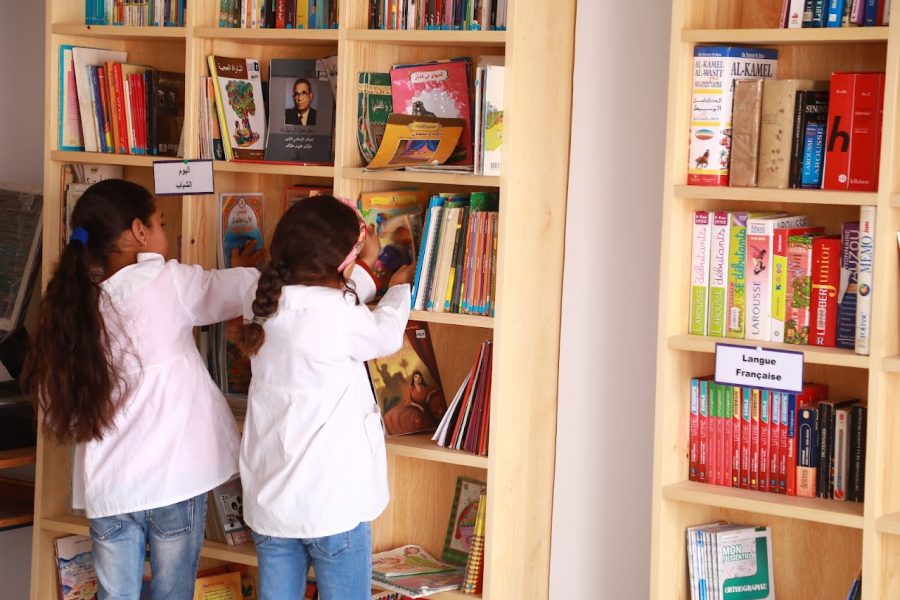
The disparity between private and public education in Morocco is reaching alarming levels, According to a report released by the Council of Advisors, which showed inequality being primarily rooted in the quality of education.
For years, the public school system has been grappling with a crisis, failing to deliver outcomes that align with the curriculum’s competency standards. This failure is exacerbating the divide between private and public education, with the difference becoming more pronounced over time.
The report highlights the advantage private school students have over their counterparts in public education. On average, private school students outperform public school students by 30 points in the sixth year of primary education, 60 points in the third year of preparatory education, and an astounding 82 points in the French language.
Adding to the concerns is the impact of the COVID-19 pandemic on private education enrollment. The decline in citizens’ purchasing power, coupled with job losses, led to a decrease in private education enrollment from approximately 18% in 2019-2020 to about 16% in 2020-21. However, there has been a slight rebound, with the enrollment rate reaching 17.8% in 2022-2023.
Despite the rise in enrollment, the support provided by private education institutions during the quarantine period was notably poor, leading to friction between families and these institutions. The pandemic’s economic repercussions have further deepened the educational gap in the country.
The framework law, which aimed to promote social solidarity in education, called on the private sector to contribute to providing education not only for affluent families but also for those in need and individuals with disabilities. However, community coverage across the national territory remains low, not exceeding 20% in 2018. Private education facilities are heavily concentrated in the regions of Casablanca-Settat, Rabat-Salé-Kenitra, and Fez-Meknes, where 60.28% of such institutions are located.
One significant concern is that private education institutions typically do not offer free seats to students from low-income families, despite the requirements set out in the framework law. Representatives of private education justify this stance by suggesting that providing free seats could disrupt the delicate balance between income and expenditure for these institutions.





add your comment
Terms of publication : Not to offend the writer, people, sacred things, or attack religions or the divine self, and refrain from racist incitement and insults.