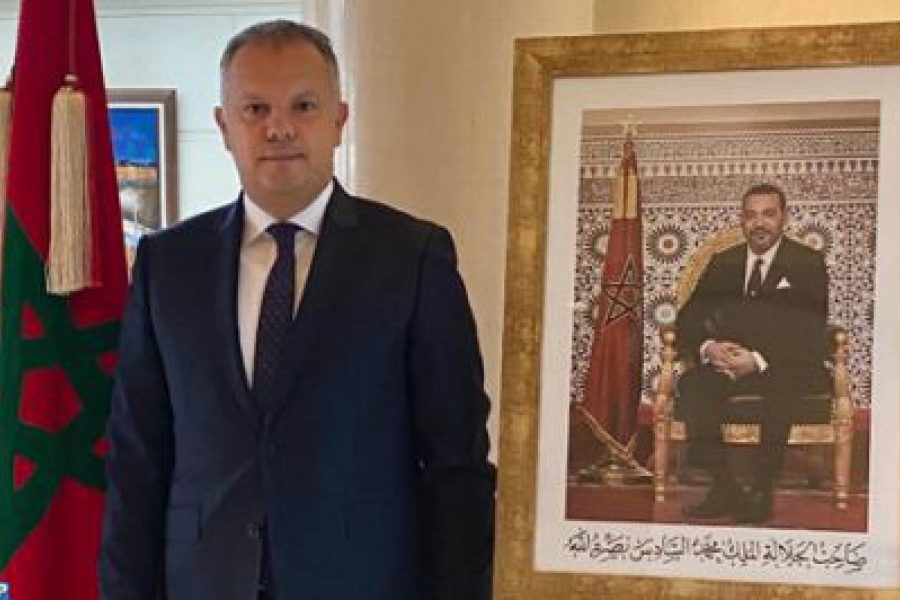
The autonomy initiative presented by Morocco with a view to finding a solution to the artificial conflict over the Moroccan Sahara enjoys growing international support, said Ambassador of the Kingdom to Peru Amine Chaoudri, highlighting the dynamic of sustained development in the southern provinces.
During a virtual seminar organized by the Peruvian International Institute for Governance on the issue of the Moroccan Sahara, Chaoudri said that the autonomy plan, described as “serious and credible” by the UN Security Council, complies with international legality and with the UN Charter, as well as with the decisions of the General Assembly and the UN Security Council.
The issue of the Moroccan Sahara has witnessed important developments in recent months thanks to the insightful vision of HM King Mohammed VI, he said, citing in particular the opening by many countries of consulates in Dakhla and Laâyoune and the decision of the United States to recognize the sovereignty of Morocco over its southern provinces and to support the autonomy plan as the only solution to this regional dispute.
Stressing the historical and legitimate rights of Morocco over its Sahara, the Moroccan diplomat noted that this new dynamic constitutes “a historic turning point which strengthens the support of the international community for the Moroccanness of the Sahara, which cannot be the subject of negotiations or discussions”, specifying that, thanks to the actions of HM the King, “we have moved from the management stage to the stage of changing the parameters in this issue.”
For him, the recognition by the United States of the sovereignty of Morocco over its Sahara is part of this dynamic, noting that the decision will create new momentum in order to settle the artificial dispute over the territorial integrity of the Kingdom, as part of the autonomy initiative.
The importance of the US decision stems from the US status as a superpower and a permanent member of the UN Security Council, he said.








add your comment
Terms of publication : Not to offend the writer, people, sacred things, or attack religions or the divine self, and refrain from racist incitement and insults.