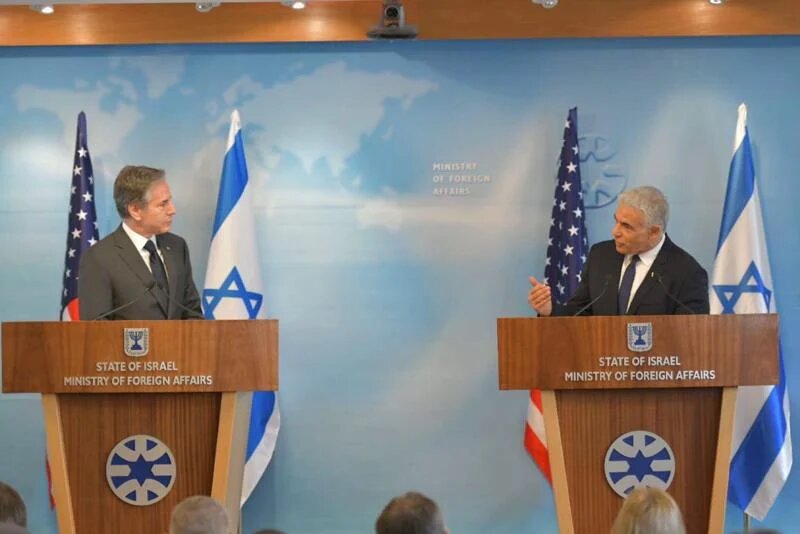
Israel is contemplating a name change for the Negev Forum, a regional cooperation group, in response to a recent request from the United States, according to an Israeli official. The aim is to select a title that is less closely associated with the Jewish state, as revealed by an official speaking to The Times of Israel on Tuesday.
The request, made by the Arab members of the forum including Egypt, Bahrain, Morocco, and the United Arab Emirates, is seen as a positive development that could potentially attract more countries to join.
The Negev Forum emerged from the inaugural Negev Summit held in March, initiated by former Foreign Minister Yair Lapid. This groundbreaking summit brought together foreign ministers from Egypt, the first Arab state to establish peace with Israel, along with the United States, the United Arab Emirates, Bahrain, and Morocco, who normalized relations under the Abraham Accords in 2020.
The US recently conveyed the Arab members’ request for a more generic name for the forum, prompting Israel to consider the change. The forum currently consists of six working groups, which were agreed upon during the initial summit.
Israel’s openness to revising the forum’s name may serve multiple purposes. It could be an effort to encourage Jordan’s participation and garner commitments from member countries for an upcoming summit. Additionally, it might reflect the desire of the current government’s Foreign Minister, Eli Cohen, to move beyond the name coined by Lapid, who currently leads the opposition.
Yair Lapid expressed strong criticism of the Netanyahu government’s contemplation of a name change, stating on Twitter that such acquiescence is a disgrace and indicates a lack of understanding of national pride.
While a specific date for the second summit, initially planned in Morocco, has not been set, it was originally anticipated to take place in March. However, concerns over violence in Jerusalem during Ramadan led to its postponement.
Preparations for the summit seemed promising, as the Negev Forum’s steering committee held its first in-person meeting in Abu Dhabi in January, bringing together numerous officials to plan the gathering of the six foreign ministers.
The US request coincides with signs of some strain in Israel’s relations with its Arab partners. No high-level visits have taken place in either direction, and the Gulf countries, particularly the UAE, have openly criticized Israeli leaders and policies under the new government. In April, ambassadors from Israel’s Gulf allies boycotted an iftar dinner hosted by the Foreign Ministry, signaling their discontent.
Furthermore, data suggests a concerning trend: public support for the Abraham Accords appears to be diminishing among the general population in the newly allied nations.







add your comment
Terms of publication : Not to offend the writer, people, sacred things, or attack religions or the divine self, and refrain from racist incitement and insults.