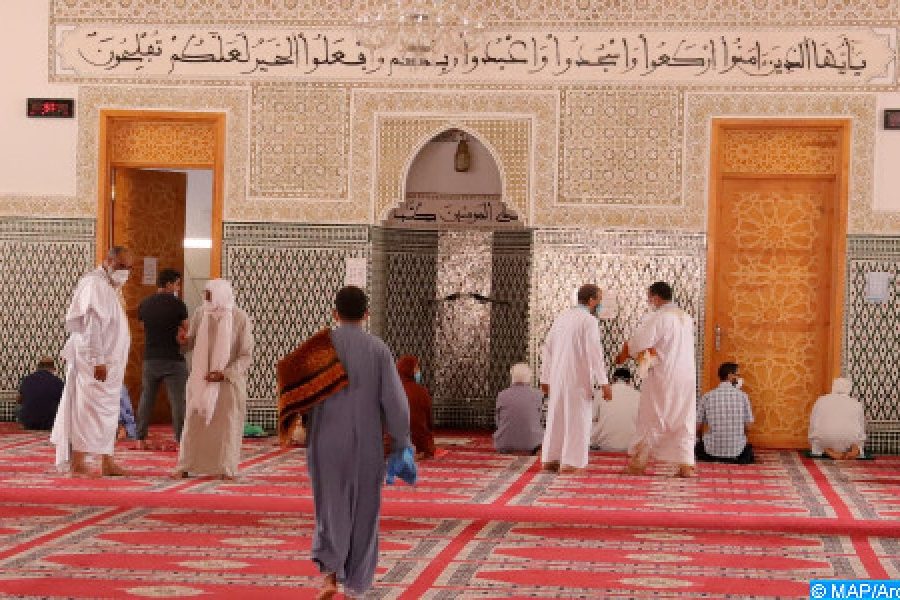
About 45% of Moroccans believe that political decisions should be made in order of religious priority, according to a new survey published by The Arab Barometer in May 2023.
The study “A new dawn for Political Islam?” presented new data on the growth of Political Islam among Arab countries.
The poll showed that young people’s religiosity has increased over the past five years, particularly in Morocco and other nations of the Middle East and North Africa region.
Youth between the ages of 18 and 29 are more likely to favor the role of religion in politics. In six of the nine Arab nations covered by the survey, young people are more likely to support the necessity of religion in politics.
Young people in Libya reported a 22% increase in support for this ideology, followed by Morocco with 20%, Jordan with 19%, Sudan with 10%, Palestine with 8%, and Egypt with 6%.
In general, Morocco saw a 24% growth in Political Islam, going from 21% in 2018–2019 to 45% in 2021–2022, indicating that more Moroccans now prefer to be governed from an Islamic perspective.
Between 2018 and 2022, rates rose in Arab nations, with Jordan rising from 34% to 49%; Tunisia from 21% to 45%; Libya from 30% to 50%; and in Lebanon, they went from 20% to 22%.
Sudan registered the highest percentages of political Islam, with an increase of 62% of the population believing that authorities should follow religion.
Islamist parties are now less influential in politics than they were in the recent years that followed the Arab Spring revolutions. The Middle East and North Africa region, however, continues to embrace the use of religion in politics, according to the survey.
The survey findings do not necessarily imply that political Islam as an ideology will become a mainstream movement, as it did prior to the Arab revolutions.
However, the concept of religion’s influence on politics has become more widely spread in the region’s population.



add your comment
Terms of publication : Not to offend the writer, people, sacred things, or attack religions or the divine self, and refrain from racist incitement and insults.