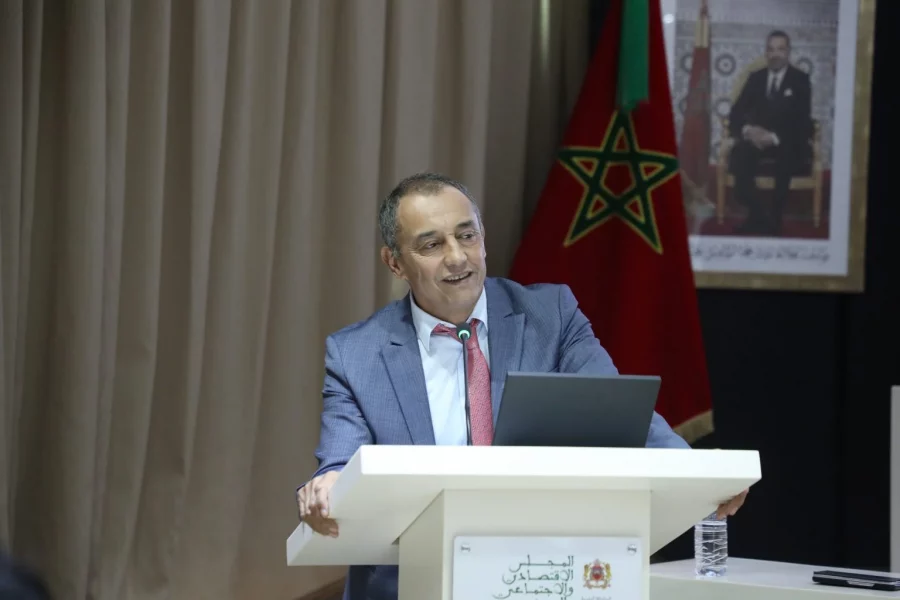
The President of the Economic, Social and Environmental Council (EESC), Ahmed Reda Chami, warned on Wednesday in Rabat against the worrying and alarming strong degradation of the national forest cover estimated at 17,000 hectares annually, calling for more sustainable forest management.
The forest, which covers 13% of the total area of the national territory and is home to 7 million inhabitants (or 50% of the rural population in a precarious social situation), is undergoing a sharp deterioration in its cover estimated at 17,000 ha/year, lamented, Chami.
This deterioration of forest cover is mainly due to the effects of climate change, excessive removal of forest resources (3 million tons per year of firewood) and forage overexploitation (2 to 3 times the capacities of forest ecosystems), he explained, adding that only 20 to 30% of the potential yield of the productive forest is reached.
Recalling, in this sense, the great rehabilitation and restoration effort made by the public authorities, in particular the implementation of the “Forests of Morocco 2020-2030” strategy, which aims to restore forest ecosystems and promote these resources according to a sustainable approach.
Based on the diagnosis, the EESC recommended the development of a concerted and shared vision, between the different parties concerned by involving local populations, in order to transform the forest sector into a more resilient space, to mobilize sustainable investments and to promote carrier sectors (aromatic and medicinal plants) and to create local economic alternatives to reduce the dependence of these populations living on forest ecosystems, he said.
The Council also called, according to Chami, for the establishment of a forest code that defines the rights and obligations of all stakeholders and facilitates the updating of the texts in force, the gradual increase in the area of protected areas from 3.76% to 30% by 2050 and the intensification of reforestation and natural regeneration operations through national planting campaigns by local authorities as part of their prerogatives, civil society and economic entities.
It also involves the mobilization of existing funds (climate green fund, climate change adaptation fund, biodiversity fund, etc.) and the promotion of sustainable investments and tax incentives for companies involved in reforestation, as well as the establishment of a payment system for ecosystem services (PES) in line with the volume of exploitation of forest resources and its impact on their sustainability.
The EESC President also called for the establishment of an integrated and territorialized information system and the use of artificial intelligence in the monitoring of planting, monitoring and fighting forest fires, relying on the expertise of the private sector and partnership as well as forest certification, in addition to the development of ecotourism in protected areas, taking into account their cultural, territorial and ecological specificities.
This opinion was developed according to a participatory approach with all the actors concerned, while taking into account the results of the consultation launched through the “Ouchariko” citizen participation platform on this self-saneousty relating to forest ecosystems.




add your comment
Terms of publication : Not to offend the writer, people, sacred things, or attack religions or the divine self, and refrain from racist incitement and insults.