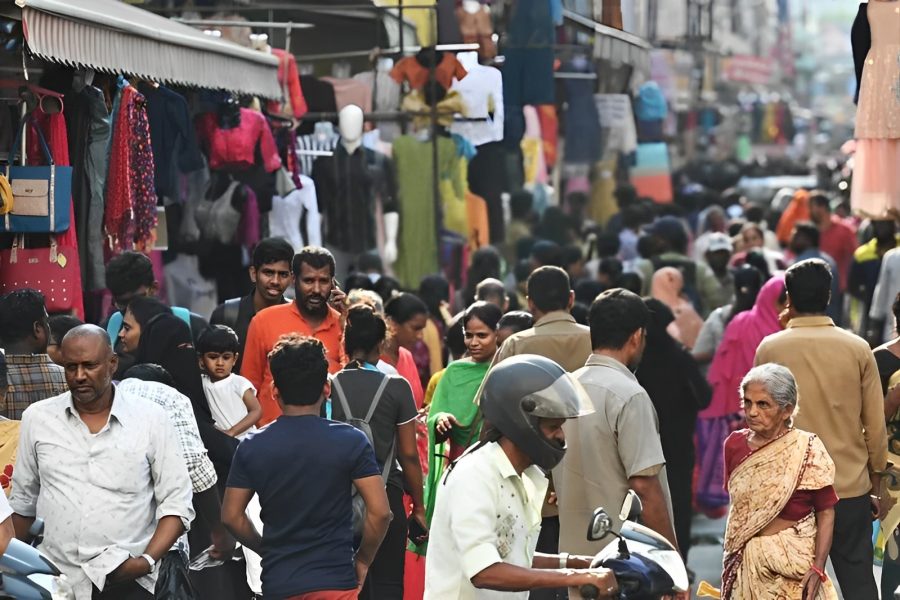
India is about to surpass China as the world’s most populous nation in the coming days, the UN population data chief told reporters on Monday.
The main driver of these trends is the fertility level in the two nations, said John Wilmoth, Director of the UN Population Division. Together, China and India’s collective populations equal more than one third of the world’s eight billion citizens.
By the end of April, India’s population is expected to reach 1,425,775,850 people, with projections indicating further growth for several decades more, the UN said. That’s slightly higher than China’s global record of 1.4 billion in 2022.
“China’s population reached its peak size in 2022 and has begun to decline,” Mr. Wilmoth told a press conference at UN Headquarters in New York. “Projections indicate that the size of the Chinese population could drop below one billion before the end of the century.”
With nearly identical levels of fertility in 1971, just under six births per woman, the countries’ experiences half a century ago have charted their population path into the 21st century, according to the UN Department of Economic and Social Affairs (DESA).
By the end of the 1970s, fertility in China’s rate fell by half, to three births per woman. Meanwhile, it took India more than three decades for its fertility rate to reach that level.
“During the second half of the twentieth century, both countries made concerted efforts to curb rapid population growth through policies that targeted fertility levels,” DESA said. “These policies, together with investments in human capital and gender equality, contributed to China’s plummeting fertility rate in the 1970s and to the more gradual declines that followed in the 1980s and 1990s.”
By 2022, China had one of the world’s lowest fertility rates, which was 1.2 births per woman on average over a lifetime, according to the UN World Population Prospects 2022 report. In the 1980s, China implemented the “one child policy” that limited families to one child each, which ended in 2016.
At the same time, India’s current fertility rate – two births per woman – is just below the replacement threshold of 2.1, the level required for population stabilization in the long run in the absence of migration, says the UN report.










add your comment
Terms of publication : Not to offend the writer, people, sacred things, or attack religions or the divine self, and refrain from racist incitement and insults.