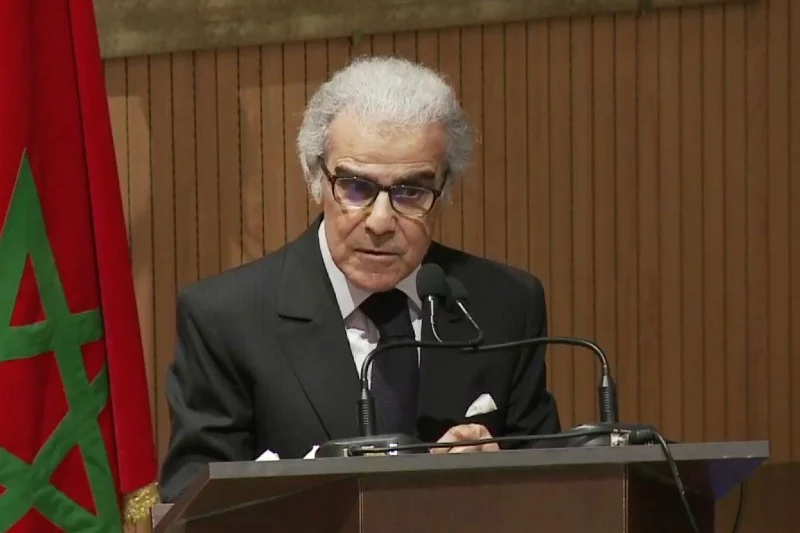
Abdellatif Jouahri, the Wali (governor) of Bank Al-Maghrib, declared that the rise in “cash” transactions has led to the conclusion that the operation should be subject to a tax.
During a press conference on Wednesday at the bank’s headquarters in Rabat, he responded to a question from Hespress by saying that Morocco had never considered using this strategy before, but that the rise in the number of “cash transactions” now necessitates doing so.
Official data shows that cash circulation among Moroccans increased at the end of last year by about 10.8% on an annual basis, reaching about MAD 354.8 billion.
As registered electronic wallets reached roughly 8 million, BAM’s governor stated that the payment system over the phone, which aims to eliminate dealing with “cash,” has been ready for years, but he claimed that transactions through it continue to fall short of expectations.
The “M-wallet” mobile payment method is still new in Morocco; it consists of a phone application that is connected to a bank account or a payment institution account.
This wallet makes it possible to complete multiple payment operations at once, including sending money to someone else by entering their phone number, paying for goods and services for free at verified retailers, and paying for utilities like water, electricity, taxes, and phone service. It also allows withdrawals from ATMs (automated teller machines.)
Jouahri emphasized that altering Moroccan culture and attitude is necessary to make this method more frequently used.
“Morocco is a country where dealing in cash prevails greatly, in which it’s classified among the first countries in the world, and this is something that has several downturns, as this phenomenon can be exploited in the financing of terrorism and money laundering.”
According to the governor, the use of “cash” comes at a cost, and in return digital payments guarantee safety, and speed at a low cost.
In this regard, he called for working to change the culture of Moroccans by underscoring the negative aspects of dealing with “cash” and the positive aspects of paying over the phone.
The governor of BAM believes that the government should adopt digital transformation with regard to public support programs in order to advance this cause.
He noted that the experience of utilizing the phone-based payment system in the “Tayssir” program to support the education of students in rural areas produced largely positive outcomes, but he also acknowledged that “It was not at the level of ambitions because the proximity merchants were not involved.”
Jouahri’s statements were delivered at a press conference that he chaired on the subject of financial inclusion, alongside Queen Máxima Zorreguieta of the Netherlands, present as Special Adviser to the United Nations Secretary-General for Inclusive Financing for Development.
Answering a Hespress’s question, Queen Maxima said that “The size of the informal sector in Morocco impedes the development of paying over the phone.”
She added that “The problem also lies in the fact that many merchants do not want to adopt payment over the phone because they will have to pay the value-added tax. It is a complex tax for them in terms of its management, calculation, and cost.”
Speaking about the situation of financial inclusion in the Kingdom, the Queen mentioned that “Morocco is one of the countries that has made tangible progress in financial inclusion, as official data for the year 2021 indicate that 44% of Moroccan adults have access to an official financial account, either from an official financial institution or mobile money service provider, compared to 29% in 2017.”
The Queen stated that “about 75% of Moroccans perform cash transactions, and this impedes access to multiple financial services, such as savings, borrowing, and insurance, and has an impact on their lives and their families.”
Recommendations for Morocco
The Moroccan government should digitize all payment processes for the benefit of the state, small businesses, as well as merchants, according to the Queen, speaking as Special Advisor to the UN Secretary-General for Inclusive Finance.
This will make it easier for them to enter the formal financial system and give them access to financial services, she explained.
Queen Maxima also called for “fighting the payment of wages in cash by some companies, and working to digitize the value chain of the agricultural sector, because it still depends entirely on cash, with the aim of opening the way for farmers to obtain insurance against climate changes.”
The data presented on the occasion of the Queen’s visit to Morocco indicates that there are still 15 million adult Moroccans who do not have a bank account according to 2021 numbers.
This means that this group does not dispose of guaranteed tools to save in order to meet emergency expenses and necessary insurance, or of the possibility of obtaining loans.
It is noteworthy that the official visit of the Queen of the Netherlands is the first of its kind
Queen Maxima met with a number of government officials and regulatory institutions, in addition to representatives of the banking sector as well as a number of women’s associations.




add your comment
Terms of publication : Not to offend the writer, people, sacred things, or attack religions or the divine self, and refrain from racist incitement and insults.