
Two new earthquakes struck Al-Hoceima on Sunday last week, not exceeding 4 degrees on the Richter scale, which created a state of panic among the locals, as they wonder on the readiness of the country to face a natural disaster.
For Moroccans, a state of anxiety grew after the Al-Hoceima quakes, which coincide with the devastating Turkey-Syria earthquakes that struck earlier last week, resulting in tens of thousands of casualties and severe structural and economic damage, which begs the question, can that happen in Morocco?
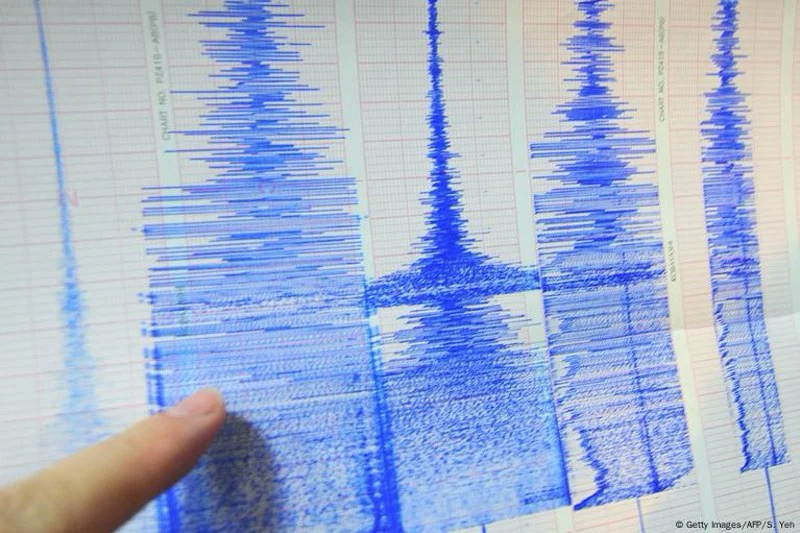
The National Institute of Geophysics announced that the earthquake in Al-Hoceima measured 3.8 degrees on the Richter.
The institute stated in an alert bulletin that this tremor, whose epicenter was determined in the Imrabatan group, occurred at 9:36 in the morning (GMT +1).
The institute announced a second recorded earthquake of 4.3 degrees in the Ankur group of the region, which occurred at 7:59 in the morning (GMT +1).
A severe earthquake according to Richter scale, begins at 7 degrees, which is considered a major earthquake, cause for serious damage kilometers from its epicenter.
For decades, the Rif region was known as a seismically active region, and the memory of its inhabitants still retains scenes of the devastation left by the 2004 earthquake, which claimed the lives of hundreds of people in the region,, and then the 2016 earthquake, which had a magnitude of 6.1 on the Richter scale and left significant material damage.
Nasser Jebbour, Head of Division at the National Institute of Geophysics (ING) spoke in detail about Morocco’s situation regarding large scale natural disasters in an interview with Hespress EN, where he explained what could be Morocco’s worst scenario, within this context, is already apparent through its history.
Morocco, by its peculiar geological context and proximity to the Nubia-Eurasia plate boundary (NEPB), is the western African littoral that is most exposed to earthquake-induced tsunamis.
Jebbour explains the most severe submarine earthquakes felt in Morocco were those generated offshore along the Atlantic coast.
Some of these events were tsunamigenic, as was the case of the November, 1st, 1755 event (Great Lisbon Earthquake & Tsunami).
The expert explains that the 1755 tsunami affected both coastal cities and inner Morocco.
Since coastal cities were not as important as the inner cities like Fes, Meknes or Marrakesh at the time, the repercussions on a national scale were minor.
This is why Jebbour stresses a tsunamigenic event in the current times would be more severe, as the most important structural and economic zones currently are across the kingdom’s Atlantic coastline.
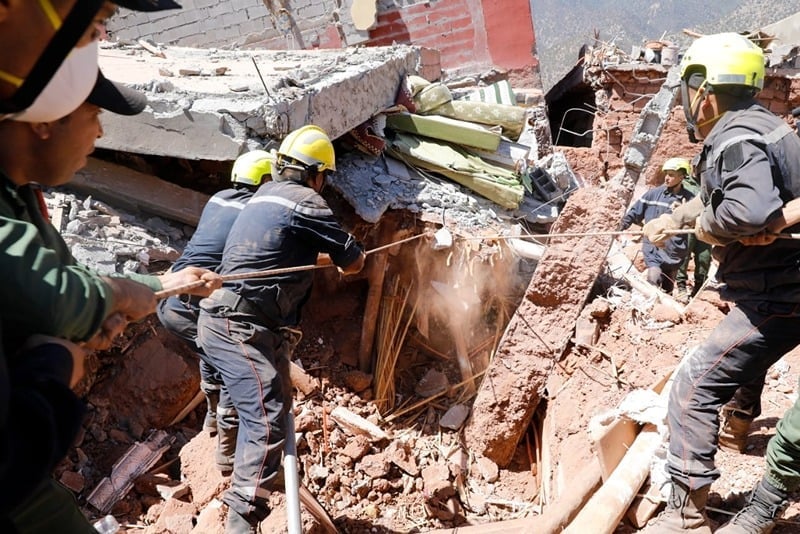
In February of 2004, Al Hoceima witnessed one of the most violent earthquakes that struck northern Morocco, with a magnitude of 6.3 on the Richter scale.
It left huge human, material and urban losses, even the neighboring areas were affected by it.
Between 628 and 631 people, mostly residents of rural areas, were killed, 926 injured and up to 15,000 displaced.
Jebbour said that “Morocco established a national strategy gathering all ministries in order to lessen the damages of any natural disaster, as its effects would have an important impact on all legislative bodies.”
Even though the north of Morocco is the most active region in terms of quakes, Jebbour explains that the reason the atlas mountains were formed is due to seismic activity in the region, which renders the mountain chain a “susceptible area for earthquakes.”
Seismic standards are mandatory. In addition to the responsibility of the contracting authorities.
Morocco is made up of five seismic zones, according to Jebbour on the study of geological risks. These zones were mapped out according to their geophysical characteristics, and factor in over the seismic standards set for each zone.
New technologies are deployed for the construction of resistant structures, he adds “government facilities are obligated to align with the seismic standards, private-owned buildings are recommended to do so as well.”
Morocco has a set of rules and laws governing earthquake-resistant construction. These texts are updated to meet the best standards in the Kingdom.
The latest is the Seismic Building Regulations called “RPS 2000 version 2011”.
It is a reinforced and updated version of the Code which was established in 2002.
This law, which sets the rules for the calculation and dimensioning of structures to strengthen the resistance of structures to seismic tremors, enacts the technical provisions for civil engineering and design architecture allowing buildings to resist seismic tremors, and sets itself the objectives of ensuring the safety of people during an earthquake, as well as the protection of material assets.



add your comment
Terms of publication : Not to offend the writer, people, sacred things, or attack religions or the divine self, and refrain from racist incitement and insults.