
headscoring more goals than the opponent, or conceding the least? A question that Morocco’s Head Coach Walid Regragui took upon himself to answer in the World Cup last year, with a hint of genius in the making.
It’s question that encapsulates the history of the game’s development and schools of thought that, for many generations, shaped how the fans watch the game, and more importantly, how teams win games and titles.
The argument of defense versus offense existed for centuries in war, politics.. In football, as long as the game’s sphere spanned beyond its European cradle. The spectacle and show business only grew with the game’s popularity and influence, which now goes beyond the game itself, Qatar’s World Cup project being a good example of that extent.
**The Build-up**
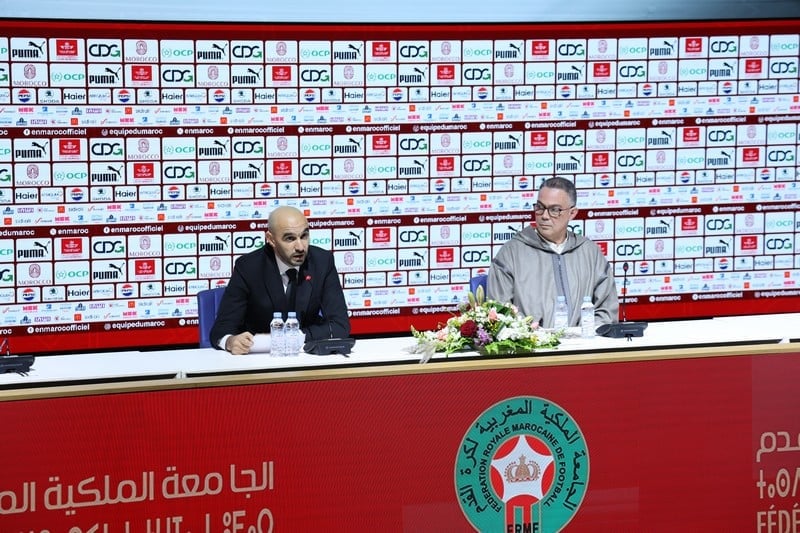
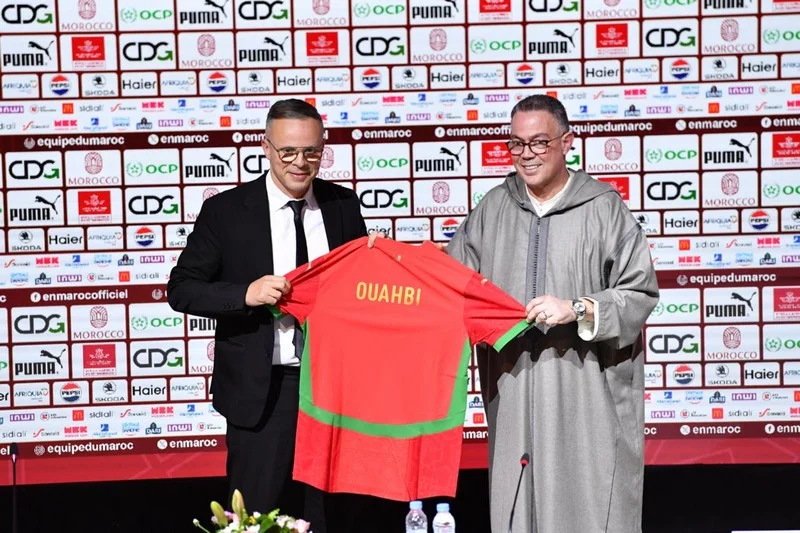
Walid Regragui has been Morocco’s National Team Head Coach since late August 2022, around three months before Qatar’s World Cup. With several players injured, as well as a couple players who retired due to fall outs with former Manager Vahid Halilhodzic, Regragui’s options were limited.
A comeback of the likes of Hakim Ziyech and Hamdallah to the national team proved to be good signs showing dedication from the 26 players-squad heading into the most important competition in world football.
The competition brings together the biggest teams in the world to play for an illustrious prize that is as important to the players and their careers, as it is to world leaders, for their country’s exposure, image and influence around the world, the stakes were high.
**As the crowds cheer for the mighty**
Football experienced through decades a phenomenon where, with a surge in popularity comes more requirements for a “show”, one that’s packed with excitement, goals, celebrations, star players and offensive plays never failing to deliver the emotion. The televised era of football, with the unimaginable heights it’s experiencing today, requires goals to be scored, as well as conceded.
The Qatar World Cup has seen the most goals scored in the tournament’s history, followed by France’s 1998 edition, while the last five editions of the competition rank variously just under it. This shows a growing trend for goals and offensive minded teams in the last two-three decades, ones that don’t shy away from taking tactical risks to seize an advantage up front in order to out-score the opponent.
This leaves another aspect of the game in a shadow of confusion, is defensive play boring? The football business says yes. Football in the money business sees profit in the neutral audience, the audience that watches games for the spectacle, goals never failed to deliver that.
**Italy’s take on the road to silverware**
“If you want a spectacle, go to the circus.” Said Head Coach Massimiliano Allegri in 2017, with reference to his Juventus side being framed by European media not being as fun to watch as Napoli, despite winning trophies.
In 2018 he said: “Many people watch games, only a few look at them,” and “When I quit I want someone to explain this thing about ‘playing well’, I am fascinated by it.”
Italy has a long and successful history of football, particularly one that’s symbolized by its rigid and organized defensive play. Legendary Italian Football Journalist Gianni Brera said in the 1960s “the perfect game ended 0-0. No one made mistakes on either side. And uncertainty would last until the very end.”
Catenaccio or “The Chain” is a tactical system in football with a strong emphasis on defense. In Italian, catenaccio means “door-bolt”, which implies a highly organized and effective backline defense focused on nullifying opponents’ attacks and preventing goal-scoring opportunities
The term Catenaccio was made famous by the likes of the successful Inter milan’s Alfredo Foni in the Early 60s, or Italy’s Ferrucio Valcareggi in the 70s. It also saw the surge of terms like Libero, or sweeper, as well as the important innovation of the “counter-attack”, Valcareggi’s Italy went on to play its first World Cup final in Mexico 1970 after a controversial campaign where the team were described as “grinding out results”.
This tactical basis fell out of favor with the rise of the fluid “Total-Football”, pioneered by Dutch managers Johann Cruyff or Rinus Michels before him, a system that disturbed man-marking with a fluid interchange and zonal-play, Total-Football is the predecessor of all modern day football’s tactical variants.
**A revival of defensive play**
Morocco’s World Cup Campaign, although ended in the semi-finals against 2018 champions France, was labeled the tournament’s sensation, the story to remember in Qatar 2022. The campaign’s context made for a good emotional story, one inspiring for passion and dedication, but not so much for its tactical innovations, or so it may seem.
Offense was, as is the case for most teams in modern football, the key element in tactics in the World Cup, with few exceptions like Japan’s versatile formations that mutate depending on the opponent’s weaknesses, or Louis Van Gaal’s Netherlands that depend on conservative, no-nonsense defense and midfield dominance.
Regragui’s version of Morocco, which is similar to Brazilian Head Coach Jose Faria’s 1986 Morocco in its vision, is one where the goal is to concede the least, and secure any lead with all-out defense.
A testament shared with Italy’s Catenaccio, although not an exact copy, Regragui decided to take inspiration and applied some of its “outdated” elements to create one of the tactical masterclasses in recent years, and football professionals did not fail to see that.
Former French International and Football analyst Mikaël Silvestre details, in an interview with sports website Betting Expert, the style of play of the Atlas Lions: “The style of play of Morocco is similar the catenaccio. They play like that because they have no choice but it oddly works: they are very well positioned on the pitch and it’s difficult to break through their defense. And then they have something more in terms of commitment, even passion. That’s why they eliminated Spain and Portugal. Besides, they could even have scored more goals against the Portuguese.”
As Silvestre describes, Morocco’s style of play is evidently inspired by the Italian tactic. One example, the “Libero”, although not behind the defense, comes in the form of Sofyan Amrabat marshaling any defensive operation to nullify opposition attacks with aggressive interceptions and positional overloads when needed.
Hakim Ziyech and Azzedine Ounahi, Achraf Hakimi and Noussair Mazraoui were integral to the Regragui’s tactical setup to bear fruit, as well as successors to Helenio Herrera’s Inter Milan. Although his “Grande Inter” side were known primarily for their defensive strength, they were equally renowned for their ability to score goals with few touches from fast, sudden counter-attacks, due to Herrera’s innovative use of attacking, overlapping full-backs. Most goals scored by Morocco on an open play were a few passes away from breaking defensive lines.
Regragui saw the importance of set pieces. In the World Cup, due to high intensity and pressure, these chances are a major part of a team’s occasions to score. And with the likes of Ziyech, being a skilled set piece taker, and Youssef En-Nesyri’ athleticism being an asset, Morocco prowled the pitch waiting for these occasions to find the back of the net.
Regragui’s Managerial vision took inspiration from Italian football tactics, Faria’s devotion to realism in football, and sprinkled the flair of talented Moroccan playmakers on top. A medium block ensuring constant pressure by a “Shadow Striker” and a “Libero” Defensive Midfielder are innovations that glued the squad that, on paper, looked to be an underdog since the first rounds.
A testament to the ground-breaking innovation by Regragui is the round of 16, where Morocco faced arguably the most dedicated “Total Football” team in Spain, as mentioned before, the bane to the Catenaccio, with their version of the tactic in the famously labeled “Tiki Taka”, the nemesis to Defensive styles of play.
The 120th minute mark’s result of 0-0 could speak less to neutral fans, but the content of the game will forever be evidence of the first step towards the resurgence of defensive teams that, beyond scoring goals, can thwart the most offensive teams, and leave the game with a positive result.




add your comment
Terms of publication : Not to offend the writer, people, sacred things, or attack religions or the divine self, and refrain from racist incitement and insults.