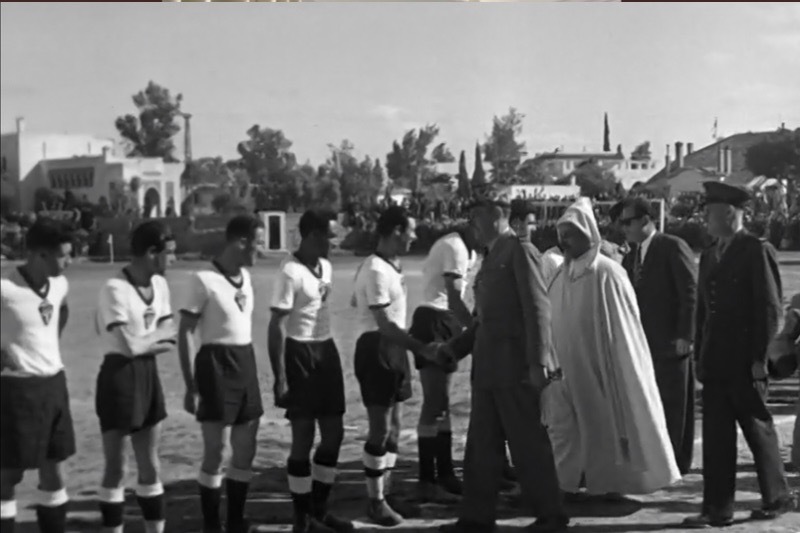
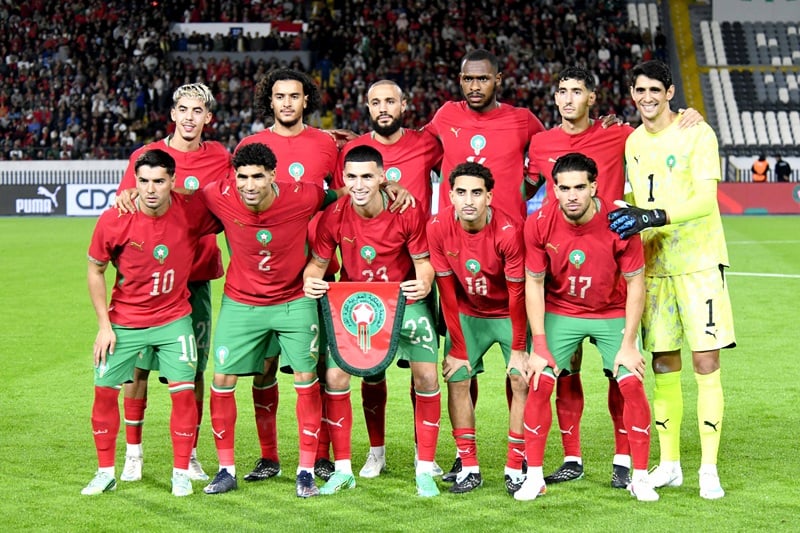
Morocco wafted into the spotlight in this year’s World Cup, in Qatar, much like a trojan horse would. Within, it carried the aspirations of African and Middle Eastern countries whose last taste of qualification to the quarter-finals of football’s biggest contest happened with Ghana’s 2010 victory.
For Arab nations, this would be a first in the itinerary of the game that was introduced to the region a century ago, and whose dark history is now seeping into the public discourse with Morocco’s win.
Football arrived in Africa and the Middle East in the late 19th century. The game was an integral part of the ‘civilization mission’ of colonizers who found the game strong and cheap enough to give the allegedly savage instincts of Africans and Arabs a good physical outlet.
In Morocco, it was the Spanish and French colonists and military who introduced and spread football. They created sports structures, associations, and federations – in a way that not only excluded and marginalized local populations, but which also replaced traditional games, such as the Amazigh Dinifri.
However, this control was often flipped on its head and used against the colonizer. In Zanzibar for instance, local players would boycott games. Indian teams in Calcutta used football as a form of resistance by fusing it with native culture and playing barefoot.
It also goes without saying that Africans and Middle Easterns did not simply fall for Western sports’ tricks and adopt them; instead, they took an active interest in the sport for their own interests and in accordance with their own rules.
Such is the case of the decades leading to independence movements, when African and Middle Eastern societies turned football from a sport identified with Europe into an anti-colonial weapon to inspire support for national movements.
Granted, politics were always infused in football, beginning as a tool for colonial resistance, where ‘beating the masters at their own games gives a powerful lift to those people who have so often been told, however euphemistically, that they are inferior,’ American anthropologist, David Israel Kertzer explains.
In Post-colonial realities, football remained intrinsically political as International soccer contests became symbolic battle grounds between nations and others – in this way it perpetuated a ritual that ventilated national chauvinism and hostilities toward other countries.
By the end of the 1960s, football competitions became a forum for state propaganda. For instance, Moroccan and Algerian governments turned games into rituals for the celebration of national pride and collective identity.
As the main post-national political figure, late King Hassan II turned to football to strengthen his political authority, but also used the game’s emotive power in the historically tense political relations with Algeria.
“The imagined community of millions seems more real as a team of eleven named people. The individual, even one who cheers, becomes a symbol of his nation himself,” writes British Historian Eric Hobsbawm.
Hassan II achieved this by putting military figures in charge of national teams and consecutive boards of the national football federation. He actively participated in football’s development. The goal was to harbor a sense of Moroccanness that is antagonistic to the neighboring competitor.
In Africa United: How Football Explains Africa, author Steve Bloomfield explains that this rivalry isn’t particular to Morocco-Algeria, and outlines a number of sporting rivalries between, to name a few, Somalia and Ethiopia, Algeria and Egypt, Ghana and the Ivory Coast, and Chad and Sudan.
In the Morocco-Spain quarter-finals game, the stars aligned and the Moroccans won, unleashing a torrent of political and historical commentary on regional tensions that have long beset the relationship between Morocco and Spain.
Jokes were made on Morocco’s rule over al-Andalus – the name given to the formerly Muslim-ruled area of Spain, as well as on Ceuta and Melilla. Maps were being shared showing Morocco’s territory extended over Spain. And mostly, colonial history was brought back to the forefront in a cathartic event of a game that cannot escape its political roots.
tunisia winning against france and now morocco playing against spain, this world cup is truly about healing our colonial trauma ☝??pic.twitter.com/0SS3al1HNa
— israa//finals (@rorisbrainrot) December 1, 2022
judging potential World Cup match ups not by the quality of the teams but by the political and colonial history between the countries >>>>
— daniel (@westanieldaniel) December 4, 2022
This entire World Cup is the best colonial revenge fantasy ever
— Anton Jäger (@AntonJaegermm) December 6, 2022
Thus, Spain’s elimination by #Morocco from the 2022 World Cup can be added as one of the negative repercussions of the expulsion of the Moriscos between 1609-1614, since it is very likely that the goalkeeper Yassin Bono has a Morisco origin… Congratulations Morocco ? pic.twitter.com/4LkbY5vvfN
— Houssem E. Chachia حسام الدين شاشية (@ChachiaE) December 6, 2022
— Out Of Context Football (@nocontextfooty) December 6, 2022
Tactical advice for the Moroccan team. #Morocco #MORSPA pic.twitter.com/b6AMTfp6Hm
— Roshan M Salih (@RmSalih) December 7, 2022
Well hello… ??♂️ pic.twitter.com/rrnYxxEHDd
— حلال ہینڈل (@Halaal_Handle) December 2, 2022




add your comment
Terms of publication : Not to offend the writer, people, sacred things, or attack religions or the divine self, and refrain from racist incitement and insults.