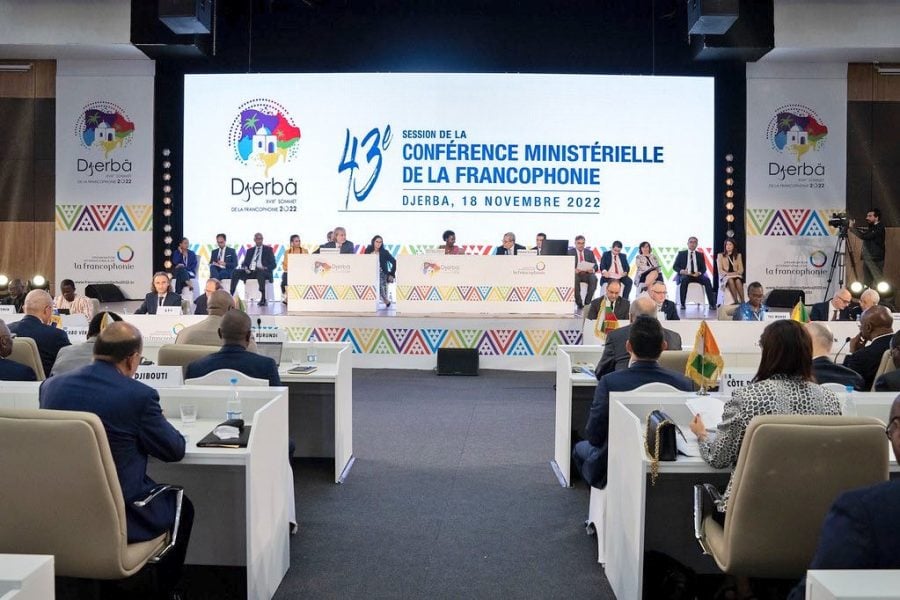
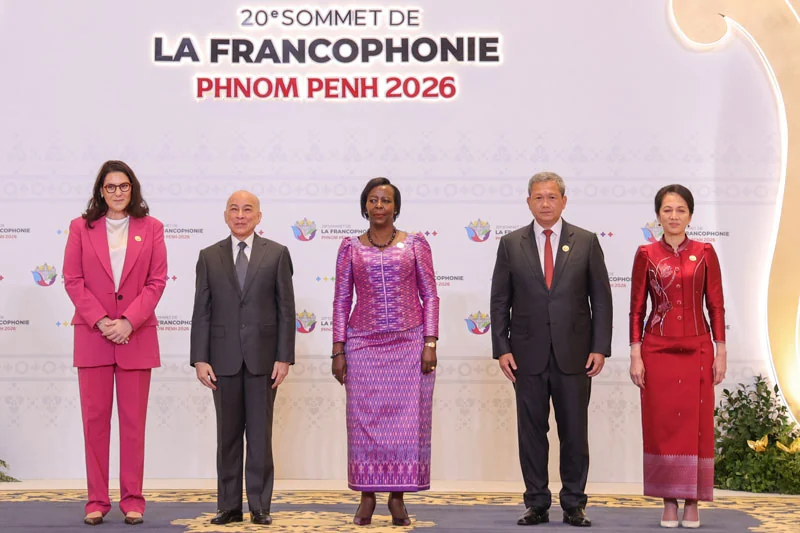
Morocco’s faint presence at the Francophonie Summit this weekend held in Tunisia in Djerba, reflects the staleness Moroccan-Tunisian relations are undergoing since the outbreak of the diplomatic crisis.
This diplomatic neglect of the event, however, could also reflect Morocco’s plan to stray away from French as a primary second language in the Kingdom, favoring the Anglo-Saxon tongue for the years to come.
In Djerba, Rabat is represented by “a delegation led by Nadia El Hnot, Director of Cultural Cooperation and Action at the Ministry of Foreign Affairs, and personal representative of the Head of Government to the International Organization of La Francophonie,” reports MAP.
El Hnot took part in the ministerial meeting of the organization of the Francophonie on Friday.
Traditionally, Morocco sends high-level ministers to take part in such summits. For example, the Minister of Foreign Affairs, Salaheddine Mezouar, led the Moroccan delegation to the 2014 Dakar summit.
Later, in October 2019 in Monaco, Mohcine Jazouli, then Minister Delegate to the Minister of Foreign Affairs, chaired the Moroccan delegation.
Even Minister of Foreign Affairs Nasser Bourita represented the Kingdom in the 41st session of the ministerial conference of the organization of the Francophonie, organized in May 2022 remotely.
Tensions in the Maghreb
Most accredit Morocco’s choice in representation for this summit to the ongoing tensions between Morocco and Tunisia.
The crisis initially ensued due to Tunisian President Kaïs Saïed’s decision to receive the head of the separatist polisario, Brahim Ghali, last August at the 8th edition of the Japan-Africa Summit (TICAD).
That same week, the kingdom recalled its ambassador to Tunis for consultations, to which Tunisia responded recalling its own ambassador.
Moroccan officials, such as Government Spokesperson Mustapha Baitas, called Saïed’s diplomatic faux-pas “unjustified“ and “serious,“ to the amazement of Tunisian officials, who seemed surprised by Morocco’s reaction.
The Kingdom however, has increasingly become more demanding of its partners in regard to Western Sahara, outlining it is now the definitive factor in weighing diplomatic relations.
This weekend’s delegation to the Summit, one of the lowest levels of representation of Morocco for participation in an international summit, reflects the Kingdom’s unapologetic diplomatic stance vis-a-vis its territorial integrity.
In addition to the spat with Tunisia, Morocco’s snob for the Francophonie summit reflects yet another position towards a partner with whom relations are undergoing a silent crisis: France.
A relic of unbalanced times
France’s ambiguous position on the Moroccaness of Western Sahara has triggered a silent, cold crisis between both countries.
The French language has dominated the Moroccan academic, professional, and artistic fields since its independence in 1956.
But the European republic, which has a history of utilizing language as a hegemonic tool, is losing its grip on Morocco and Africa as a whole.
On the political and strategic fronts, the long history of French influence in Africa has suffered multiple setbacks in recent years.
With a gradual military withdrawal from the very strategic Sahel region, a fading cultural and political hegemony over its former colonies in West and Central Africa, France is redirecting its efforts towards a less direct approach.
By increasingly allocating considerable spending to its “International Organization of Francophonie” (OIF), an 80-member institution designed to promote the French language, France is attempting to revive support for the language and, indirectly, the French government, which may explain Morocco’s sudden lack of interest in the event.
The number of French speakers in the world could double within 50 years thanks to the large portion of African countries that have adopted the language as their official foreign tongue.
By encouraging people to learn French, Paris not only hopes to maintain a fragment of its cultural influence, but it also seeks to dilute the painful bearings on the collective consciousness, linked to its colonial past.
A democratic tongue
A study, commissioned by the British Council last year, showed that more than two-thirds of Moroccan youth are convinced English will succeed in replacing French in the next five years.
According to the study, young Moroccans are increasingly seeing English as a necessary tool to improve their socio-economic conditions.
Approximately 82% of the respondents indicated they have “positive associations with English.”
According to the survey’s 15-25 year old participants, 65% of young Moroccans regard English as important, while 62% feel similarly about Arabic and 47% about French.
Currently, 52% of all internet websites are in English, while 95 of the world’s top 100 universities teach in English.
Meanwhile, 70% of employers in non-English speaking countries in key industries say English is of crucial importance, leading Moroccan youth to favor learning English and having the language spread in importance domestically.
The shift to English is likely to only accelerate in upcoming years, according to surveyed youth, with 85% of participants expecting an increase in the use of English among young Moroccans over the coming decade.
Currently, young people in Morocco learn English in school (37%), online (17%), through language apps (7%), and through training institutes (6%).
With affordable high-speed internet available in most places in Morocco, movies, series, and online activity are helping familiarize Moroccans with the language, with more young people (42%) saying they gained their English skills through these media compared to 37% who learned English at school.
The fact that a large number of Moroccan English speakers are self taught, reinforces a common sentiment in Moroccan society, that English is a more accessible and democratic language than French.
The simple matter of fact is that learning French has long been linked to access to quality education, while most young Moroccan English speakers have learned the language through pop culture, TV, music, and movies.
Democratic technological mediums, especially with the advent of the internet, have taken privilege out of the equation. This factor organically allows for the emergence of an important segment of society that favors English over French.
As Moroccans increasingly call for a more English-friendly environment, and strong elementary English training in Moroccan schools, the high demand for English in Morocco is bound to override the French wave.
Morocco’s future, written in English
The overwhelming public excitement over English in Morocco has evidently reached the executive, who now see the inevitable need for the language to advance educational and economic performance.
After multiple officials’ denials back in 2019, Director of Curricula at the Moroccan Ministry of Education Fouad Chafiki told Hespress EN last month that the ministry has rolled out a project to make English the primary language of learning scientific subjects in all levels of high school curriculums.
Five model high schools that adopted English as the learning language for all scientific subjects since 2015, as well as 250 others that introduced this year English as an optional language, attest to the success of the experiment, Chafiki said.
By 2030, Morocco will officially have four classes of students all over the country who were taught English for six years in both middle and high school.
“There is a strong belief that English could potentially become Morocco’s first foreign language in a couple of years,” the official told Hespress EN.
Three birds, one stone
Though Morocco’s participation in the recent summit has made domestic headlines, none can say for certain who this diplomatic choice was taken for.
But what is evident, is that Morocco’s decision and choice of representation deliver many messages to governments and the public.
In an attempt to categorize, the Kingdom is categorical: the settlement of the territorial integrity debate for Morocco comes before all else, no matter the history with the nation is question or the intrinsic ties shared with the country.




add your comment
Terms of publication : Not to offend the writer, people, sacred things, or attack religions or the divine self, and refrain from racist incitement and insults.