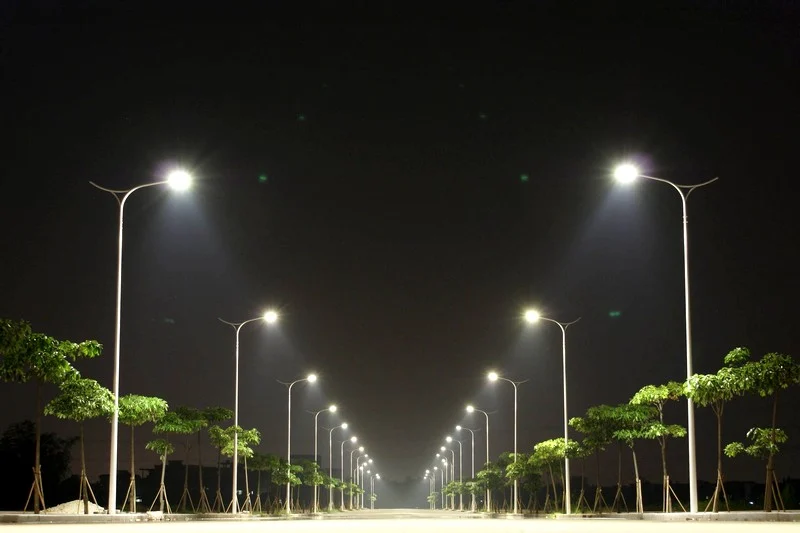
Morocco’s Interior ministry announced that it will begin reducing the capacity of street lighting at night by 20% to 30% in the coming days, as Moroccans will find themselves forced to adapt to new measures.
With this measure, Morocco is making an effort to save energy, as gas supplies and high energy costs weigh on regional budgets.
In a circular sent to the governors of the regions seen by Hespress EN, the Ministry of the Interior ordered the partial use of public lighting in residential areas starting at 11 pm, “providing that it does not affect safety and public security.”
The measures that will be taken in order to rationalize electricity consumption in public lighting networks include reducing the intensity of lighting lamps and limiting public lighting to city entrances and main streets.
The same procedures will be applied in parks, public gardens, playgrounds, recreation spaces, and beaches.
Lights will be switched off on one side of the streets in case of double lighting for two sides.
The measures taken by the Ministry of the Interior do not extend to public spaces only, but extend to public buildings, where territorial authorities and institutions are demanded: “to take all necessary measures for this purpose.”
According to the same source, territorial groups and bodies are required to turn off lights and devices at the end of work days.
The Ministry of the Interior also called on its bodies to turn off lights in public buildings and in common areas such as stairs, toilets, parking lots, etc., through the use of electrical timers.
Measures aimed at reducing the use of electricity in public buildings also include reducing the number of light spots and making use of natural light as much as possible, ensure the energy efficiency of lighting by using lamps with low consumption, and optimal management of external and decorative lighting for buildings and monuments.
The Ministry of Interior also called for avoiding the use of air conditioning and electric heating, except in extreme or necessary cases.
The ministry will regularly monitor the evolution of electricity consumption, and requires territorial bodies to prepare periodic reports within every three months to evaluate the results of the measures taken.





add your comment
Terms of publication : Not to offend the writer, people, sacred things, or attack religions or the divine self, and refrain from racist incitement and insults.