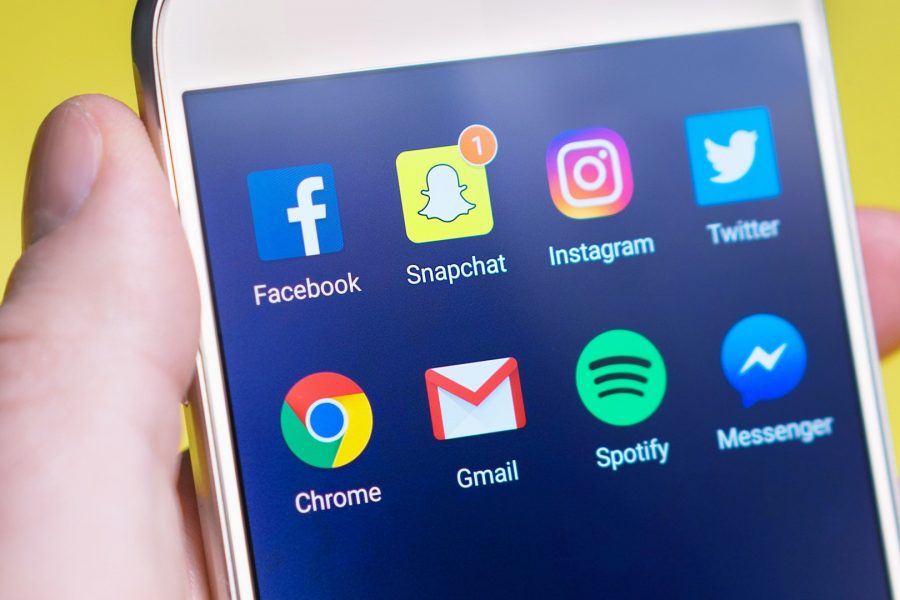
The World Health Organization (WHO) hosted a conference on Monday with speakers ranging from psychologists, researchers as well as social media activists in collaboration with the “Chifae platform” to raise awareness about mental illnesses in the era of social media, particularly among children and adolescents.
This occurred a few days after “World Mental Health Day,” which is recognized worldwide on October 10, under the theme of “Mental health in the age of social media.”
Under the motto “Mental disorders are a medical condition,Dignity and rights belong to you and I,” the Moroccan Ministry of Health and Social Protection launched the beginning of the “Second National Campaign to Combat Stigmatization of People Suffering from Mental and Psychological Disorders” on October 17, which will end on October 27.
Maryam Bigdeli, WHO’s representative in Morocco, warned in her intervention at the meeting of behavioral disorders resulting from addiction to social media. She pointed out that the youth “should take their life back after it was snatched from them by social media and they became a prisoner of it.”
She spoke of “Screen Effects,” by pointing out the association with the image and its strong effects, especially during quarantine periods, which caused “addictive behaviors” among most social network users.
The WHO representative regretted that “the same effect is creeping towards the elderly,” and she said that a ‘fake news pandemic’ swept the world in parallel with the actual Covid-19 virus.
Bigdeli stressed that the use of social media and monitoring how addicting it gets is a joint responsibility of social media users.
She explained that there is an absence of any figures that monitor the phenomenon quantitatively and qualitatively in Moroccan social circles.
During the activities of the same meeting, Bigdeli told Hespress Ar that cooperation with other international organizations concerned with mental and psychological health is to be expected.
“We have a global program directed at adolescents specifically regarding their addiction to social media,” said the expert before noting that it aims to “education on the media.”
The program aims to educate teachers and parents on modern media and social communication through training.
Bigdeli concluded that It must be worked on carefully given the important role that has become occupied by those “described as influencers” in virtual social media spaces.
On her behalf, Dr. Salma Azzaoui, a specialist in medicine and psychiatry in Rabat, expressed her appreciation to the organizers of this meeting, for the opportunity to discuss a topic that “we do not talk much about.”
She stressed that “the first culprits in the lack of awareness are the psychiatrists themselves and those with specialization and field.”
In her intervention, Azzaoui mentioned figures indicating the lack of mental and psychological health care in Morocco, through the lack of medical frameworks and specialized hospitals regionally, and emphasized that the number of doctors must be doubled 3 times to reach the global average.
The doctor elaborated on the factors of deteriorating mental and psychological health, stressing that social media is part of the causes yet is not a direct cause, attributing the matter in depth to individuals being affected by factors of a “genetic environment that is a fertile breeding ground for the spread of mental diseases; Which means biological fragility,” as she described it.
Azzaoui also stressed that the environmental factor remains crucial in a direct relationship to mental and psychological disorders.
She pointed out that the simple act of watching a video might disturb an individual’s life.
“There are cases every week that I receive in my office concerning psychological disorders related to the use of social media,” said the doctor, noting that people “search for appreciation in the social media, to compensate for the lack of appreciation and self-esteem.
Azzaoui concluded that the impact of social media on mental and psychological health is on the rise continuously, after it was exacerbated by the Covid-19 pandemic, noting that the majority of the disorders that were recorded manifested in an increase in depression and anxiety rates.
The doctor explained this by the isolation experienced by members of society and its impact on a person’s self-esteem and the nature of his communication with others.
The Ministry of Health and Social Protection defines mental illness as “a disease like any other disease, recognized by the World Health Organization, which arises from a combination of genetic, biological and environmental factors and personal life experiences.”
The ministry considers mental disorders as serious public issues.
Data by the ministry showed that 48.9% of Moroccans aged 15 years and over suffer from one or more mental disorders; 26.5% suffer from anxiety disorders, and about 6.5% suffer from mental disorders.





add your comment
Terms of publication : Not to offend the writer, people, sacred things, or attack religions or the divine self, and refrain from racist incitement and insults.