
Minors, while searching for a better life, fell into the arms of death, and rode waves, trying to reach European paradise to fulfill dreams beyond their ages.
One of the European capitals, Madrid, attracts Moroccan children and youth, who desired paradise and threw their bodies into the arms of death in search of a better life.
Many children roam the streets; their Moroccan nationality can be guessed from their looks or their common words, shocking scenes that the visitor must see: one takes drugs, the other steals, and others sleep on the street.
Falling into the arms of death
Hespress Ar met some of these lost Moroccan children surviving in Spanish streets, Omar (a pseudonym), a 17 years old minor, was interviewed by the team, while homeless.
His childish appearance and cheerful face encouraged us to approach him and ask him about his trip to Spain, unlike others whom we could not approach because they seemed to be under the influence, unable to express themselves.
Omar quickly agreed to talk to us, as if he was waiting for a listener so that he could tell his suffering, and recount his journey from his native Moroccan city Fnideq, to Madrid.
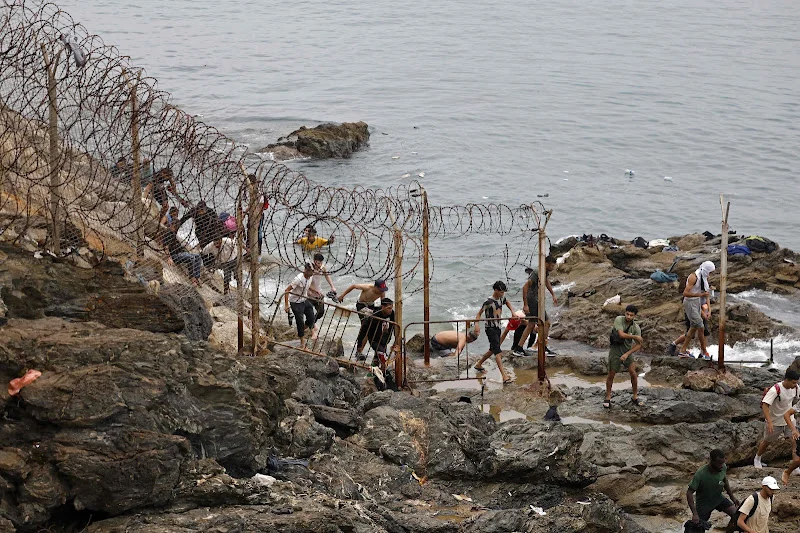
As soon as we asked the question: “How did you get here?”, the response came with tears running from his eyes that are filled with sadness beyond his age: “I managed to come during the wave of crossing from Fnideq to Ceuta in 2021.”
”After more than ten swimming attempts, the first time I was beaten by security, and other times the sea was too rough, and I returned, to avoid coming back to Morocco in a body bag, before I could finally cross during the last wave of migration.”
When asked if he were afraid, Omar replied: “Not only fear but more than that.”
He continued: “It is not me alone, but the story of thousands of Moroccan minors,” explaining that while undertaking the treacherous irregular migration road, one sees death with their own eyes, “but you must risk your life to achieve your desires and dreams.”
Different methods yet the goal is one, Omar fled from Morocco chasing the European dream, a way was more dangerous than the other, one threw himself into the sea, another traveled for five days on a boat, and one of them sneaked inside a truck.
Among those whom Hespress AR met in Madrid, Hamid (18 years old), from El Jadida, was a young man with a knife scar across his face, who had not yet grown out of his childhood features.
The way Hamid came to Madrid was different from Omar, yet just as dangerous. He traveled from the city of El Jadida to Cadiz, accompanied by others, on a boat.
Hamid said in an interview with Hespress AR: “Throughout the five-day trip, we drank sea water and did not eat at all. As soon as I arrived in Cadiz, I passed out. I did not regain consciousness until days passed, and I did not know how many.”
He added that this was not his first attempt to escape from Morocco. “There were many attempts before that, as well as attempts to secure a living in the country, but all of them failed.”
Hamid, who came to Madrid when he was 15 years old, said his life was “miserable” in his native country, saying: “I used to go to school in the morning and work at night distributing newspapers, but it was no longer sustainable. Our situation was very bad; I could not even find clothes to wear to school.”
“When I made the decision to irregularly migrate, I did not tell my father until after the fact, I woke up from my coma and called him to tell him that I was in Spain, but he did not believe me and asked me to return because my mother was worried about me.”
18 years old Abdellah from the city of Tetouan experienced similar trauma, coming to Spain in hiding, in the back of a bus: “I had been trying since 2016 until I finally succeeded in 2018; I hid in a bus that went from Tetouan to Seville.”
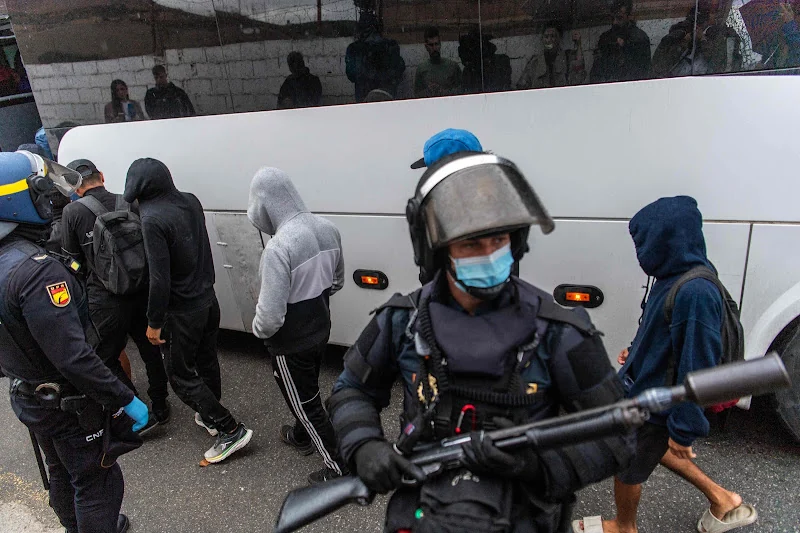
Abdellah hid for ten hours and stayed still to avoid getting caught, until he reached his last stop, after which he was thrown on the street before he went to a security center asking for help.
He was then taken into the custody of an unaccompanied minors’ center.
Crossing to the unknown
For years, young children irregularly migrated to Spain and other European countries; The idea has seduced increasing numbers over the years and was one of the main problems encountered in both the Moroccan and Spanish kingdoms.
Attempts differ, but the result is the same, children who find themselves alone in the streets of a foreign country, who do not even understand the language of its citizens, hope to be transferred to one of those centers that they hear about.
Moroccan children go through many stages within the Spanish shelters, beginning with reception centers in cities that are the initial first stations they are accommodated in, mostly in Ceuta or Melilla.
Abdellah said that as soon as he arrived in Seville, he started knocking on the security doors, but the language barrier made asking for help more difficult; until he decided to forcibly enter a police station to inform them that he was an unaccompanied minor, who then transferred him to the “reception center.”
Abdellah said: “I spent two days in the reception center, they provided me with all the necessary care, and then I was transferred to another center called a shelter. I spent four months there, but they did not start the procedures for preparing my papers, and I discovered that there are a number of children living in that center that, until they reach the age of 18, have no guarantees to obtain legal status, that Spain wishes to send back to Morocco, which forced me to flee and come to Madrid.”
Abdellah confirmed that he spent two years in an accommodation center in Madrid, where “I used to only leave at the end of the week, until I reached the age of 18, when we were asked to leave the center to one of the houses provided by the state, there I spent two months, after which they asked me to leave, finding myself in the street without any shelter.”
“We steal to eat”
The children’s dream life was not as rosy as they had expected, but they were rather met with a succession of tragic events..Detention, imprisonment, even some of those who are lucky enough to get spots for themselves in the shelters, find themselves thrown in the street as soon as they reach the age of 18.
Hamid, who was hit by a knife that disfigured his face during a fight with his peers two months before we met him, confirmed that as soon as he reached the age of 18, his life became very tragic. He was expelled from the center only to find himself on the street without a home, a job, or any refuge.
Within a short period, he was imprisoned more than once, and when we asked about the reason for his arrest, he said: “I steal to eat, and that is why I am arrested over and over again.”
He added: “Since I turned 18 years old, I have been living in very severe torment. Life is bitter here and there is no help or support.”
Hamid added, with tears in his eyes: “The last time I was imprisoned was very cruel, I was asking them to deport me to Morocco because of the severity of what I suffered through; I can neither find food nor cigarettes and even my clothes, I cannot change them because I don’t have more.”
He said that prison in Spain is “very difficult.”
Minor centers
According to the statistics of the United Nations Children’s Fund, the number of Moroccan children in Spain reached 9,000, which is equivalent to 68% of the total number of minors who are currently irregularly in Europe.
According to a previous report by the Spanish Public Prosecutor’s Office, the Spanish Kingdom received more than 12,000 foreign minors in 2019, and the number decreased to 9,030 foreign minors in 2020, 60%of whom are Moroccan children.
Spain confirmed that it has centers to accommodate unaccompanied children. While we were in Madrid, we tried to visit one of these centers, but we were informed that the request is almost impossible, and requires a government permit to obtain, which takes multiple months in administrative processes. However, we received a semi-governmental response to the criticisms leveled at these centers.
We met Juan Manuel Muños Estefan, a spokesperson for the Spanish Network for Migration and Refugee Aid in charge of running these centers in Madrid, who said that his organization had joined the Framework Agreement for the Distribution of Foreign Minors that are under guardianship.
He said, in an interview with Hespress AR, that “these minors are overwhelmingly Moroccans due to the geographical proximity between Spain and Morocco and the current immigration streams.”
Estefan confirmed that when these children arrive, their first reception is held in one of the shelters located in Andalusia or in other nearby areas, and he said: “Most of them want to reach big cities like Madrid or Barcelona; They believe that there are more opportunities to achieve social integration, especially since they always come in search of help for their families and work for themselves in order to achieve stability in Spain and be able to live in dignity.”
The spokesman pointed out that when these minors arrive in Madrid, they enter another center, and are later received by special bodies.
He continued: “We are doing an integrated work, especially since they come without prior knowledge of the Spanish language and without knowledge of the legal procedures that must be taken. We are trying from the first moment to find out whether they have received training in their country, whether they have studied and to what level. We are also working on a plan of action that aims to stand by them in order to achieve their future goals, especially in light of their choices oscillating between working in construction, completing studies at university and getting a quick job to help their families.”
On the other hand, the Spanish official indicated that training courses are being held for the benefit of these minors in order to integrate them into the labor market, and “we also provide them with health and psychological care in case they experience any kind of trauma or problems during the migration journey, in cooperation with the authorities of Madrid and we provide them with the minimum requirements in order to live a decent life, by paying pocket money for each one of them on a weekly basis. We are responsible for paying the expenses of practicing sports in halls designated for this purpose for the benefit of the children who wish to do so.”
Criticism of the reception centers
Despite what is said, even reception and accommodation centers receive their share of criticism. Various voices criticize the violations that take place in these centers and demand to provide more protection for young children who sought refuge in immigration.
Hespress met with Sandra Kaiardo, a spokeswoman for the Observatory for Human Rights in Migration, who confirmed that “there are complaints submitted by immigrants against the background of the attacks that affect them inside the temporary residence centers.”
She said: “In some cases, migrants are subjected to semi-imprisonment sentences inside the shelters, and it can be said that they are detention centers where human rights and protocols stipulated by the European Union and the United Nations are violated, as well as policies that do not take into account the culture of the other. The unfortunate thing is that the Spanish judicial authorities rarely invoke all this.”
For his part, Pepe Mejia, a journalist specializing in immigration issues, said: “In the centers for minors, cases of sexual abuse are recorded, and there are also private security workers contracted with the Spanish administration, who are in most cases unqualified and lack methods of dealing with minors in special circumstances.”
Mejia added in an interview with Hespress that “private security workers live in precarious conditions and receive poor salaries, but they are obligated to receive training courses and training in the psychological and educational aspects to understand how to deal with unaccompanied minors.”
He continued: “There is another aspect that must be paid attention to, which is that the shelters in which these minors are in are often located in the middle of residential neighborhoods. Thus, they are not isolated entities, but rather public places with a social environment. But what is noticeable is that there are no plans and no work within this social environment, as well as a lack of coordination with city councils or with civil society organizations or associations that deal with the issues of immigrants, whether from Morocco or Latin America.”
We conveyed these accusations to Estefan, who responded by saying: “Our organization insists on the implementation of human rights since its creation in 2018. During this year, Spain suffered from a huge wave of immigrant minors, which led to overcrowding in shelter centers in various Spanish provinces. We do not want such incidents to be repeated, especially the phenomenon of overcrowding in the headquarters that take care of minors.”
He added: “Faced with this situation, the provinces of Andalusia and Madrid have invested more public funds in order to solve this problem. As of 2018, we no longer see problems of this nature. In our center, applicable laws are complied with, and today there are no cases of human rights violations. On the contrary, there is a comprehensive response to the needs of minor children within a joint action plan.”
He added: “Here in the province of Madrid, we are doing a very good job due to the presence of sufficient economic wealth to allow the provision of the necessary resources, and I am not aware of what is happening in the rest of the provinces. The truth is that today we can say that there is a significant increase in the number of minors arriving in Spain, but at the same time the necessary needs are being met for all. We always bet on working within the dynamics of small groups.”
He continued, “We believe in the idea that children should live in homes for 10 people, and we do not support large hostels where 40 or 50 children live. We believe that in the medium term, the rest of the centers will work to accommodate this dynamic; Because small numbers of minors help create a family atmosphere, when you work with 40 or 50 children in a shelter, human relationships are lost and the children feel as if they are in an environment where all the components of personality are lost. Therefore, our organization has always been in favor of working with small groups to avoid unfavorable situations.”
Strict laws
Spanish laws dealing with immigrants are strict. According to activists here, minors consider Spain just a transit point to European countries that provide more protection.
We met El Pablo Sainz, a lawyer specializing in immigration issues, who confirmed that “Spanish immigration laws are basically punitive and do not help the integration of immigrant individuals, especially as they blame and criminalize people who have chosen Spain as a country of residence. With regard to the file of minor children, the matter is more serious. They are treated as if they are adults and are admitted to shelters that do not meet the humanitarian requirements.”
“Some of these children leave shelters without identity documents, resort to criminal activities and live on the street,” Sainz said.
Security forces arrest adults for the purpose of deporting them to their countries of origin, and cases of serious human rights violations have been recorded in this regard.”
The same lawyer stressed that “the laws related to foreigners seek to criminalize and chase irregular migrants instead of ensuring their basic rights are guaranteed, like the rest of the citizens, and enabling them to find work through which they contribute to building the host society.”
Public policies
There are many demands to change public policies directed at these children. Although Spain declares that all efforts are being made to preserve their rights, the criticisms are rising and increasing day by day.
Sainz said that the solution is linked to empowering migrants with their basic rights, such as education, health, work, and roaming freely. “When immigrants are given these rights, things will work out better in society.”
In this context, Mohamed Lamrabet, an activist in Spain, said: “We are in the process of a new phenomenon experienced by Moroccan society, and all events and institutions are supposed to mobilize to find a solution to the issue of minors. For Morocco, the major achievements that it should be proud of should be in social and educational cases, and not by searching for them in security policies and partnerships with Western countries.”
Lamrabet stressed that “the immigration of minors is a phenomenon that is unique to Morocco globally, and it is a black stain, whether for the Moroccan state or even for society,” stressing that “it has exposed Morocco’s nakedness globally, and it shows that Moroccan society is a torn and disintegrated society.”
Lamrabet considered that “the treatment of the phenomenon is to deport these children again to Morocco,stressing that “the deportation cannot be forcible, but rather within the framework of a pedagogical, social and psychological plan and reconciliation with society again.”
He warned that “there is no future for minors in Europe. They are marginalized and always turn towards crime and delinquency; According to European Union statistics, the vast majority of prison inmates in Europe are Moroccans, and this makes sense in the matter,” he continued, adding that “Morocco has started exporting its social problems to Europe, and it is time for us to say enough is enough.”
Success models
Despite the great tragedy that the file holds, Hespress was able to identify examples of minors that came to Spain and were able to successfully leave the shelters behind them, and today are striving to realize their dreams that until recently, were not possible to achieve.
Among them, Adil Chaara, who came to Spain in 2020, swam from Fnideq to Ceuta for three hours at sea before reaching safety and setting out on his journey in the accommodation centers.
Now, Chaara benefits from about five training courses in different professions and got a job, not to mention training in football and playing for a well-known team in the city.
He received us in his apartment given to him by the Madrid government after the end of the center stage and turning 18.
In his meeting with Hespress, he said: “I was able to fulfill my dream of playing in a football team professionally, and I was able to work and ensure my financial stability. Today I have hopes of completing my training and helping my family.”
Out of these minors are ones who went through hard phases and became a helping hand to other minors. Examiners Association was founded by those who have reached their dreams and started supporting others.
Oussama Mazri, who was also introduced as an irregular immigrant at a young age, is today a member of the association that provides a helping hand to immigrants “Al Harakah,” especially young people who have reached the age of 18 and over.
“We are trying to help these people so that they do not face the same difficulties that we faced, and to make it easier for them to obtain official residency papers,” said Mazri.
Same hopes
They have the same aspirations: to escape poverty and inhuman conditions to live in dignity and to meet their families alive.
Omar Ahlam summed up the sentiment noted among all the children Hespress interviewed by saying: “My only wish is to save myself and my family from the swamps of extreme poverty and to return to my country and find my mother alive, even if I cannot achieve my dreams, at least that she remains alive.”
He continued with tears: “Every day I hear the news of the death of a mother or father of one of my friends. I die of fear and rush to talk to my parents and reassure them that they are still alive,” stressing that “exile is very difficult and cannot be tolerated by everyone, there are those who have lost their minds here and others who only live with drugs, only those who have a hard heart can bear this pain.”
As for the reality of the situation, it shows that the screams of Moroccan minors are still calling for dignity, freedom, and a decent life.




add your comment
Terms of publication : Not to offend the writer, people, sacred things, or attack religions or the divine self, and refrain from racist incitement and insults.