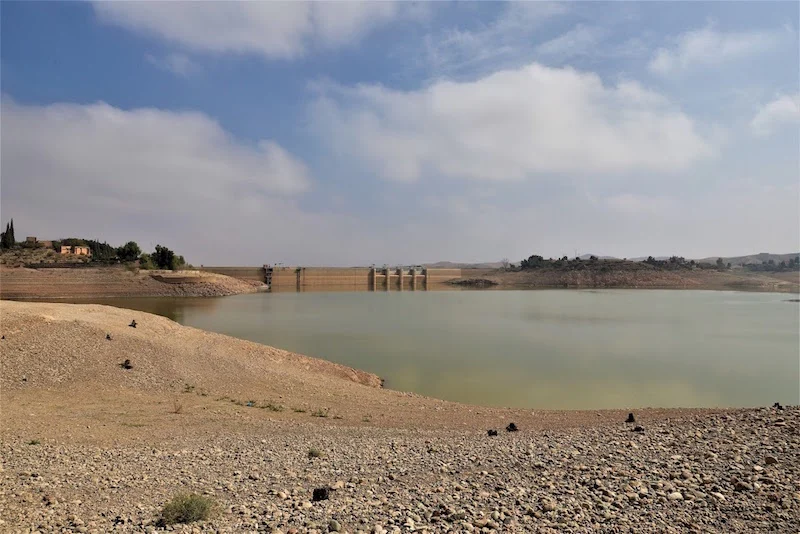
Morocco is facing an intense water shortage with filling rates of dams vastly decreasing compared to last year, according to data collected by the Ministry of Water.
Minister of water, Nizar Baraka warned of the serious repercussions of water shortage in In a presentation before the Chamber of Representatives on Monday.
Compared to last year, water reserves decreased by 14%, going from a 39% filling rate to 24%.
The Touizgui Dam located in the Assa region recorded a zero filling rate this year.
The Mohamed V dam in Oujda recorded a filling rate of 0.3%, the Abdelmoumen Dam of Taroudant filled up with 1.7%, and the Massira dam in Settat filled up by 3.4%.
Meanwhile in Tangier, the Ibn Battuta Dam is filled with 9.3%, the April 9 dam in the same region with 12%, the Tamalout Dam of the region of Midelt rose up to 9.2 percent, and the Beni Mellal dam reached 10%.
In the region of Demnat, Hassan the first dam recorded a filling rate of 12%.
The Imfout dam in the province of Settat filled up by 10.6%, Dakhla’s dam was filled up to 8.9% and the Mansour Dahabi dam of Ouarzazate recorded a filling rate of about 12%.
Despite many dams recording noticeably low rates, the Tangier-Mediterranean dam achieved a filling rate of about 93%, 83% percent in the Asmir dam in M’diq, and 8 in the Chefchaouen dam, while the Bouhouda dam in Taounate recorded a filling rate of around 81%.
The Said Ben Maachou dam achieved a filling rate of 95%, the Ait Messaoud dam in the Beni Mellal region recorded a filling rate of 87%, the Moulay Abdel Rahman dam of Essaouira recorded 52%, and in the Fez region, the Allal El Fassi dam recorded 88%.
Unfortunately, the Tamesna dam was unable to exceed 37% this year, after it recorded 51% during the same period last year, and the Sebou dam rate fell down to 74% after it was more than ninety last year.
The Mokhtar Soussi dam in the Taroudant region also went down to reach a rate of 17.8%, compared to 56% last year, and the Idriss the first dam in the Sebou region fell down to 26% after achieving a filling rate of about 53% last year.
Morocco still relies on dams to provide its water needs, which is why this decrease in filling rates in dams is very alarming.
The minister said that the drought we are currently experiencing has severely affected the supply of drinking water in the urban field, unlike past droughts that affected the supply of drinking water in the rural world and agricultural activities.
He revealed that the current data that the ministry of water and equipment disposes of, shows a significant deficit in most of the water basins.







add your comment
Terms of publication : Not to offend the writer, people, sacred things, or attack religions or the divine self, and refrain from racist incitement and insults.