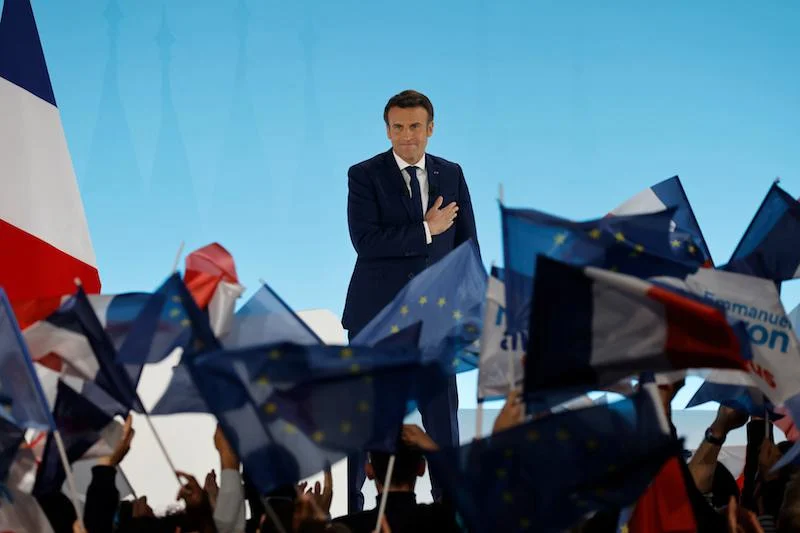
The French presidency announced on Monday the composition of the new government, two weeks after the legislative elections, which saw the presidential coalition lose its absolute majority in the National Assembly.
The new executive comprises 42 members, including 21 women. Its announcement comes after several days of consultations between the Prime Minister, Elisabeth Borne, and the various political parties represented in the Assembly.
While some ministers have been maintained in their positions, others have been replaced or have changed portfolios. The main members of the former government team, appointed following the re-election of Emmanuel Macron on April 24, have been maintained in their ministries, in this case Bruno Le Maire (Economy and Finance), Gerald Darmanin (Interior), who sees his prerogatives expanded and takes charge of the Territorial Collectivities and Overseas, Catherine Colonna (Foreign Affairs), Éric Dupond-Moretti (Justice), Sébastien Lecornu (Armed Forces) Olivier Dussopt (Labor), Pap Ndiyae (Education and Youth), Sylvie Retailleau (Higher Education), Marc Fesneau (Agriculture), Agnès Pannier-Runacher (Energy Transition) and Rima Abdul-Malak (Culture).
Olivier Véran, in charge of relations with parliament in the former government team and former Minister of Health and Solidarity during the first five years of Emmanuel Macron, has been appointed Minister Delegate in charge of Democratic Renewal, spokesman for the Government. In the new composition, Damien Abad, Minister of Solidarity, Autonomy and the Disabled, was replaced by Jean-Christophe Combe, Director General of the Red Cross, at the same time that Franck Riester became Minister Delegate in charge of relations with Parliament.
Chrysoula Zacharopoulou has, for her part, been maintained in her position as Secretary of State for Development, Francophonie and International Partnerships.
Christophe Béchu, mayor of Angers, became Minister of Ecological Transition and Territorial Cohesion, replacing Amélie de Montchalin, defeated in the legislative elections. He will have the supervision of two new entrants to the government: Caroline Cayeux, appointed to the territories, and Olivier Klein, appointed to the City and Housing. François Braun, emergency doctor and president of SAMU – Urgences France, replaces Brigitte Bourguignon, defeated in the legislative elections, as Minister of Health.
Geneviève Darrieussecq returns to the government as Minister Delegate for the Disabled, while Sarah El Hairy has been appointed Minister Delegate for Youth and Universal National Service. Jean-Noël Barrot, deputy of Yvelines, joined the executive as minister delegate in charge of Digital Transition and Telecommunications.
Laurence Boone, Deputy Secretary General of the OECD, becomes Minister Delegate in charge of Europe, replacing Clément Beaune, who takes over the Ministry of Transport.
In addition, Jean-François Carenco, has been appointed Minister of Overseas Territories, replacing Yaël Braun-Pivet, elected President of the National Assembly, while Olivia Grégoire, spokesperson for the former government team, has inherited the Ministry of Small and Medium-sized Enterprises, Trade, Crafts and Tourism.
The former Minister Delegate in charge of Citizenship, Marlène Schiappa, has been appointed Secretary of State in charge of the Social and Solidarity Economy and Associative Life attached to Matignon.
Emmanuel Macron will preside over the first Council of Ministers in the afternoon.






add your comment
Terms of publication : Not to offend the writer, people, sacred things, or attack religions or the divine self, and refrain from racist incitement and insults.