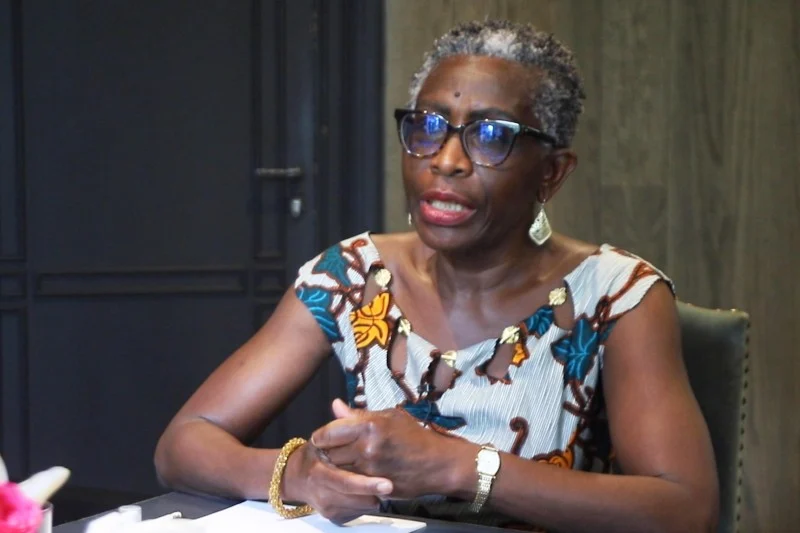
Morocco has shown “real resilience” in the face of a number of major shocks over the past few years, said the Deputy Managing Director of the International Monetary Fund (IMF), Antoinette Monsio Sayeh.
In an interview with Hespress AR, the IMF deputy said that despite “a drought, the repercussions of the COVID-19 pandemic, the effects of the war in Ukraine, and the consequent increase in import prices,” Moroccan authorities were able to utilize certain flexibility to get through a difficult stage.
According to Sayeh, Moroccan authorities are doing everything they can to contain inflationary pressures and ensure the post-COVID-19 recovery, which was in its infancy before the repetitive natural, geopolitical and international constraints.
“Authorities have activated a number of policies to support macroeconomic stability, and we are confident that this will continue and achieve the objective,” said the IMF official.
However, due to the successive and simultaneous shocks to the national economy and despite the government’s considerable efforts to limit their effects, the IMF “had to revise the Moroccan economy’s growth expectations from 3.1% last January to 1.1% during the current year,” explained Sayeh.
“Morocco faces rising food and energy prices, which results in inflation and reduces both s income and consumption,” explained the IMF official, adding that such effects are highly dependent on the external and international phenomena, such as the Ukraine war.
From a regional perspective, Sayeh noted that “the outlook for North African countries is affected by a number of unfavorable factors, namely the fallout from the war in Ukraine, and sanctions against Russia, not to mention the mounting inflationary pressures.”
The post-pandemic recovery in the region is expected to be slow, as oil-importing countries do not have margins to cope with negative shocks, meaning that GDP growth is expected to decline from 4.1% in 2021 to 1.8% in 2022 in North African countries, with the exception of Libya and Egypt.
“Inflation is also expected to remain high at 8.8% in 2022 for North Africa, with the exception of Sudan, due to higher food and energy prices.
The IMF additionally forecasts that oil-importing countries will witness a deterioration in their external balances and budget as a result of support expenditures and the cost of debts.
“In contrast, the future prospects of oil-exporting countries such as Algeria and Libya have improved well, as their budgets are expected to recover,” noted Sayeh.
However, the IMF official emphasized that “most countries in the region are likely to face food insecurity problems due to their dependence on wheat imports from Russia and Ukraine,” a dependence that will only be worsened due to expected droughts.







add your comment
Terms of publication : Not to offend the writer, people, sacred things, or attack religions or the divine self, and refrain from racist incitement and insults.