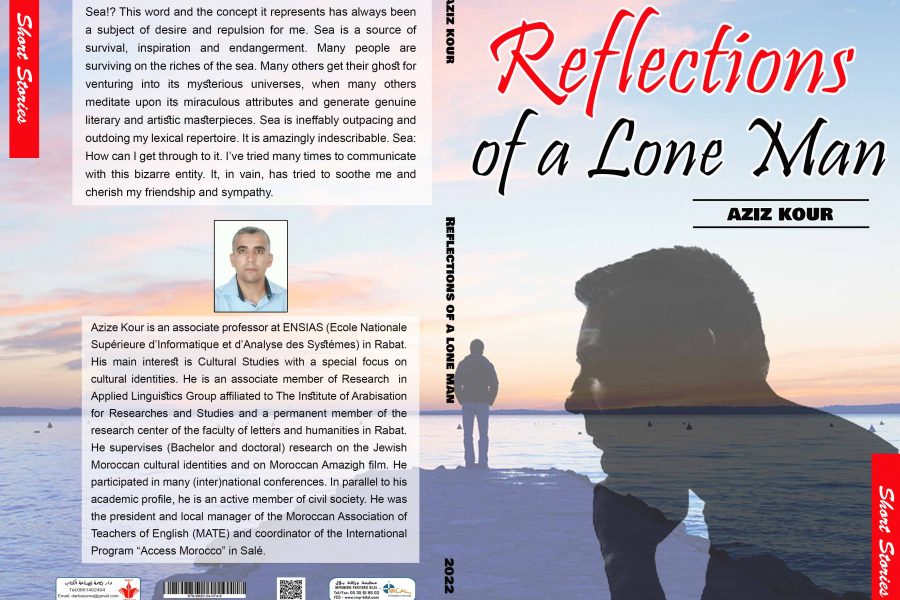
Professor Kour’s Reflections of a Lone Man is a collection of short stories that illustrates a fictive attempt to identify loneliness and social disconnect during the very special circumstances of the pandemic, an attempt that takes different forms and produces complex meanings where notions of death, trauma, and memory are strongly stressed.
The collection opens with a Young Man and the Sea, an experience of isolation from people and society. This melancholic atmosphere that the sea represents, and from the start, gives us an idea about the tone that the next pages will generate, taking of course Reflections of a Lone Man, as an umbrella title.
This isolation helps the author, through his character, define who he is and emphasize the unique nature of the young man’s character.
At the same time, the sea becomes a landscape that generates memories. Memories of sadness, sorrow, and sometimes happiness that are not certain though.
The pandemic times come, for the author, to redefine what death could mean. A redefinition that goes beyond the biological functionality of the heart through the beating, ‘The death of the heart, of course, the first thing we (un) consciously have recourse to conform whether someone is dead or not is listening to his/her heart beats, is an alarming trait that characterizes most human conducts nowadays’. It is being a good person which matters.
Another thematic component that is so dominant in Reflections of a Lone Man is “memory”. I utilize “memory” to describe the recollection of past experiences and trauma. The emphasis on memory makes room for a more meaningful conversation about the authors’ views on the connection between personal narrative, present events, and future outcomes.
The author creates a continuous conversation between memory, trauma, and narrative with his implementation of sad experiences from the perspectives of his character’s past into the text. We, as readers, can experience the melancholic ubiquity of death throughout the narrative and its connections with grief and societal violence. As the collection unfolds, readers notice more psychological trauma connected with death and this time the mother’s death in ‘To her Deceased Mother’.
It is this loss of a mother that we, almost no exception, fell like an all-encompassing event that defines a person for the rest of their life. Death the author describes is ‘the only truth that unifies the living creatures’. This reminds readers that all living beings succumb to death, which balances and in a way purifies society.
The author ensures that his personal experiences never fully separate themselves from his fiction; subsequently, his work and personal life constantly intersect in negotiating trauma, memory, and history. That’s why, in his introduction, Professor Aziz acknowledges his fiction as “The stories, if it is allowable to call them so, in this collection mirror up different life stages of a Moroccan citizen who interacts with life fluctuations. The work is fictional even if similarities with the author’s life might be observed”.
The author’s recollection of his memories allowed him to understand his grief and loss of identity; through the act of writing. The role of remembering that spills into fictional pandemic texts, the importance of memory as it pertains to the trauma caused by the virus, and the function of narrative as a therapeutic device to give voice to trauma are complex issues discussed through the course of the collection.
Aziz Kour uses a language that enables him to write of the forgotten, the shadow, death, love, solitude, and survival. A literary mishmash that will remain throughout the pages of the collection as a straightforward reminder of the devastating effects of the pandemic, the absence of freedom, and the conditions that allow a person to live a life that has been broken down to a mere daily struggle for survival and no more than survival.




add your comment
Terms of publication : Not to offend the writer, people, sacred things, or attack religions or the divine self, and refrain from racist incitement and insults.