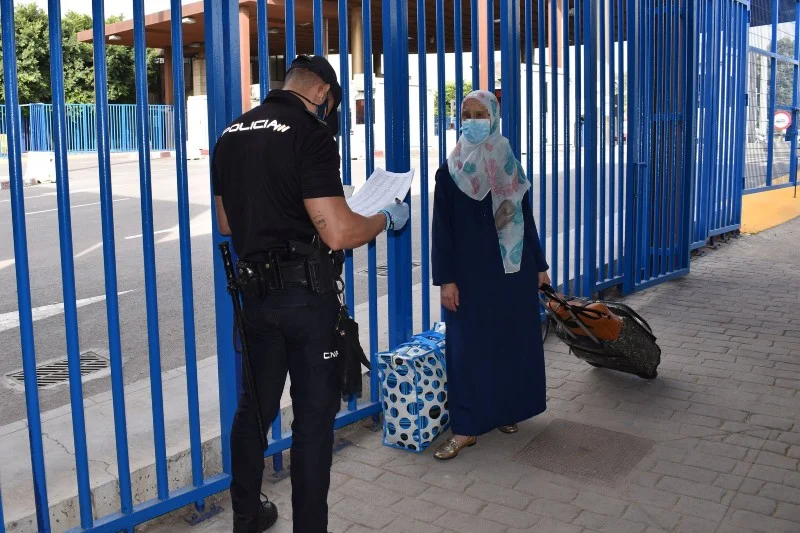
Official sources told Hespress that the Moroccan authorities “will never allow” the crossings of Bab Ceuta and Beni Ansar to become corridors for smuggling activities, as the two enclaves prepare to reopen on May 17.
Spanish Ministry of the Interior announced that by midnight on May 17, the land borders of Ceuta and Melilla will be reopened.
Although prearranged as part of the roadmap established between King Mohammed VI and Pedro Sanchez, reopening Ceuta and Melilla border crossings has been delayed several times, leaving the two cities isolated from a Moroccan market and workforce that make up the bulk of economic activity in the enclaves.
Borders to the enclaves have remained closed for two years, first due to the COVID-19 pandemic, then due to the diplomatic differences between both countries. The closure led to much economic hardship for the enclaves’ citizens and cross-border Moroccan workers.
The two years-long closure of borders has driven an increasing number of Spanish companies to declare bankruptcy after the transit of goods between Ceuta, Melilla, and Morocco was abruptly halted following the COVID-19 induced border closure.
Both cities have been living under economic stagnation for nearly two years now.
Smuggling has been the main lifeline for Ceuta and Melilla as well as northern Moroccan cities. The full shutdown of this trade left citizens in financial distress.
Nabil Lakhdar, Morocco’s director-general of Customs, told parliament in 2020 that smuggled products from Ceuta and Melilla entering Morocco were worth 1.2 billion to 1.6 billion dollars.






add your comment
Terms of publication : Not to offend the writer, people, sacred things, or attack religions or the divine self, and refrain from racist incitement and insults.