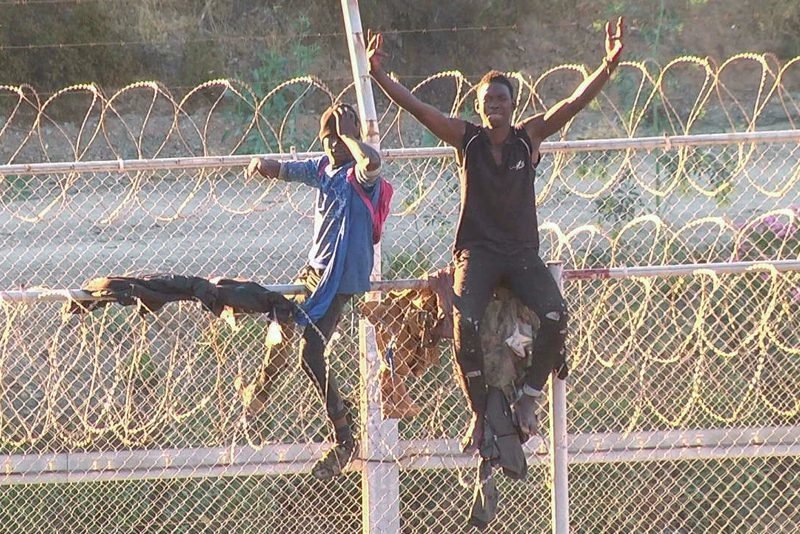
The Nador section of the Moroccan Association for Human Rights (AMDH) denounced “an intensified wave of arrests of irregular Sub-Saharan migrants, following the appeasement of Moroccan-Spanish relations.”
“Repressive apparatus against sub-Saharan migrants has become widespread in different cities across the country with mass arrests and transfers,” Said Omar Naji, an AMDH member in Nador, in a statement to Hespress English.
This practice is known as “refoulement,” and is prohibited under international refugee law.
Naji explained that migrants’ arrests are “one of the consequences of irrelevant European and Moroccan migration policies,” noting that “migrants across the country are living under very difficult circumstances.”
“Migrants who were arrested in Nador were brought close to Beni Mellal, Marrakech, or near the Algerian border,” he added.
The Nador section of the AMDH created a Facebook page untitled “Dead and Missing Migrants in Morocco,” on which it publishes dozens of missing and arrested migrants cases across the country, in order to help their families find them.
Amnesty International has repeatedly expressed its concern about allegations of excessive use of force by Spanish Civil Guards when confronting migrants attempting to reach Spain.
“My friends disappeared, and I’m waiting for my turn,” said Ibrahim, a 30-year-old from Senegal based in Nador.
Once arrived in Morocco, he had to start his journey seeking a place to settle and had to spend many nights in Nador’s streets.
“I couldn’t find a house at the beginning (…) renting poses a problem for the majority of us due to the illegal status of most sub-Saharan migrants,” he said.
Like many, he said employment as well as the difficult economic situation his country is facing were the reasons for trying to reach Spain’s Canary Islands, the most deadly sea route for migrants.
“Many of my friends have disappeared recently. I actually don’t know if they have been arrested or are dead, and maybe my turn is coming soon too,” he said.
Ibrahim claimed he had been arrested two months ago by Moroccan authorities, after fighting with some of his neighbors. “They humiliated me,” he noted.
Madrid and Rabat: security agreement underway
Spain’s policy shift in favor of Morocco’s Autonomy plan is now leading to the entry into force of a security agreement signed between both countries in Rabat, back on February 13, 2019.
The agreement sees both countries vowing to strengthen control on irregular migration.
Spain is also planning to send back irregular migrants who had reached the Canary Islands through Morocco.
Morocco is a growing destination for Sub-Saharan migrants, seeking to reach Europe.
Data suggests 700.000 sub-Saharan African migrants reside in Morocco. The Kingdom has been receiving hundreds of millions of euros each year from the European Commission to help it address irregular migrants on its soil.
The European Commission provided Morocco with 148 million euros, as well as 182 million euros to create job opportunities for them.
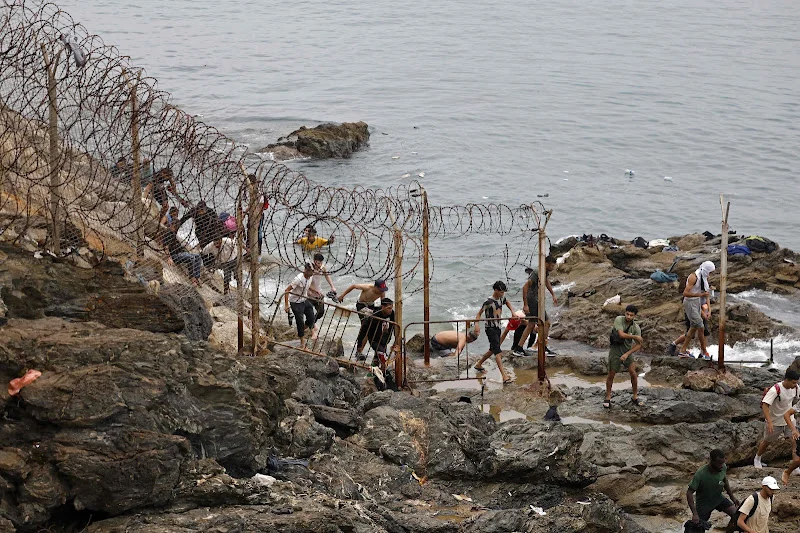
Since the Spanish Ceuta and Melilla enclaves have become magnets for irregular African migrants, 929 irregulars arrived in Melilla from the beginning of 2022 until mid-April by climbing the border fence, which represents a total increase of 657 migrants, compared to 272 migrants recorded last year.
In 2021, 41,945 irregular migrants arrived in Spain, down from 42,097 in 2020, according to the data from the Spanish Interior Ministry.






add your comment
Terms of publication : Not to offend the writer, people, sacred things, or attack religions or the divine self, and refrain from racist incitement and insults.