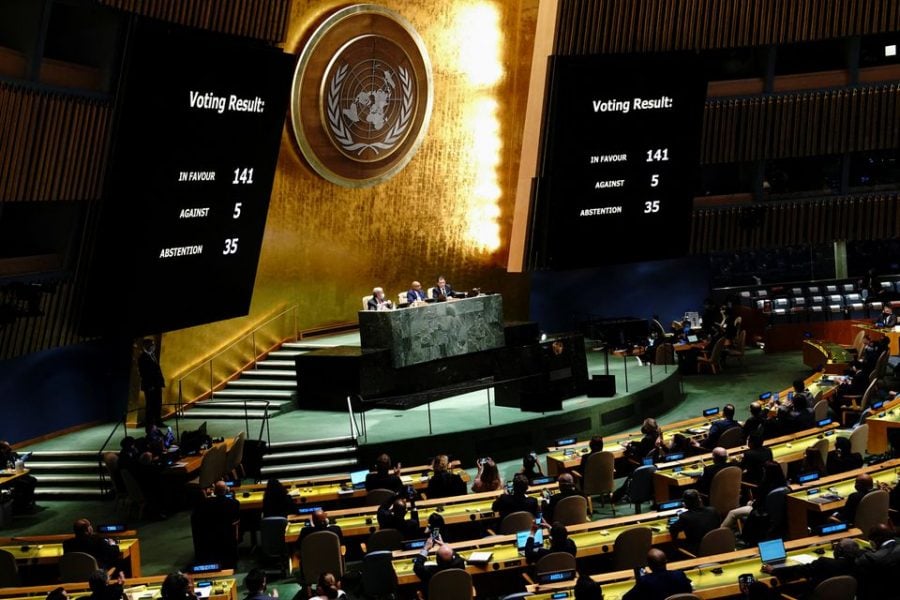
The United Nations General Assembly voted on a new resolution demanding aid access and civilian protection in Ukraine this Thursday, March 25, to which Morocco did not participate.
During its 11th Emergency Special Session, member states adopted Ukraine drafted resolution with 140 votes in favor, 38 others abstaining and five against, namely Russia, Syria, North Korea, Eritrea, and Belarus.
The resolution demands “civilian protection and humanitarian access in Ukraine,” while also criticizing Russia for creating a “dire” humanitarian situation resulting from its military offensive, launched one month ago.
Morocco had previously been absent from the March 2 UN Extraordinary General Assembly resolution, condemning the Russian invasion in Ukraine, which analysts said was “an attempt to make the best of a delicate situation.”
The Kingdom has reiterated its position of “respecting the territorial integrity of all UN member states while valuing dialogue and diplomacy over armed conflict.”
Morocco’s absenteeism from Russia and Ukraine resolutions is rooted in neutrality, as the Moroccan government maintains good relations with both countries.
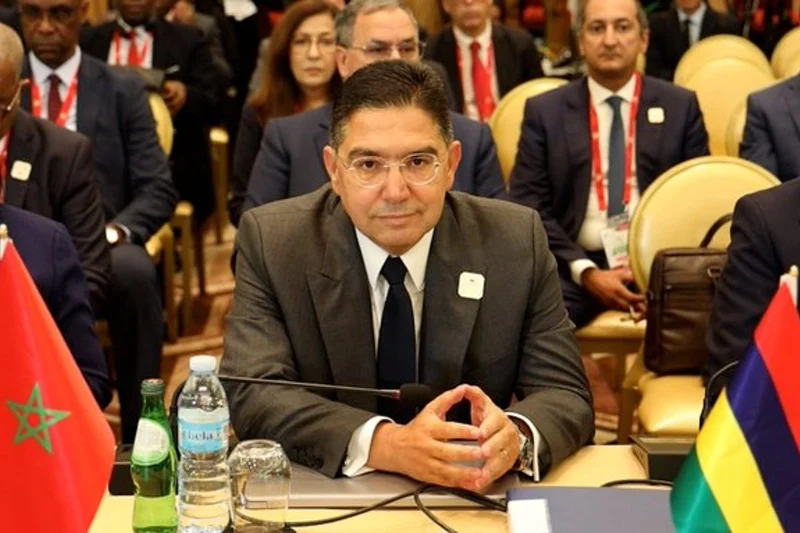
On March 22, Moroccan Minister of Foreign Affairs Nasser Bourita held phone calls with both his Russian and Ukrainian counterparts, Sergey Lavrov and Dmytro Kuleba. Details of the FMs discussions have yet to be made public.
Following the “successful” UN vote this Thursday, South Africa proposed a counter draft resolution that focused on the humanitarian situation and did not mention Russia.
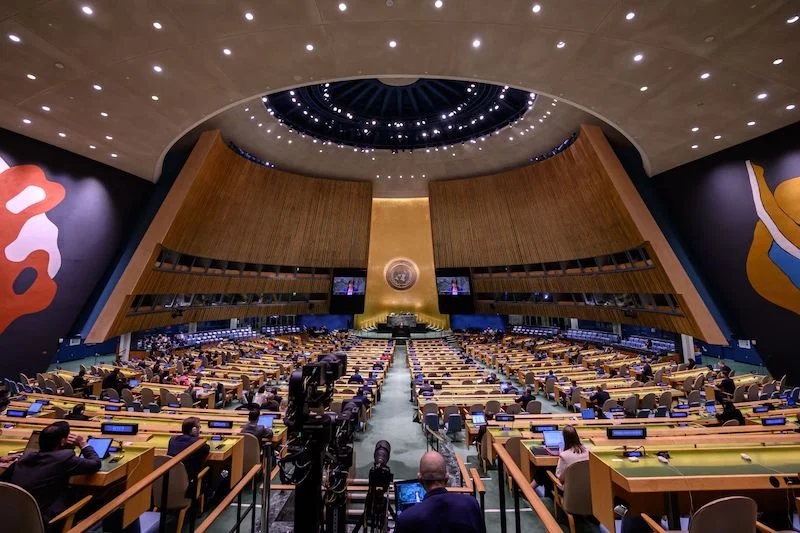
50 countries gathered in the General Assembly Hall and agreed to favor moving to a vote on the South African draft, while 36 abstained, but the resolution did not garner enough support to proceed to a full General Assembly vote.
Speaking before the vote, South African Ambassador Mathu Joyini explained that despite the success of the Ukraine-sponsored draft, her country put forward its draft “with the focus that the humanitarian situation is the immediate priority.”
“Unfortunately, instead of placing the humanitarian crisis and our response at the center of our deliberations, the political divisions in the Assembly suggest that perhaps, in the minds of some delegations, the humanitarian response is secondary to geopolitical objectives,” she said.



add your comment
Terms of publication : Not to offend the writer, people, sacred things, or attack religions or the divine self, and refrain from racist incitement and insults.