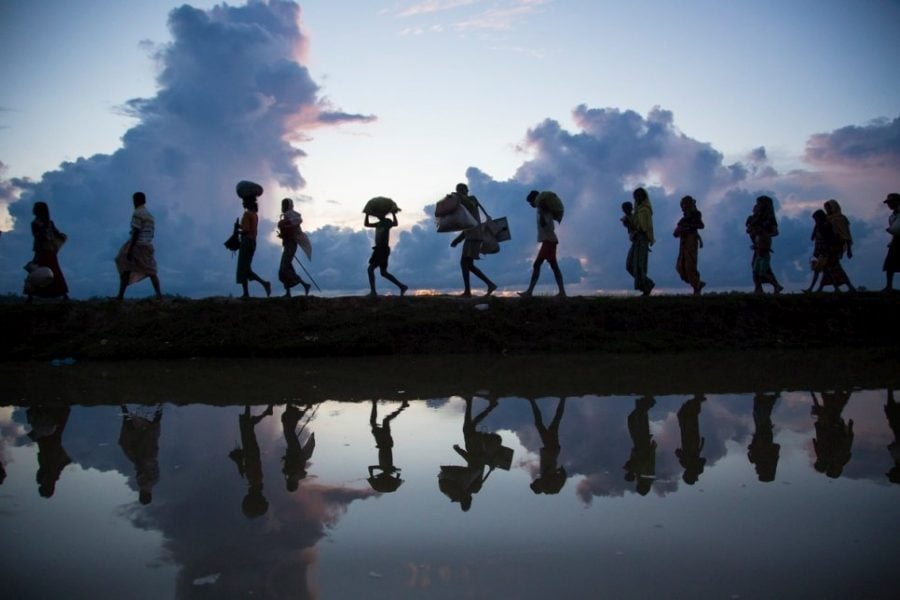
Morocco totaled 18.248 refugees and asylum seekers by the end of 2021, according to the recent data published by the UN High Commission for Refugees (UNHCR) in Morocco.
In 2020, the number of refugees and asylum seekers was set at 13,533, amounting to 9,342 as of December 31, 2021.
As in previous years, Syrian refugees still top the list with a total of 5,082 people.
As for other nationalities, Yemen comes second with 1,102 refugees, followed by the Central African Republic (987), South Sudan (439), Côte d’Ivoire (391), Palestine (258), the Democratic Republic of the Congo (193), Cameroon (175), Guinea ( 145), Iraq (127), Senegal (106), Mali (58), Sudan (54), Nigeria (25), and Gambia (2), according to UNHCR’s data.
In terms of gender, men still outnumber women, as 5,844 male refugees have arrived in Morocco, representing 62.6% of total refugees, compared to 3,498 female refugees (37.4%).
The age distribution shows that the majority of refugees are aged between 18 and 59 years old, representing 66.2% of the overall refugee population, or 6,187, noting that 24% of the overall refugee population is made up of children aged 0 to 12, or a total of 2,235 (1,097 children are aged 0 to 5, and 1,138 children are aged 6 to 12). Refugees aged over 60 represent only 2.5% (235).
As for refugees’ level of education, 22% of them have no school level, 31% have the primary level, 24% have the secondary level, and 20% of them have a high level of study (university).
Regarding their former position in their country of origin, 24.61% of refugees worked in the tertiary sector (services, liberal profession). Also according to UNHCR data, 27% were unemployed, 9.4% were students, while 7% worked in the primary sector, mainly agriculture, and only 1.7% were employed in the secondary sector (industry).
Additionally, the UNHCR reports that Rabat continues to record the largest number of refugees, totaling 1,398, followed by Casablanca with 953 refugees, Oujda (870), Nador (677), Marrakech (514), Fez (492), Meknes (446), and Kenitra (429), these 8 cities host 62% of refugees in Morocco, while 3,563 other refugees live in other cities.
21.7% of refugees registered with UNHCR in Morocco, or 2,023, have specific needs. Among them, there are 462 with a serious medical condition, 193 children in risky situations, 68 elderly people at risk, 203 women in risky situations.
As for asylum seekers, their number stood at 8,906 by the end of 2021, coming mainly from Guinea with 2,509 applicants, followed by Senegal (1,118), Cameroon (1,074), Cote d’Ivoire (1,047), Sudan (938), Mali (765), Nigeria (413), Democratic Republic of Congo (190), and Gambia (126).
Globally, there have never been as many displaced people in the world as in 2021. From January to November, over 84 million people were forced to leave their homes, according to UNHCR data published by the UN in its annual review.
A figure that is a clear increase compared to 2020 and 2019. Refugees and migrants moving out of necessity have been particularly hard hit by Covid-related travel restrictions, and millions of them have found themselves stranded far from their country of origin, and in danger.
In a previous UNHCR report of the body’s cash assistance for the forcibly displaced, the UNHCR delivered $695 million in cash assistance, out of which over 55% was allocated to the Middle East and North Africa (MENA) region, amounting to $384.5 million.




add your comment
Terms of publication : Not to offend the writer, people, sacred things, or attack religions or the divine self, and refrain from racist incitement and insults.