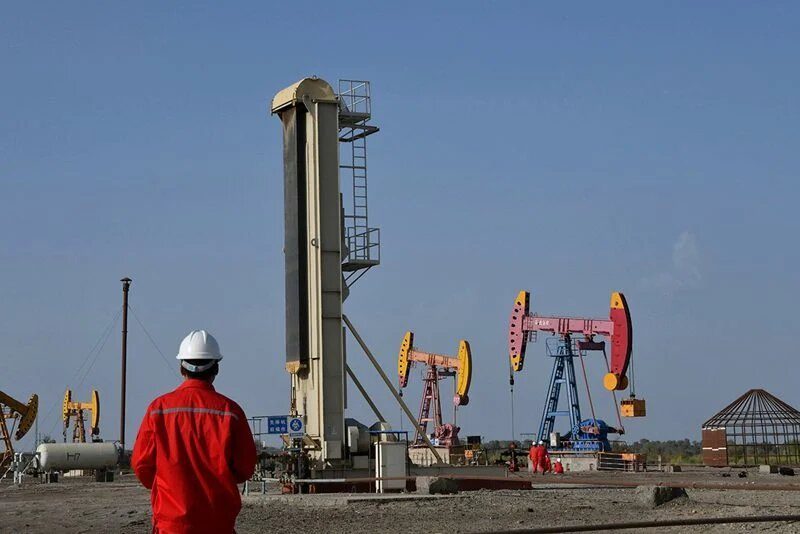
The Competition Council has issued an unfavorable opinion on the draft law relating to the downstream natural gas sector in Morocco, and the government’s amendment of the law regulating the electricity sector.
In its opinion, the Competition Council “recommends that the draft law be redrafted to harmonize it with the rules relating to the free and fair rules of competition.”
The council assumes that “given that the natural gas sector is not yet established,” it is imperative to take advantage of the benefits of competition in this market and “avoid freezing positions, establishing monopolies and granting exclusivities that will have a negative impact on the development of the sector.”
The national production of natural gas in Morocco exceeds 100 million cubic meters annually, and it is extracted from small fields in the West of the country and Essaouira, but this volume is not sufficient to meet the national needs, which are currently estimated at one billion cubic meters a year.
According to data published by the Competition Council in its aforementioned opinion output, the National Office for Hydrocarbons and Minerals is responsible for the transport and distribution of natural gas in partnership with companies specialized in the field of hydrocarbon research and exploration.
But the Council is recommending improving the visibility and predictability of the draft decree, noting that some provisions should be clarified and specified in order to have a stable, fair, and attractive legal framework and to strengthen its predictability to send reassuring signals to domestic and foreign investors in the natural gas sector.
The National Office of Hydrocarbons and Minerals has a network of pipelines to transport gas for a distance of 215 km in the Western Basin and 160 km in the Essaouira Basin.
At the level of Essaouira, the OCP purchases natural gas at the Youssoufia site, which is used to meet the energy needs of drying and roasting facilities.
In the Western Basin, the National Office of Hydrocarbons and Minerals, together with its partners, is working to market the extracted natural gas for the benefit of the Moroccan Company for Carton and Paper, the “Super Ceram” company for the production of ceramics, and the “Keyes CEMOK” company, specialized in the manufacture of plates in the Kenitra industrial zone, in the northwest part of Morocco.
In order to compensate for the shortfall in national production of natural gas, several companies are working on exploration and research in Morocco, including “Sound Energy,” which holds an exploration license in the Tandrara group in the eastern region, and “Shario Oil & Gas,” which has a license in the Lixus area off the coasts of Larache, Mohammedia, and Kenitra.
In Morocco, the “Petrador Oil and Gas” company in the Guercif region and the “SPX Energy” company are also prospecting through five licenses in the western region and 3 licenses in the northeastern region of the Kingdom.
While waiting for the explorations to yield important reserves, Morocco will resort to importing its natural gas, which had been done directly from Algeria by the National Office of Electricity and Drinking Water through an agreement that was terminated last October 2021.




add your comment
Terms of publication : Not to offend the writer, people, sacred things, or attack religions or the divine self, and refrain from racist incitement and insults.