Christian Aid, a disaster relief and development agency, has released a report titled “Counting the cost 2021: a year of climate breakdown.” which lists 15 of the most destructive climate disasters of the year.
The cost of ten of these climate-related disasters exceeded $1 billion. The majority of these estimates rely on insurance losses, which means the true costs are likely to be even higher. Among those is Hurricane Ida, which devastated the US in August, costing $65 billion and killing 95 people. In Europe, flooding caused $43 billion of damage and killed 240 people, while china’s floods resulted in $17.5 billion of destruction, killed 320 people, and displaced more than 1 million.
While the report focuses on financial costs, which are usually more expensive in richer countries due to property values and insurance costs, some of the most destructive extreme weather events in 2021 have hit poorer nations, which have contributed little to global warming.
As well as financial costs, these extreme weather events have caused severe human suffering from food insecurity due to droughts, as well as mass displacement and mortality due to extreme weather events. As many as 850,000 people have fled their homes in South Sudan as a result of the floods, many of whom were already internally displaced, while East Africa is ravaged by droughts, underscoring the injustice of the climate crisis.
Despite the pandemic dominating headlines, a new survey commissioned by Christian Aid shows that the UK public believes the climate crisis should be the Government’s top priority heading into 2022, above healthcare, the economy, crime, social care, and housing.
Among the top ten events costing the most, four occurred in Asia, with floods and typhoons costing a combined $24 billion. But the impact of extreme weather was felt all over the world. Australia suffered floods in March which displaced 18,000 people and Canada’s British Columbia suffered floods that caused $7.5 billion in damage and displaced 15,000 people.
In the absence of action to curb emissions, such climate devastation will likely continue. Global natural catastrophes are expected to cross the $100 billion insured loss threshold for the sixth time in 2021, according to the insurance company, Aon.
A report from the World Bank also highlights slow-developing crises such as the drought in the Chad Basin, which has caused Lake Chad to shrink by 90% since the 1970s, threatening the lives and livelihoods of millions of the world’s poorest.
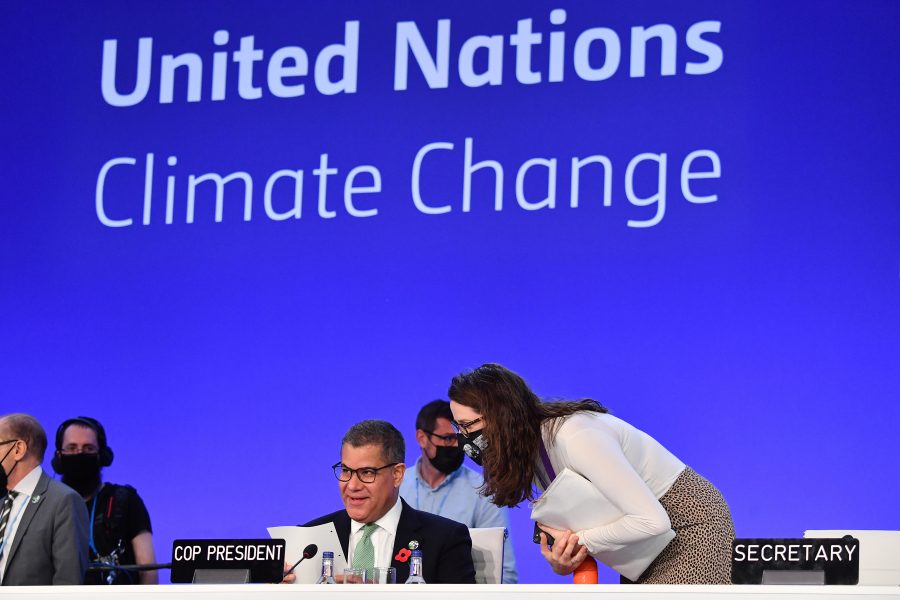
In the face of such extreme events, climate action is imperative. While the Paris Agreement set the goal of keeping global temperature rise below 1.5°C relative to pre-industrial levels, the outcomes of COP26 in Glasgow do not currently put the world on track to meet this goal, which is why action has to be taken more urgently.
Furthermore, it is important that climate change-related losses and damages in poor countries be dealt with in 2022 through the establishment of a climate change-related damage fund.








add your comment
Terms of publication : Not to offend the writer, people, sacred things, or attack religions or the divine self, and refrain from racist incitement and insults.