
The Islamic Development Bank, along with the Ministry of Economy and Finance, and the National Office for Hydrocarbons and Mines (ONHYM) in Rabat have signed a financing agreement for the Study of Front End Engineering Design (FEED) for the Nigeria-Morocco Gas Pipeline Project.
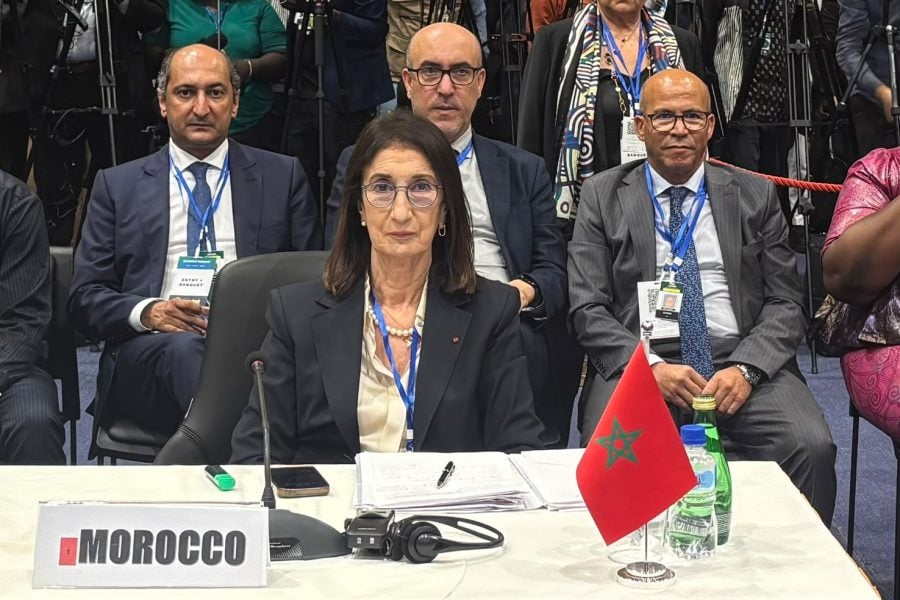
The signing ceremony of the agreement was held virtually on Monday, December 21, in the presence of Morocco’s Minister of Economy and Finance, Nadia Fattah Alaoui, and included Mansour Mokhtar, from the Islamic Development Bank, and Amina Benkhadra, Director of ONHYM.
The Islamic Development Bank stated that the pipeline project will play a key role in enhancing energy security in the region, and will contribute to the economic and social development of the countries through which it will pass, according to its press release.
The project will support achieving regional economic integration, enhancing intra-world trade, as well as increasing exports on the African level.
The front-end engineering design study is critical to this strategic project to make the final investment decision by 2023.
The study will be concerned with assessing the environmental and social impact to ensure that the project complies with all local and international environmental and social standards, and the development of the lands through which it will pass in agreement with all the countries concerned, to ensure smooth implementation.
According to the agreement between Morocco and Nigeria, the two parties will equally share the cost of the study project, which is estimated at USD 90.1 million (MAD 386 million). The Islamic Development Bank will support the Moroccan contribution with an amount of up to USD 15.45 million in the framework of the “Ijarah Service.”
As for Nigeria, the Bank has approved the financing of a sum of USD29.75 million, which brings its contribution to 50% of the total cost of the forward engineering design study for the project.
Morocco and Nigeria announced this project in 2016, which would link natural gas wells in Nigeria and other countries with Morocco. In 2018, this project entered a new phase with the signing of bilateral cooperation agreements.
According to the project details, the countries that have gas fields will pump their production into the pipeline, while other non-gas-producing countries will benefit from it for development purposes. The pipeline is expected to extend at a length of about 5,660 km
Previously, the Islamic Development Bank had launched a request for Proposals for the Environmental and Social Impact Assessment, and the land Acquisition Policy Framework in mid-October for the Nigeria-Morocco Gas Pipeline Project.
The request for proposals stated that this evaluation includes 13 countries, namely Nigeria, Morocco, Benin, Togo, Ghana, Ivory Coast, Liberia, Sierra Leone, Guinea, Guinea Bissau, Gambia, Senegal, and Mauritania.






add your comment
Terms of publication : Not to offend the writer, people, sacred things, or attack religions or the divine self, and refrain from racist incitement and insults.