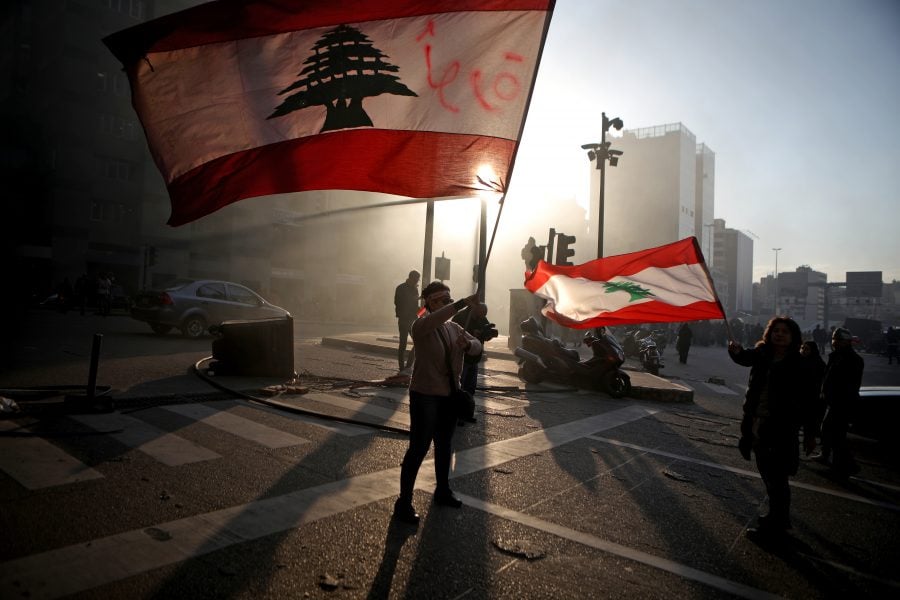
The number of protests and riots in the Middle East and North Africa (MENA) region has jumped by 45% in 2021, rising from 19,677 to 28,458 incidents, according to an analysis by specialty reinsurance group Chaucer.
According to the report, the increase in protests in the region has been largely driven by economic and social distress resulting from the COVID-19 pandemic.
In the Middle East, Lebanon alone experienced 2,695 incidents of unrest.
As a result of an unprecedented economic crisis and the deadly explosion at the Beirut port last year, Lebanon has suffered serious economic and political damage.
The economic crisis in Lebanon has exacerbated distrust in politicians and is to blame for major and frequent protests across the country.
The Lebanese pound has lost 92.27% of its value in the last two years, rendering citizens incapable of affording basic goods.
On December 13, media reports revealed food prices have risen by 2067% since the end of 2018, prompting widespread outrage and protests, with citizens calling for urgent international intervention.
For North Africa, there was an overall 39% rise in protests and riots. In neighboring Algeria, widespread protests have contributed to the rise of civil unrest in the republic.
Algeria saw an 11% increase in the number of protests, going from 2,250 to 2,490 in 2021. This spike can be largely attributed to a movement pushing for more government transparency and better management of the health crisis.
As for Tunisia, it saw its incidents double from 989 to 1,986, with protests over the government’s handling of the health crisis, and subsequent political unrest that has plagued the country.
As recent as last week, thousands of protesters demonstrated against Tunisian President Kais Saied in the capital, in a sign of increasing opposition to his seizure of power and suspension of parliament five months ago.
Incidents in South Sudan increased from 608 to 844, in light of frequent political crises and a recent military coup, the resolution of which is still being contested in the streets of Khartoum today.
The collapse in oil and gas prices during the lockdown was a contributing factor to an increase in protests in a number of middle eastern economies in the region, considering their high dependence on oil and gas revenues.






add your comment
Terms of publication : Not to offend the writer, people, sacred things, or attack religions or the divine self, and refrain from racist incitement and insults.