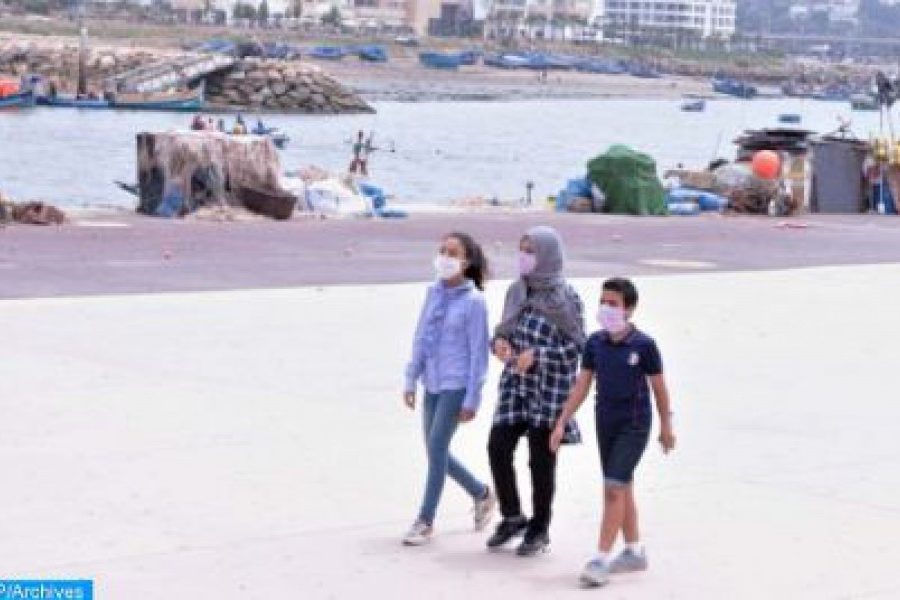
Although additional structural reforms are needed, several improvements have enhanced the business environment for foreign investment in the Moroccan kingdom, such as heavy infrastructure funding by the government and ambitious privatization programs, said the Oxford Business group.
The UK based global research and advisory company issued recently a report in collaboration with Now Morocco, the new economic brand that aims to boost foreign investment in the Kingdom, about the improvement that Morocco witnessed during the pandemic on different levels.
“Morocco economy recovery report” monitors Morocco’s efforts to overcome the pandemics loses, as it uses the experience of fighting COVID-19 as a pillar to start a new era.
Pharmaceuticals
Amid the pandemic, Morocco re-energized its pharmaceutical industry with the July 2021 agreement to produce 5m doses of the Sinopharm Covid-19 vaccine monthly for export.
“The country has managed to transform challenges into opportunities,” said the report.
The collaboration with the Chinese pharmaceutical firm, valued at an investment of around €421m, will lead to technology and knowledge transfer. And also secured the African country’s vaccination’s safety, as many countries still struggling to provide COVID19 jabs to its populations.
Health care
Access to health care remains out of reach for millions of Moroccans – particularly in rural areas. The Covid-19 pandemic underscored the importance of providing affordable health care to all.
Morocco is currently working to expand health coverage to all citizens. Akhannouch’s cabinet approved this year the compulsory health insurance project targeting 3 million Moroccans, independent workers, and non-wage earners, who will benefit from compulsory health insurance starting from next year.
Increasing Social Protection
Rolling out measures such as financial support to affected individuals and companies, and additional funding to health care facilities, “Morocco showed agility and responsiveness at the onset of the Covid-19 pandemic,” said the report.
In the early period of the health crisis the government focused on compensating households and firms for their loss of income, and created a special fund to finance the public health.
Through the fund, around Dh22.4bn in direct transfers was distributed to workers who were impacted by the crisis and protected an estimated 71% of jobs threatened by lockdowns.
Morocco’s government launched initiatives focused on supporting small and medium-sized enterprises (SMEs) and achieving universal health, within the Dh120bn economic recovery plan that was introduced in August 2020.
Integrating the informal workforce into the formal economy has been a priority for the government in recent years. The Covid-19 pandemic amplified the vulnerability of informal workers and accelerated efforts to remedy this.
Morocco’s informal sector accounted for 30% of GDP in 2009-18, according to a study released in January 2021 by the central bank, Bank Al Maghrib (BAM).
Although the health crisis resulted in a loss of jobs, the creation of the “auto-entrepreneur” status, resulted the sharp increase of the number of self-employed individuals increased, driving the transition from the informal to the formal economy.
“According to a report released in May 2021 from the National Agency for the Promotion of SMEs (Morocco SME), there were 286,020 self-employed people in the country in 2020, up 120% from the figure in 2019; this trend continued into 2021, reaching 307,937 as of the end of March of that year,” said the report.
Education
As was the case in many countries, the pandemic prompted the government to accelerate sector reforms and encouraged digitalisation.
In response to school closures, the government rolled out the TelmidTICE tutoring app. Produced by teachers, the platform provides digital resources such as videos, exercises and interactive materials in order to facilitate remote learning of all subjects at all levels.
However, some rural students remain hard to reach as they do not have access to virtual classes.
To help overcome this obstacle, the government has partnered with private sector stakeholders. In May 2021 the authorities and telecom providers Orange and Huawei signed an agreement to donate 1500 tablets to students in mostly rural areas to make it easier for them to access remote learning.





add your comment
Terms of publication : Not to offend the writer, people, sacred things, or attack religions or the divine self, and refrain from racist incitement and insults.