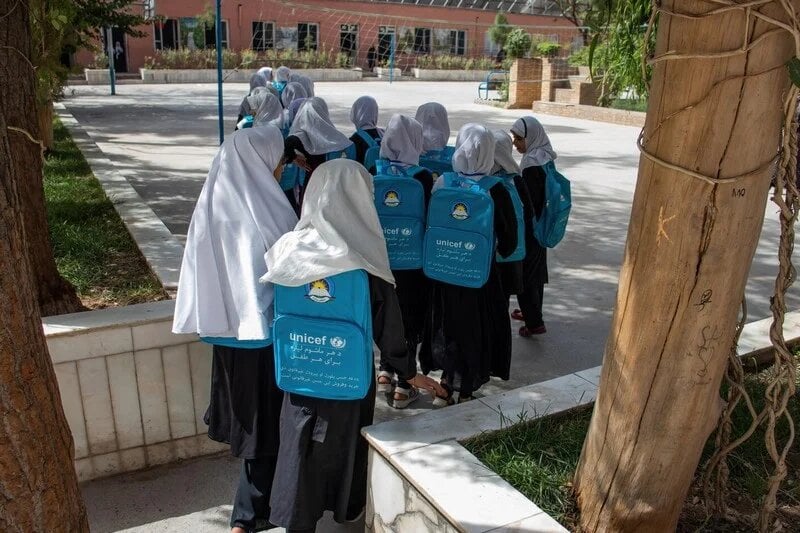
At least 200 million schoolchildren live in 31 low- and middle-income countries that remain unprepared to deploy remote learning in future emergency school closures, according to a new UNICEF report.
Among that group of students, 102 million live in 14 countries, located in Africa and Asia, have kept their schools fully or partially closed for at least half of the COVID-19 pandemic.
UNICEF said earlier this year that about 1.6 million children around the world have dropped out of school since the beginning of the pandemic, as the health emergency has disrupted the education of children around the world, especially in low-income countries, threatening to undo decades of educational progress.
During the COVID-19 pandemic, the impact of lack of remote learning readiness was especially felt by students living in countries where schools were fully or partially closed for at least half of the past 19 months, such as Congo and Madagascar, says the report.
The report outlines the limitations of remote learning and inequalities of access, warning that the situation is likely far worse than the available data shows.
Beyond the countries assessed, qualitative data reveals that learners have faced challenges with remote learning globally, including in higher-middle and high-income countries, adds the UN’s study.
Out of 67 countries assessed, 31 countries are not ready to provide remote learning at all levels of education, with schoolchildren in West and Central Africa most affected.
According to the UN report, pre-primary education is the most neglected level of education, with many countries not deploying a corresponding policy during COVID-19 lockdowns, leaving behind the youngest learners during their most critical years of development.
Other crises, such as those caused by climate change, can also significantly impact access to education. Of the 31 countries, 23 countries also face high or extremely high exposure to climate and environmental shocks, putting 196 million schoolchildren at greater risk of school disruptions in emergencies, stated the report.
The report concluded that there is no replacement for in-person learning, however, resilient schools with remote learning systems can provide a degree of education during school closures in times of emergencies. And once schools reopen, these systems can support students to catch up on their lost learning, explains the report.






add your comment
Terms of publication : Not to offend the writer, people, sacred things, or attack religions or the divine self, and refrain from racist incitement and insults.