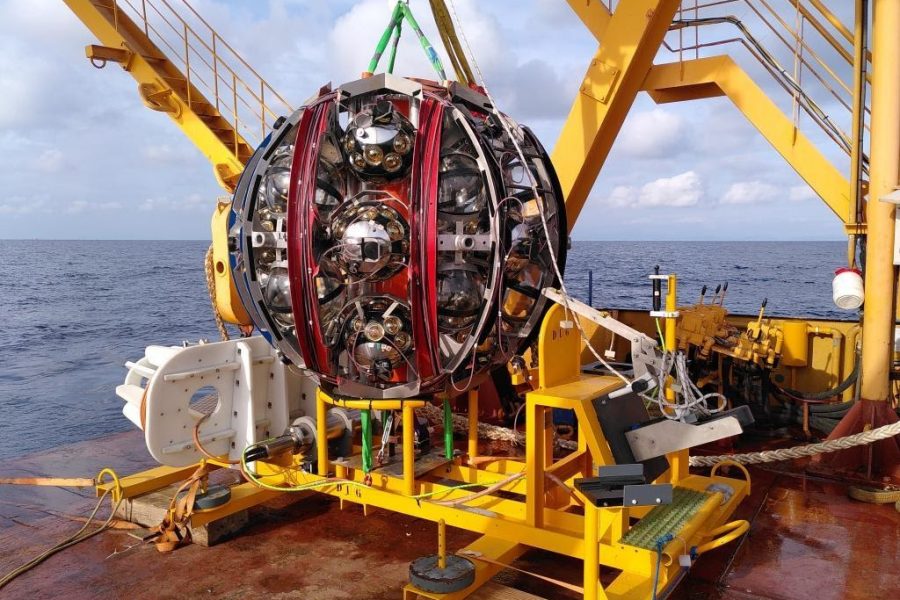
Deep under the enigmatic Mediterranean, an international group of particle physicists is building the world’s biggest marine telescope. Its goal? To investigate an elusive ghost-like particle called neutrino, that holds the key to how our universe came to being.
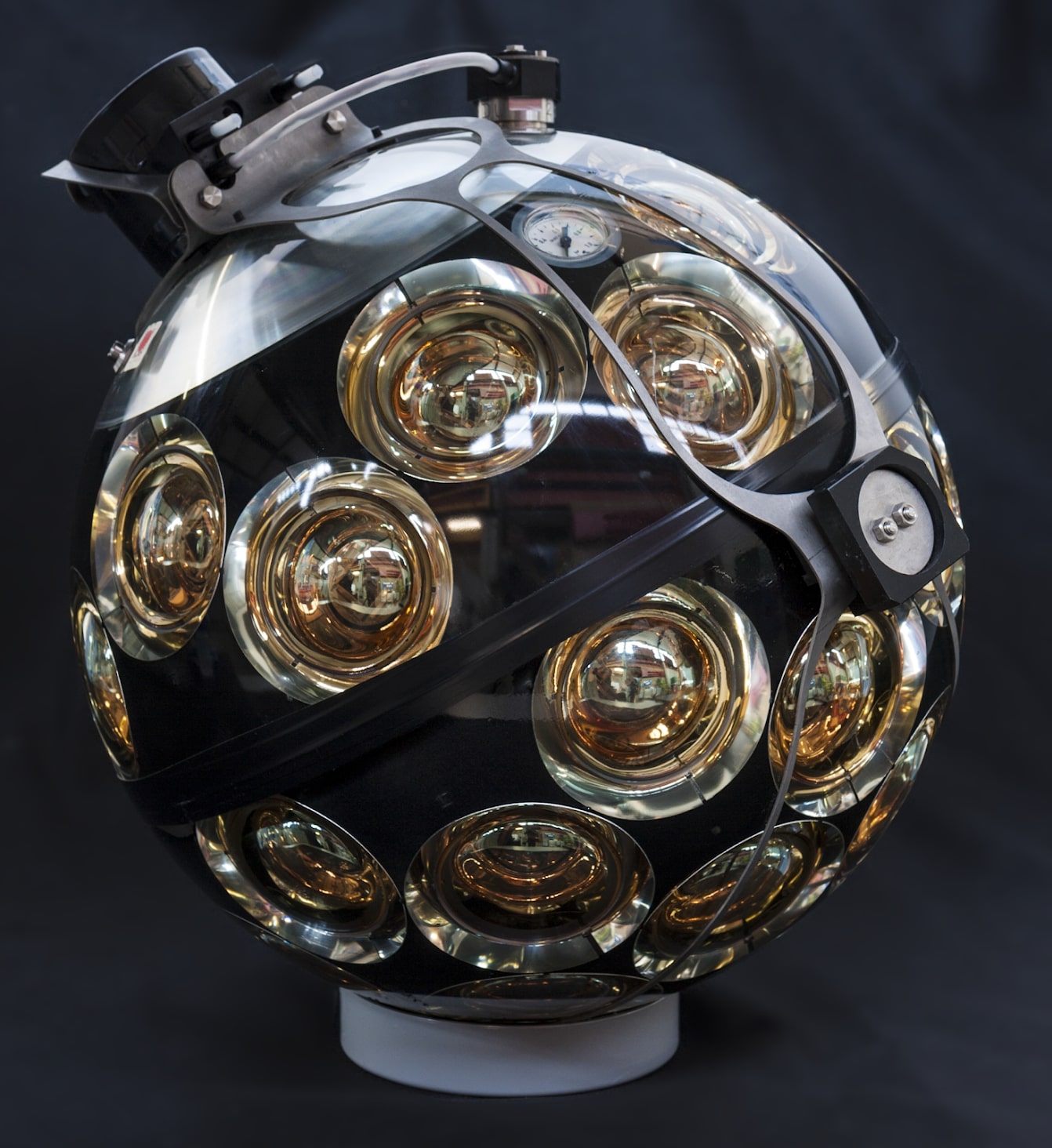
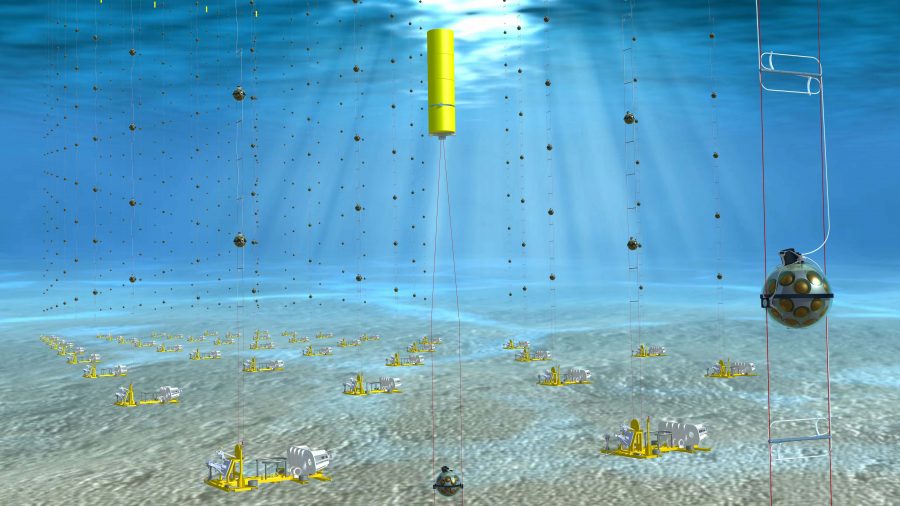
« KM3Net » or « Next Generation of Neutrino Telescopes” is a project, aiming to create the biggest telescope in the Mediterranean in order to do a deep investigation of the neutrino.
Hespress English spoke to Yahya Tayalati, University professor at Mohammed V University and coordinator of the KM3Net project, saying the future telescope will enable a better follow-up to neutrino sources as well as determine its fastest movements around the universe.
“KM3Net is the abbreviation of the 1km cube network,” Tayalati explained, adding, “the goal behind this project is to explore the nature of the enigmatic and mysterious neutrino.”
“Neutrino is an element that does not respond to gravity, as it is known for its long-travel through many light-years of the normal matter before interacting with anything,” he said, adding, “It represents a reliable messenger for the production of the universe, and is produced right next to the sun,” he added.
“As it is known in astrophysics, there is a link between mass and energy, the neutrino is still strange to that,” he said.
The coordinator of the KM3Net project said Neutrino is a subatomic particle that is very similar to an electron but has no electrical charge and a very small mass, and it has very little interaction with matter, as it is made of matter and anti-matter.
The future telescope is aiming for a better understanding of the mysterious neutrinos as well as their composition and movement.
“16 states, including 55 science research centers are involved for the achievement of this project,” Tayalati said, adding, “KM3Net will be completed by 2025, as it requires a lot of research and practice.”
“At the national level, this project is the fruit of a strong partnership between Moroccan scientists and experts from Mohammed V University in Rabat and Mohamed I University in Oujda who are participating in the development of the project alongside scientists from Spain, Italy, France, and Greece,” he specified.
“As for the financial and logistics support, the Ministry of Higher Education and Scientific Research has allocated a budget of MAD2 million for the creation of the laboratories as well as providing equipment in order to enhance research in astrophysics,” he added.
Doctor Tayalati said his doctoral students and himself received big support mainly from the universities of Rabat, Oujda, and Marrakech, he said, adding, “the president of Oujda’s university has allocated a budget of MAD50 million for the equipment as well as organizing trips abroad for research,” he added.
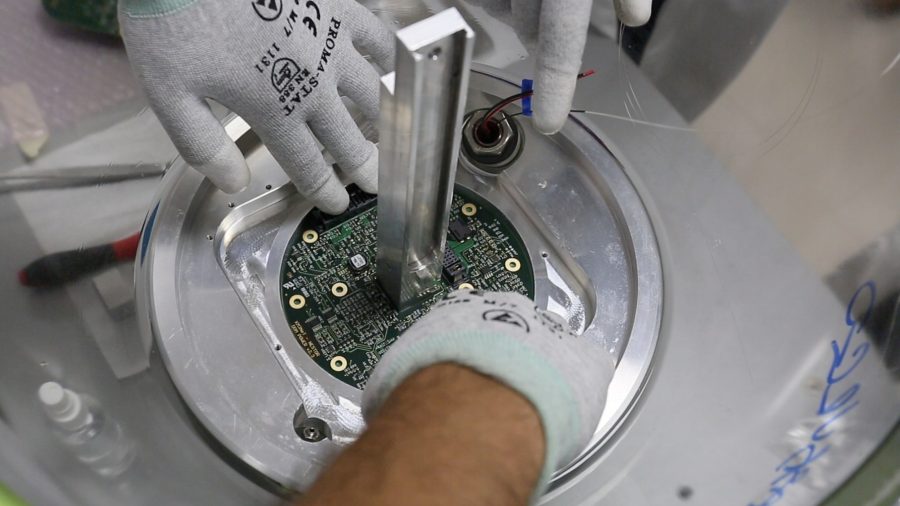
“The University of Rabat has created a device specializing in the manufacture of digital optical units for the telescope, while the University of Oujda has launched a unit specializing in the manufacture of electro-optical telescopes, making both universities complete each other for a better astrophysics network,” he specified.
“What makes this project more important, is the fact that is not only destined for scientists, but also for humans in order to develop their knowledge as well as for researchers to improve their know-how by exchanging expertise and adopting quality of scientific research,” Tayalati said.
“For now, the KM3Net’s project is still in construction, with the creation of twelve lines in the water, to be deployed once completed,” he said, adding, “the telescope will be placed in the deep sea of the Mediterranean to examine energy sources and study the fundamental properties of neutrinos.”
Indeed, Morocco’s participation in the manufacture of the telescope is a unique opportunity that will open doors to several other scientific projects in the country by encouraging Moroccan researchers to become more involved in the development of advanced research programs.“The Next Generation of Neutrino Telescopes is one of the largest scientific research programs where a range of disciplines such as electronics, electrodynamics, and fiber optic communication overlap in the manufacture of telescopes,” he added.
Tayalati said he is involved in another project called light by light scattering, “Atlas detector” installed in Switzerland in order to explore neutrino’s movement, as well as upgrading localization by using 4D instead of 3D, enabling to be more precise about duration, speed, in addition to the high gravity time detecter estimated for 3pq/ s.
Morocco is the 6th site to be involved in this project, along with China and European countries, he added.


add your comment
Terms of publication : Not to offend the writer, people, sacred things, or attack religions or the divine self, and refrain from racist incitement and insults.