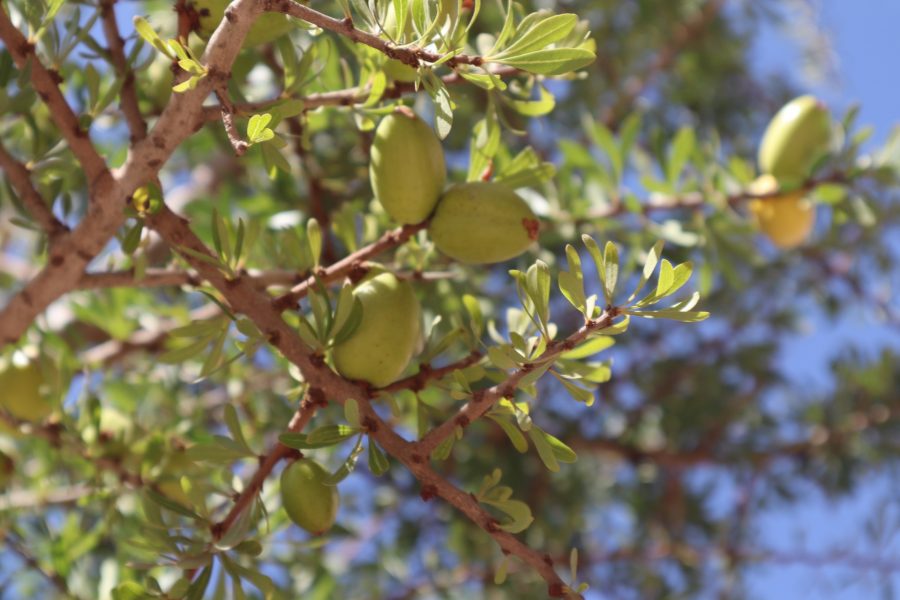
Olive farmers in Morocco’s most olive-producing regions are holding out hope on rainfall to save their crop as the olive harvesting season is looming amid high temperatures.
Amid the late rainfall, rise in temperatures continues to worsen the situation of olive trees in the Moroccan regions, especially in regions of Marrakesh-Safi and Fez-Meknes, which are considered the two most olive-producing regions in the country.
“It is normal for the month of October to witness cold weather, which would have helped relatively the olive trees,” said Rachid Benali, head of the Moroccan Interprofessional Federation of Olive Producers.
The quality of the olive harvest depends on the last rainfalls before the harvesting season.
As the kingdom didn’t witness any significant rainfall during the last weeks, farmers fear a decline in the quality and the quantity of their crops, which will dwindle immediately their incomes as well as the national agriculture economy.
“The current situation is very difficult in light of the late rainfall. It will force the farmers to harvest their crop, which will be low in quantity and quality,” said Rachid Benali.
Benali explained, in an interview with Hespress, that the irrigated areas won’t be affected by the discussed situation. However, the majority olives’ lands in Morocco are fertile and therefore the national olive’s production will be significantly low, if the rainfall didn’t save the olive season in the upcoming weeks.
Olive cultivation in Morocco covers about one million hectares, and olive trees, according to data from the Ministry of Agriculture, represent about 65 percent of the total fruitful trees.
During the 2019-2020 agricultural season, the national production of olives reached about 1.9 million tons, which makes Morocco one of the top olive producing and exporting countries in the world.
The olive chain in Morocco plays multiple roles, especially in the areas of combating erosion and soil erosion, valorizing agricultural lands, stabilizing the population in rural areas and adapting to climate changes.
This chain is also an important source of employment, as it is providing more than 51 million working days per year, equivalent to 13% of the total working days provided by the agricultural sector.








add your comment
Terms of publication : Not to offend the writer, people, sacred things, or attack religions or the divine self, and refrain from racist incitement and insults.