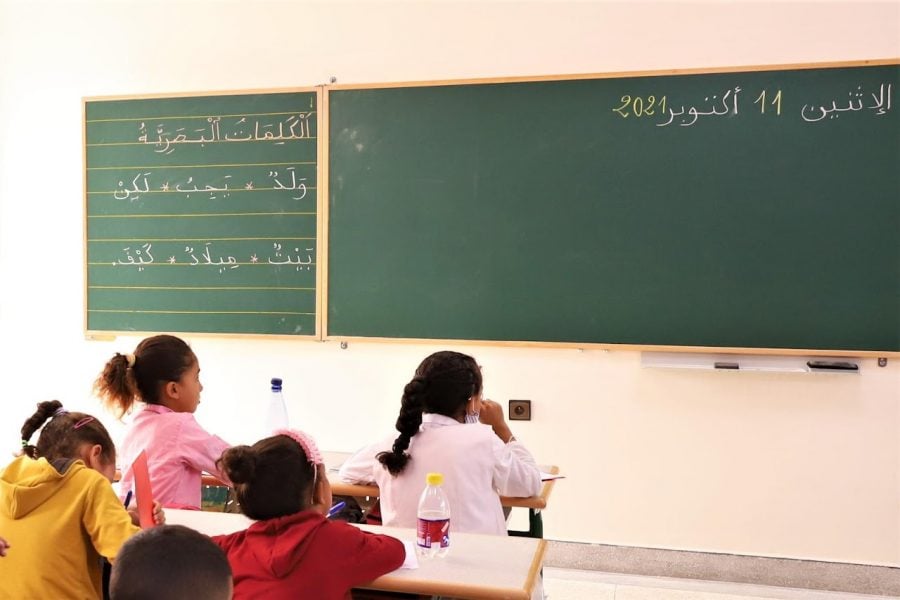
As the world is struggling with climate change and political conflicts amid an international health pandemic, the UNO chose to celebrate World Students day this year under the theme of “Learning for people, planet, prosperity and peace.”
Since 2010, the United Nations Organization (UNO) has marked October 15 as World Student’s Day in order to acknowledge the efforts and struggles of students around the world.
Students experienced around the world a bizarre period that affected their academic performance, their social life as well as their mental health.
It was March, 15 when the state announced officially the start of quarantine in the Moroccan territory, schools were closed and the concept of online education was introduced to the Moroccan students.
Hafed, a 20 years old English studies’ student, found himself bereft of the university experience of making friends, conducting thrilling debates in the classes and having a face to face contact with his professors.
“Last year specifically was just horrible, in a way that we had studied the whole year online, professors just took the opportunity to stress everyone out with countless assignments and tasks to answer,” stated Hafed to Hespress English.
Staring at the laptop daily, repeating “can you hear me?” mechanically to the small rectangles on the screen “was taking a toll on students’ mental health and left them hanging with depression and stress of getting all the work done from home is exhausting;” said Hafed.
After graduating during the pandemic, Hafed decided to take a gap year as “an escape to heal from the trauma of online education,” refusing to go back to university seats this year, despite the start of in-person education.
Studies show that the Covid-19 pandemic led to an increase of more than 25 percent in cases of major depressive disorder and anxiety disorders, affecting mostly women and young people, according to researchers from the University of Queensland’s School of Public Health.
Last year, 2020, witnessed an estimated additional 52 million people suffering from major depressive disorder, while an additional 76 million struggled with anxiety.
Zakaria, a 21-year-old university student, decided instead to get enrolled in a master’s degree, emboldened by the hope of going back to normal and starting the era of the post-Covid World.
The young master’s student, who found online education stressful and not necessarily productive, added, “perhaps one day I will get my PhD and become a university professor, I would love to improve, then, the education situation and make students feel more comfortable, I don’t know how, but I will figure out that in the future.”
Yahya, an 11-year-old student, filled the absence of the school’s ambiance, during quarantine, with drawing and painting different scenes of clean nature, family gatherings and friends’ games.
The 11-year-old student continued to paint the quarantine blues in colors even when he contracted the virus and experienced the physical pain of Covid-19, said Yahya’s mother.
Today, Yahya, who wants to be an artist in the future, is happy going back to normal and experiencing life’s colors’ in real life, “I am happy because now I go to school and I meet my friends and my teachers.”
Going back to schools and universities was a direct result of the positive progress of the national vaccination campaign for teens aged 12 to 17 and over as well as the improvement of the epidemiological situation in the country in recent weeks, according to the scientific committee.









add your comment
Terms of publication : Not to offend the writer, people, sacred things, or attack religions or the divine self, and refrain from racist incitement and insults.