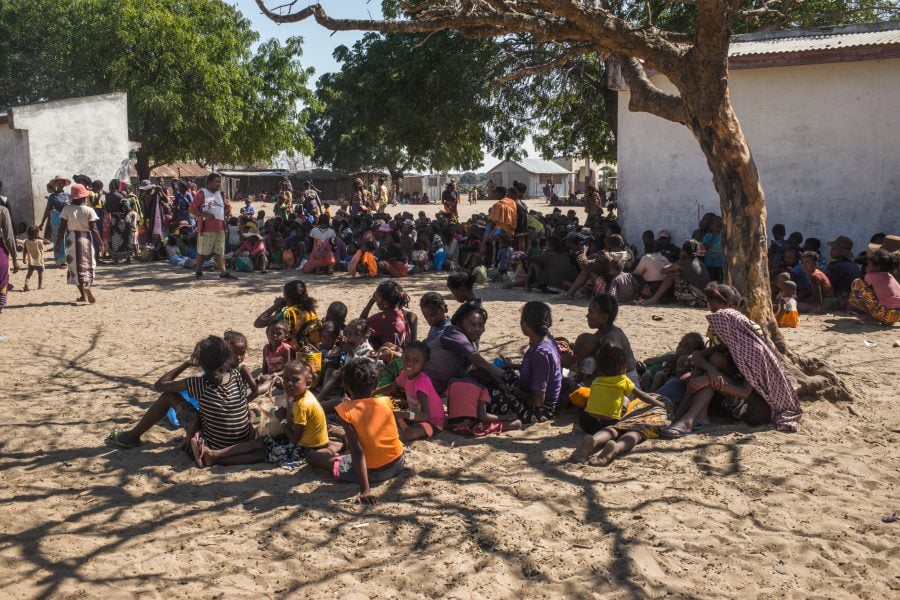
Several United Nations agencies have been warning of the world’s first “climate change famine” in Madagascar, as food shortages were driven up by global warming.
The previously rainy Indian Ocean Island has been battered by droughts for four consecutive years, turning green plains into arid fields where only cacti survive.
“In previous years there was rain, a lot of rain. I grew sweet potatoes and I had a lot of money… I even got married because I was rich,” Tsimamorekm Aly told Reuters.
Some days, all Aly eats is sugary water, or a handful of rice if there is money to spare. But with six children to feed, he more often than not goes without.
More than one million people in Aly’s home in southern Madagascar, two out of five residents, require emergency food aid.
“The situation in the south of the country is really worrying,” said Alice Rahmoun, a spokeswoman with the UN’s World Food Program in Madagascar. “I visited several districts… and heard from families how the changing climate has driven them to hunger.”
According to Rahmoun, certain villages haven’t had proper rain in three years, some in eight or even ten, as the country’s rainfall patterns grow more erratic.
“Fields are bare, seeds do not sprout and there is no food,” she told Reuters.
While conflict has been at the heart of many of the world’s hunger crises, Madagascar is the first country to fall prey to famine while at peace.
“Madagascar is a victim of climate change,” President Andry Rajoelina said while visiting the island’s worst-hit areas earlier this month.
According to the World Carbon Project, Madagascar is responsible for less than 0.01% of global carbon dioxide emissions, yet the country is the first to suffer the consequences of pollution driven climate change.
“It’s a natural disaster,” said Aly. “May God help us.”



add your comment
Terms of publication : Not to offend the writer, people, sacred things, or attack religions or the divine self, and refrain from racist incitement and insults.