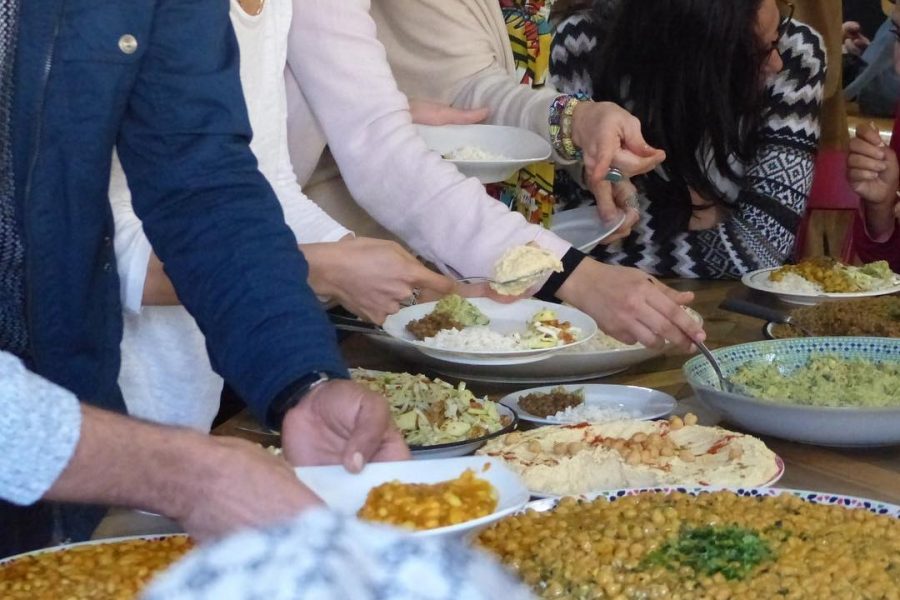
With over half a billion people across the world identifying as vegetarians October, the vegetarian awareness month marks a special occasion to explore the different aspects of what it means to be vegetarian.
Hespress EN spoke to Mohammed Bouhakkaoui, the founder of Veg’fest in Morocco, a festival that aims to promote veganism, exploring the different diets, motives and ways to cope in a meat-consuming country such as Morocco.
The different diets within the vegan community
Before exploring the different aspects of vegetarianism and veganism, Bouhakkaoui offered us a basic dictionary as an introduction to the different types of diets within the vegan community.
“When people think about a vegetarian diet”, Bouhtaoui explains, “They typically think about a diet that doesn’t include meat, poultry or fish. But vegetarian diets vary in what foods they include and exclude.”
Bouhakkaoui continued, “We have Lacto-vegetarian diets which exclude meat, fish, poultry and eggs and Dairy products.”
On the other hand, Lacto-ovo vegetarians don’t eat meat, fish and poultry, but eat dairy products and eggs, while pescatarians allow just fish and exclude diary, meat, poultry and eggs.
“And of course, Vegan diets are the ones that exclude meat, poultry, fish, eggs and dairy products — and foods that contain these products,” explained Bouhakkaoui.
The road to veganism
Mohammed Bouhakkaoui started his vegetarian journey in 2012. An animal passionate and a citizen concerned by climate change, Mohammed cut off meat, poultry and fish after watching different documentaries, that opened his eyes on the horrible consequences of slaughtering animals on nature and health.
“After watching several documentaries I was convinced that the right decision, for my health, nature and animals, is to cut off meat. I gave myself time to get used to my new diet, and after 3 years I cut off completely meat, poultry, fish, eggs and dairy products.”
The game changers, Cowspiracy and Dominion are all documentaries that influenced the decision of Bouhakkaoui to abandon meat forever.
Strict vegans and unrepentant carnivores rarely find any common ground. But whatever your view on the ethics of eating meat, there are some hard facts that should inform any debate.
An estimated 50 billion chickens are slaughtered for food every year, a figure that excludes male chicks and unproductive hens killed in egg production, according to UN food and agriculture.
Half a billion sheep are taken to the abattoir every year. The number of goats slaughtered overtook the number of cows eaten during the 1990s, although the figure for cattle excludes the dairy industry.
When it comes to seafood, the number of individual fish and shellfish is almost impossible to calculate. One hundred and fifty million tonnes of seafood were produced for human consumption in 2016 – nearly half from aquaculture (for example trout or shrimp farms) rather than caught in fisheries.
In the last 50 years, the number of people on the planet has doubled. But the amount of meat we eat has tripled.
The environmental cost of our growing appetite for meat is alarming. Agriculture is responsible for 10-12% of greenhouse gas emissions, with meat, poultry and dairy farming producing nearly three-quarters of that, according to World economic forum.
“To produce one Kilogram of meat, we need 10 000 liters of water. It makes no sense,” Bouhakkaoui stated.
For many people, meat is the main source of protein, vitamins and minerals. But some meats are high in saturated fats that can raise cholesterol, as eating too much red has been linked to bowel cancer, heart attacks and blood pressure.
It’s been estimated that swapping some of the beef we eat for beans, peas and mycoprotein (derived from fungi) could reduce mortality by 5-7%, according to World economic forum.
But the question that rises, “is cutting off completely meat, poultry and fish safe for health?
“It is the capitalist propaganda that convinced us that we cannot survive without meat and dairy. First of all the proteins and vitamins in meat, the animal got it from its plant-based diet, hence, greens are the first source of all the useful components of meat.” Bouhakkaoui continued, “for example, 100 g of cauliflower contains 1.9 g of protein and 25 calories, which is a good portion of protein.”
Bouhakkaoui says that being vegan in Morocco is embracing the struggle of making your own food at home, while being bereft of enjoying a good meal in a restaurant.
“It’s true that almost the only choice of vegan in Moroccan restaurants is French fries, which isn’t a healthy choice of course, but this lack of alternatives didn’t push me to go back to consuming animal products, because I am always reminding myself for the reason why I am vegan, for animals, health and nature,” explained Bouhakkaoui.
The vegan activist admits the difficulty of convincing Moroccan society of veganism with arguments about animals’ compassion and climate change, “they think it’s nonsense, the only justification they accept is the health’s risks of consuming animal products,” said Bouhakkaoui.
The Veg’Fest founder believes that one day the climate change will force the world to adopt a vegan diet, “the oceans will be empty of fish by 2048, the meat, poultry and dairy industries are hurting the ecosystem and worsening the climate change situation, one day, the world will be forced to cut off animal products and stop the exploitation of nature, so we better start now.”




add your comment
Terms of publication : Not to offend the writer, people, sacred things, or attack religions or the divine self, and refrain from racist incitement and insults.