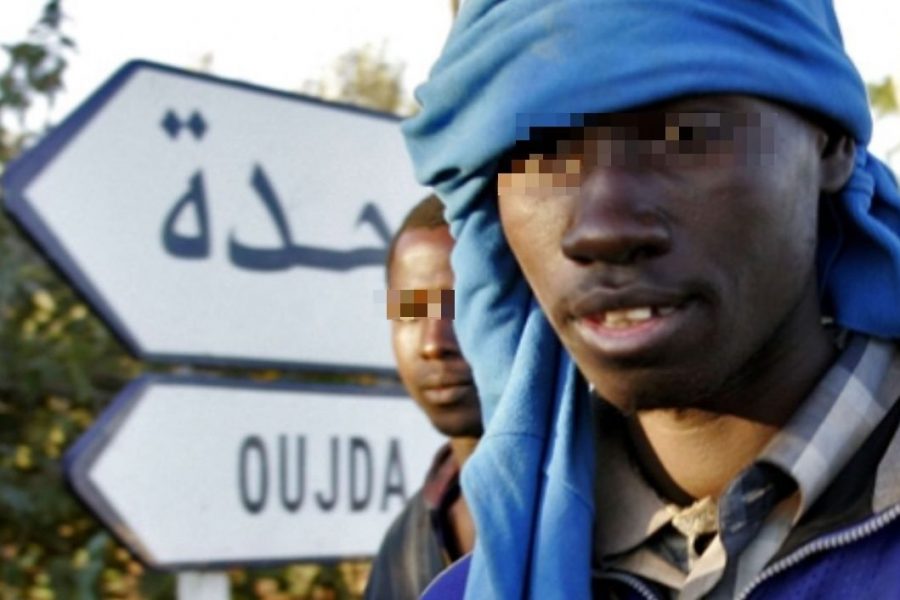
Over 300 Sudanese migrants have been stranded Oujda, northeast Morocco, amidst police crackdown and aspiration to cross to Europe, according to the Sudanese migrants’ statements mentioned in the Association for Aid to Migrants in Difficult Situation’s (AMSV) report.
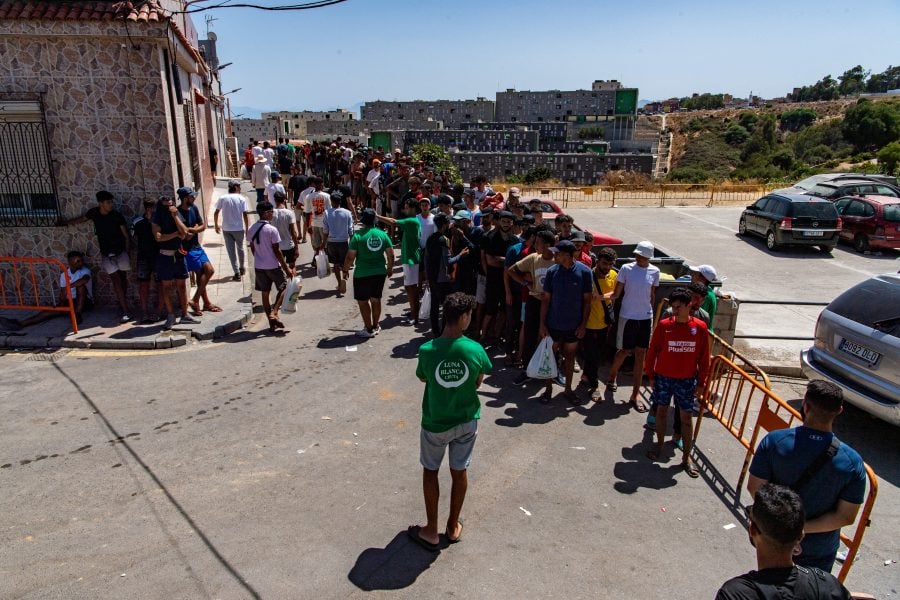
Hassan Ammari, a member in the Association for Aid to Migrants in Difficult Situation (AMSV) said almost 317 migrants, aged 15-26, have been trying to survive on the streets of Oujda. “Some sleep on sidewalks, on the ground, or on abandoned land,” he told Hespress EN.
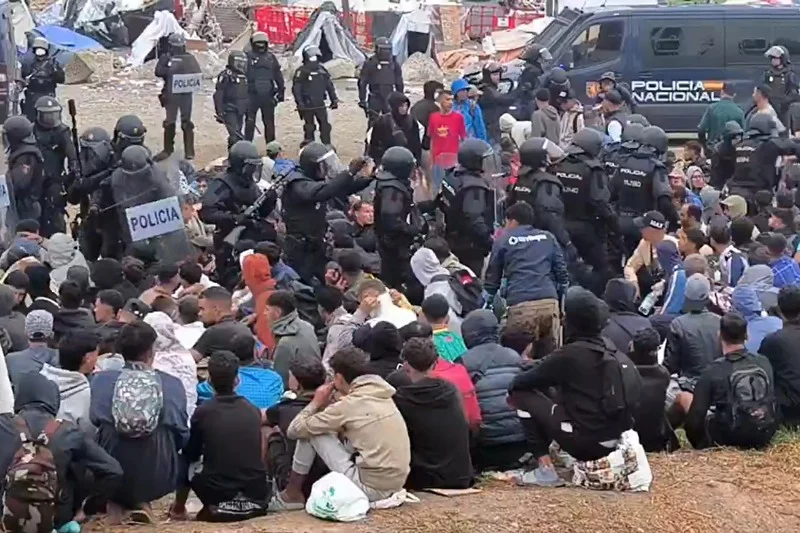
He added that the association is not sure of the current total number of the Sudanese migrants in Oujda, “since the authority is chasing them, the migrants are in an ongoing escape journey, hiding in the outskirts of Oujda, under pounds, near the rivers or fleeing to other cities as Nador, looking for a way out. Hence, we cannot confirm the total number here in Oujda.”
The migrants’ group includes several minors and a disabled person, as well as some injured ones, “the injured migrants, who are a minority, are the ones who found shelter in the church,” said Ammari.
According to the Sudanese migrants’ statements mentioned in the AMSV’s report issued on Aug, 21, the migrants were exposed to violence, detainment and stealing.
Most of them took to the road the first time from the cities of Khartoum, Omdurman, or villages in Darfur, while some of them escaped the Libyan prisons in Tripoli, after having spent between four months to 3 years in inhuman conditions, according to the migrants’ statements.
Ahmed, a 22 years old migrant, recalls his story in the Libyan detention centers, “I was detained in Libya with Moroccans, the treatment was inhumane. Also, I still remember with sadness how four Moroccans had died in one of the detention centers, then, how one of the Moroccans escaped the hell of the detention center to die in the desert because of thirst.”
Alabed, a Sudanese migrant, 17, told AMSDV his story, “I was in Zuwara, Libya, one of the asylum seekers and they promised to give me the asylum paper on November 23, 2021. Here in Oujda, I was arrested by the police at about two o’clock in the morning and then they took me to the security station and they stripped me from my belongings and what I own (phone and money). Subsequently, I was deported to the Moroccan-Algerian border in a five-day journey without eating, except for one loaf a day.”
When Alabed returned, to Oujda, with eight other migrants, they were physically abused by the Algerian border guards, despite the existing wounds and bruises on their bodies, according to Alabed statement.
The 15 years old Abd Lmounaim, another Sudanese migrant, was hit with a rifle in the head by the Algerian guards, which caused injured badly his head, “the Moroccan guards detained me despite my dangerous health situation. Moreover, they took my phone and my money.”
Ammari, the AMSV’s member, condemned the abuse and terror that the migrants experience each day in the streets of Oujda, as he added “Sudanese migrants are in vulnerable situation and NGOs and officials should respect their status and afford a better treatment to them.”
Migrants in Vulnerable Situations, according to the Principles and Practical Guidance on the Protection of the Human Rights, are migrants who are unable effectively to enjoy their human rights, are at increased risk of violations and abuse and who, accordingly, are entitled to call on a duty bearer’s heightened duty of care.
According to the same guidelines, these migrants should be rescued, protected, sheltered, and humanely treated. Since Sudan is a fragile state, many of them applied for the refuge card and got it. However, the brutal treatment continued.”
Sudan has experienced nearly continuous conflict since independence in 1956, and has required external emergency assistance every year since 1984. Over the past fifty years, humanitarian crises in Sudan have been the result of inequality in the distribution of wealth and power between centre and periphery, of conflicts and displacement, as well as drought and economic crisis.
Last year’s revolution and the end of al-Bashir’s regime has offered real opportunities for change, with a transitional civil-military government committed to promoting human rights and justice, negotiating peace with insurgents and holding democratic elections after three years. However, the current government is still struggling amid political and economical crisis, which have been deepened due to the pandemic.
“All the Sudanese migrants in Oujda are aiming to immigrate to Europe, looking for better life conditions.”


add your comment
Terms of publication : Not to offend the writer, people, sacred things, or attack religions or the divine self, and refrain from racist incitement and insults.