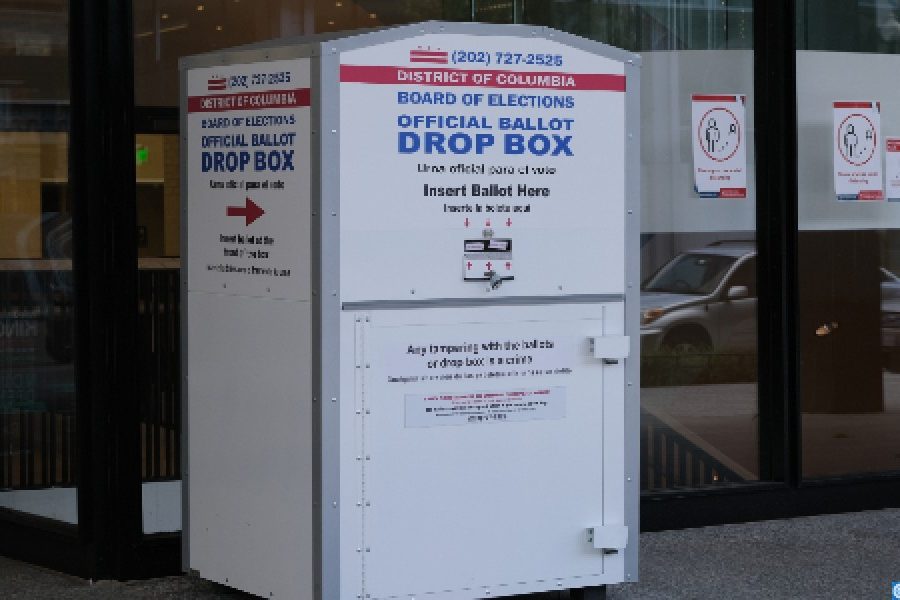
Nearly three months after President Joe Biden took office, after more than 60 courtroom losses, and numerous state ballot recounts, many Republicans and Republican lawmakers in the US continue to believe that the election was “rigged” in order to justify passing new voting restrictions, some of which are likely to be held unconstitutional.
The right to vote is one of the most fundamental American rights, a cornerstone of democracy for the last four hundred years. But it was not always so for every individual in America. Poor white men, women, and slaves were not allowed to vote. When black men were first afforded the right to vote, they counted as only 3/5 of a white man. American women did not gain the right to vote until 1920.
After the American Civil War in the 1860’s, institutional and legal barriers were put into place to prevent blacks from voting. Literacy tests, poll taxes, and other bureaucratic restrictions became a prerequisite. Black voters faced harassment, intimidation, economic reprisals, and physical violence when they tried to register or to vote.
The 1965 Voting Rights Act outlawed these discriminatory voting practices adopted in many southern states, and by the end of 1965, a quarter of a million new Black voters had been registered.
Now, some are arguing, the US is returning to the “Jim Crow” days of voter suppression during reconstruction.
Since January 6, 2021, when thousands of Trump supporters stormed the US Capitol to try to stop the certification of electoral votes and overturn the will of the majority of the American people, Republican lawmakers in dozens of states have introduced legislation imposing new voting restrictions that impact minorities and people of color.
According to the Brennan Center for Justice (named after Chief Justice Brennan of the US Supreme Court), as of March 24, legislators had introduced 361 bills with restrictive voting provisions in 47 states—a 43 percent increase just since February 19.
The states with the largest number of restrictive bills introduced are Texas (49 bills), Georgia (25 bills), and Arizona (23 bills).
Georgia’s bill not only included a restriction on drop boxes where voters can deposit their ballots, required mandatory proof of identity for absentee voting, and created greater legislative control over how elections are run, but also made it a crime to provide food or water to voters lined up outside polling stations. It also eliminated early voting on Sundays, the day when many Black churches hold get-out-the-vote drives.
The new law comes in the wake of Georgia’s historic voter turnout, particularly among Black voters and voters of color, in the November 2020 general election and then again in the January 2021 senatorial runoff in which two Democrats defeated incumbent Republican senators.
Surprisingly, corporate America is taking a stand on this systematic attempt to make it difficult for Americans, particularly minority communities, to exercise their democratic right.
Coca-Cola executive Alfredo Rivera said in a statement that the company is disappointed by the Georgia law. Coca Cola, which is headquartered in Georgia, opposes “measures that would seek to diminish or restrict voter access.” It advocates for “broad access, voter convenience, election integrity and political neutrality.” The statement added, “anything that inhibits these principles can lead to voter suppression.”
Porsche, whose North American operations are also headquartered in Georgia, said that “equal access to the polls for every voter is core to a democracy.”
Mercedes-Benz said that it “stands against efforts which discourage eligible voters to participate in this vital process.”
In a very unusual move, Major League Baseball pulled its annual All-Star Game from Atlanta after the controversial voting law passed in Georgia. It will relocate the game to Coors Field in Denver, Colorado.
President Joe Biden called the Georgia law “outrageous,” “un-American,” and “Jim Crow in the 21st Century.”
For decades, Republicans have tried to make voting harder, while Democrats have tried to make voting easier. Democrats argue that the right to vote is fundamental to American democracy, and that there should be fewer barriers.
Republicans, however, despite the lack of evidence of widespread voter fraud at levels that would tip elections in the US, continue to suggest that safeguards are needed to prevent fraudulent voting.
After the November 2020 election, federal judges threw out dozens of cases brought by the Trump campaign for lack of evidence. Even the US Supreme Court with three Trump appointed justices dismissed Trump’s last hope in such a case.
Christopher Krebs, the director of the Cybersecurity and Infrastructure Security Agency under the Trump administration, stated categorically just after the 2020 election that there had been no evidence of fraud. Trump subsequently fired him.
According to the Washington Post, “the outcome of dueling efforts will vary depending on partisan control of statehouses.”









add your comment
Terms of publication : Not to offend the writer, people, sacred things, or attack religions or the divine self, and refrain from racist incitement and insults.