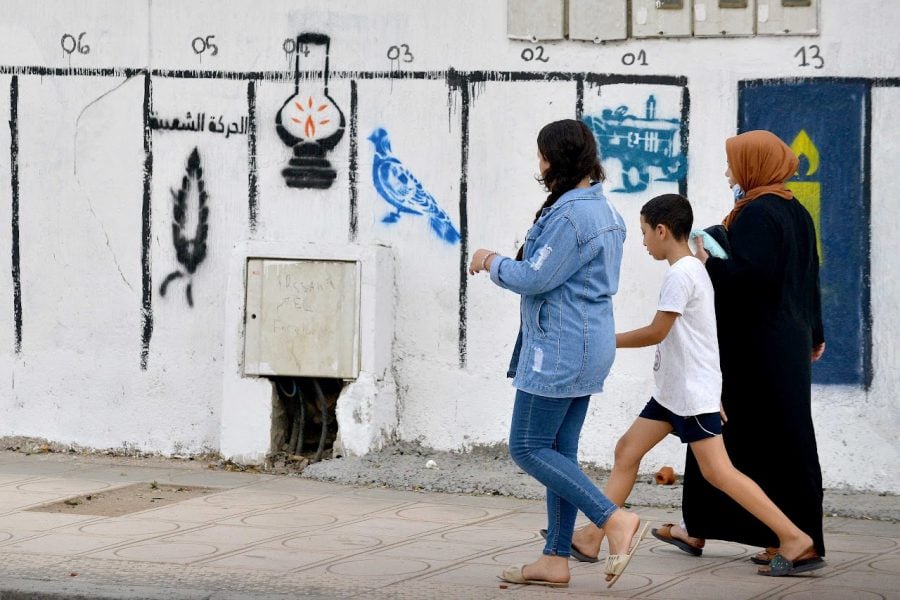
After a decade of Islamic political parties rise to the ruling majority in the wake of the Arab spring, this year, the last leaf of their ruling tree fell as the huge loss of the Islamic party, PJD, in the Moroccan election, marked the end of their era in the Arab world.
In 2011, manifestations stormed the streets across the Arab world, protesting the high rate of unemployment and poverty asking for better living conditions, democracy and freedom of speech.
Despite the violence and arrests they faced, people across North African and the Middle East emboldened by the audacity of hope and the democratic dream, made history and changed the political scene in the MENA region by overthrowing autocrats that ruled the region for decades.
The Arab spring adopted different scenarios in each country; however, most of the scenarios ended up, then, by the Islamic parties sweeping the polls as in Tunisia, Egypt and Morocco.
The rise of the Islamic political parties
Driss El Ganbouri, researcher in the Islamic ideology, explains, in his interview with Hespress Eng, the reasons behind the Islamists’ rapid climb to the ruling majority.
“In the wake of the Arab Spring, Arab people considered the Islamic parties as the most competent political parties to bring the desired change thanks to three main reasons: the religious aspect, relating sacrifice to integrity and the nostalgic feeling of the golden era of the Islamic nation.”
The religious aspect dominated the Islamic parties’ speeches, slogans and appearances, a feature that the majority of Arab people relate to honor, nobility and honesty “since they believe that Islamic politicians will take care of the nation in obedience to the true Islamic instructions,” El Ganbouri explained.
Playing the nostalgic card of bringing back the Islamic Golden Age, a period of cultural, economic, and scientific flourishing in the Arab world under the Islamic law, was indeed a winning card in their speeches, as El Ganbouri explained.
“To be fair most of the Arab leaders played this card before 2001, but after the 9/11 attacks, politicians, except the Islamic parties, avoided religious references fearing terrorism’s accusations.” He added.
Islamic parties were a part of the Arabic political scene since the 30s of the last century, “the birth of the Islamic movement in the Arab world was in 1928, when Hasan Benna established the Muslim Brotherhood in Egypt, since then the movement has spread in several Arab countries and developed to different shapes to enter the political field,” said El Ganbouri.
Their rise wasn’t just thanks to their religious agenda but also thanks to “the victim and executioner conflict”, as El Ganbouri stated.
“The movement was faced by arrests, political pressures, and prohibition from election in different courtiers around the MENA region.” He continued, “this discrimination pictured the Islamic parties as the victim of the Arab regimes’ injustice, and after 2011, Arab people voted for the victim since they thought he will never be the executioner.”
The fall of the Islamic political parties
In Egypt, the cradle of the Muslim Brotherhood, the movement reached power in 2012, after Mohamed Morsi won the presidency of the country and the “Freedom and Justice Party”, the political arm of the Brotherhood and Morsi’s party, swept the parliament seats, winning 222 seats, representing 43 percent of the total number.
The Brotherhood ruled for only one year, during which the economic situation was tense, and fierce political battles were being fought on more than one front as the party was attacked from several parties, and most right-wing, left-wing, and even Islamic parties stood against them, led by the Salafi “Nour Party”, as well as their liberal opponents who were mobilizing for a decisive battle, warning against “Islamizing the State”.
The armed forces, masqueraded under the manifestations of June 30, which were protesting the economic situation and the Islamizing of the State, conducted a coup d’état, ending the era of the Islamists in the nation.
In Tunisia, the birthplace of the Arab spring, after overthrowing Zain el abbidin Ben Ali, the “Ennahda” movement won first place in the Constituent Assembly elections in 2012, obtaining 89 seats out of a total of 217 (41 percent), with the leadership of Rached Ghannouchi, who was in lived before the revolution.
The Ennahda movement formed the first government after the revolution led by Hammadi Al-Jabali (2012-2013), and then Ali Al-Arayedh led the second Ennahda government (2013-2014).
The Jebali and Al-Arid governments faced difficult economic and security crises, and several political forces turned against them, whether those affiliated with the revolution or from the remnants of the former regime, especially after the assassination of political activists Mohamed Brahmi and Shukri Belaid.
In the 2014 elections, the entire political scene changed, as Ennahda lost 20 seats and fell to second place. In 2019, the party rose up to first place again.
The first government of President Kais Saied fell after its head, Elias Fakhfakh, was accused of conflicting interests, and Interior Minister Hisham al-Mashishi was assigned to form a new government.
The Ennahda movement sided with Al-Mashichi after his dispute with Saied over the formation of the government, but the latter turned the tables on everyone.
He dismissed the prime minister, froze the Parliament’s decisions, and headed the Public Prosecution, decisions that were considered by his opponents as a “soft constitutional coup.”
In the Moroccan kingdom, the fall of the Islamists was less dramatic than the other Arab countries.
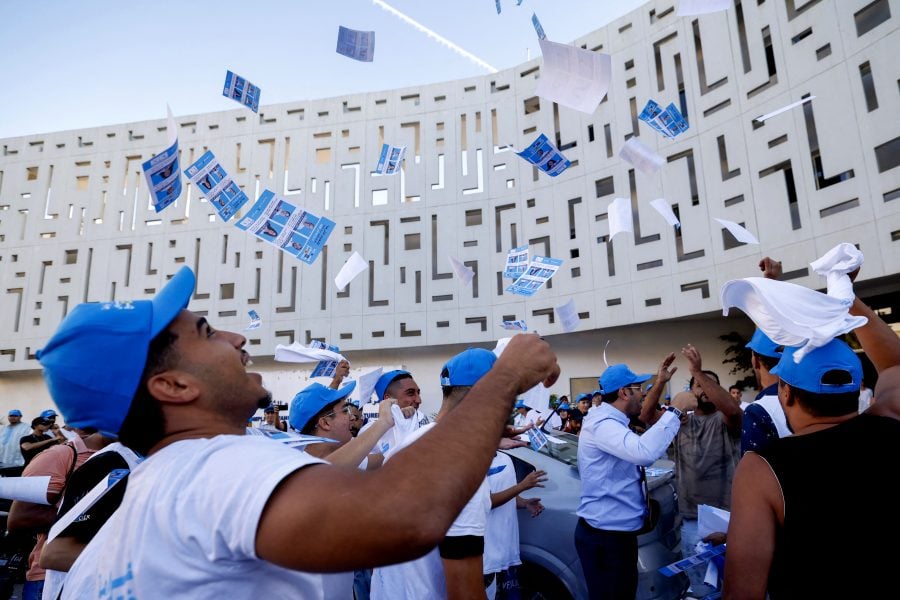
In the September 8 elections, PJD, which had hoped to lead the country for a third term, received a blow with only 13 seats in Parliament amidst unprecedented low voter turnover. Their defeat led to the resignation of numerous leaders in the party, including their former secretary-general Saad Eddin El Othmani, as young voices rose from inside the party blaming the PJD’s leadership for the “the painful loss.”
“I would say that the reasons behind the rise of the Islamic parties are the same ones which stood behind their fall,” he continued, “the inexistent relation between the slogan and the application and the gap between the ideology and the actual political work have all led to their failure,” El Ganbouri stated.
He explained this gap between the ideology and the political work by the last decisions that have been made in the Moroccan Kingdom under the government of the Islamic party, PJD, “signing the normalization of relations’ accord with Israel and fortifying the presence of the French language in the educational system are all decisions that contradict the main promises in the PJD’s electoral program,” said El Ganbouri.
However, Driss El Ganbouri, doesn’t anticipate any real change in the Moroccan political scene after the RNI’s win and the PJD’s loss.
“The next government will be in charge of executing the development program decided by King Mohammed VI, thus, the name of the winning party won’t have a big change on the Moroccan policy for the next five years.” El Ganbouri told Hespress Eng.
The future of the Islamic parties in the Arab world: will they rise from their aches?
“In their ruling era, Islamic political parties abused the core of their ideology, which is considered as a suicide move for every ideological party.” El Ganbouri stated.
Ideological parties build their legacy and support base on a specific ideology, not as administrative parties which can rebuild their reputation by changing their leadership, El Ganbouri explained, “for that, I don’t think that they will ever rise. They will never be again the PJD of 2011.”
He added, “the PJD will be just as the Socialist Union of Popular Forces after they lost their «striving reputation » during their participation in 1988’s government, a normal party with no shimmering legacy.”
However, Driss El Ganbouri, argues that religion, in the Arab world is inseparable from politics as political Islam won’t despair from the Arab world by the fall of the Islamic parties.
Most of the Arab regimes derive their legitimacy from the religious institutions and traditions, as Al Azhar in Egypt and the tradition of Al Baiaa in Morocco, however the dialectic of “who control who” stays a major question in the Arabic political scene.
El Ganbouri explains, “the political Arabic regimes, nowadays, are stronger than the religious institutions in the Arab world, as a solution we need to separate the “Islamic Daawa” of the politics by reviving institutions, such as Al Azhar and Al Qaraouinne to secure the balance of power between the political regime and the religious institutions since Islam will always stay at the core of the Arabic political regime.” El Ganbouri stressed.



add your comment
Terms of publication : Not to offend the writer, people, sacred things, or attack religions or the divine self, and refrain from racist incitement and insults.